
by YouTime Coaching | Dec 21, 2016 | Anxiety, Behavior, Children, Communication, Confidence, Control, Growth, Kids, parenting, parents, Stress
Personally, my favorite part of the holidays is the food (diets don’t count in December right?) and re-living the traditions you have built-up over the years with family. For some, the favorite part it is buying gifts, while for others it may be receiving them. We all have our things to look forward to, but parenting your teenager or college aged kid throughout the holidays frequently does not make the list
The holidays are here and we are almost in the thick of it with just a small amount of preparation time left. Since making life a little easier is our job, YouTime Coaching is assigning you (yes you) two pieces of parental homework to help you and your family get through this December and into January feeling good, relaxed, and positive about the holiday dinner with crazy Aunt Sally (sorry if this hits too close to home).
Here we go.
Assignment #1: Keep Calm and Carry On.
Believe it or not, the holidays can be a stressful time for everyone. It is important that you take care of yourself, have strategies to maintain some level of equilibrium/relaxation, and model this positive behavior to your kid.
If you need a quick break from the chaos, try “4-7-8 breathing”. Many people use it to help them fall asleep, but in this case you will reap the benefits without dozing off. Here’s how it works:
- Breathe in for 4 seconds
- Hold it for 7 seconds
- Breathe out for 8 seconds
This entire cycle counts as one breathe. Continue for at least four cycles. If you do an emotional inventory over the past week you will quickly see that parents feel many emotions, some for varying lengths of time. The point is, emotions change and they can rather quickly. What you feel right now, may not be what you feel 5 minutes from now. Taking a step back, giving yourself space, and completing this breathing assignment will help you see a little more clearly.
Share you experience in the comment section.
Assignment #2: Actively Search for the Positive.
Many parents have their morning routines which can involve turning on the tv, looking at news on their phones, or reading the newspaper. Doing this can condition us to have a false reading on the ratio of positive to negative events that happen in life, simply because of what the media puts out there for us to see.
This holiday, keep an eye on your kid and no matter how small it may be, maintain a mental list of the positive behaviors they have displayed. It could range from helping with the dishes, going to pick something up from the store for you, or simply asking “how are you?”. When you see a positive behavior, give some positive feedback (ex. “How are you Mom/Dad?”, “I’m doing well, just a lot of work to do. That was really thoughtful of you to ask.”).
Searching for the positives at home and with your kids will help restore the more realistic ratio of positives to negatives, making life a little easier.
Share your list of positives in the comment section.
There you go!
This holiday season try using the stress of the holidays instead of allowing the holiday stress to use you. HINT: You can start with these two assignments.
Happy holidays from YouTime Coaching!

by YouTime Coaching | Dec 14, 2016 | Children, choice, Kids, Life Coaching, parenting, parents
Finding a Life Coach or Mentor for your kid can be like just going into the grocery store or TJ Maxx/Marshalls, you walk in to buy one thing and walk out with $100 worth of items that were never on the original list.
(entering scene) SHINY THINGS and CHOICES.
We want to make your search for a quality Life Coach simple and most importantly transparent for you and your family. To help you in this next step, take a gander below at, “2 Crazy Important Factors When Looking for a Life Coach” and “2 Mandatory Reminders for Parents When Looking for a Life Coach”.
There are plenty of reasons why families look for additional support with their teens/young adult children. It is a move that can greatly impact not only the younger person, but the family as a whole. Follow these 6 very important gold nuggets of information during your search, and if you have any more questions without wanting to feel pressured into purchasing a “I don’t know what I’m getting myself into” Life Coaching package, please email us at [email protected].
2 Crazy Important Factors When Looking for a Life Coach:
#1 Their coaching is proven to work.
Life Coaches and Mentors should not guarantee results, BUT what they should do is provide transparency about what they base their coaching methods off of. For instance, YouTime Coaching uses multiple personal/professional change and motivation based theories and methods when working with younger people. YouTime makes it a priority to engrain the “Stages of Change” model into our work with young people, which has been backed by, oh, just a mere 35 years of scientific research.
You should ask your potential Life Coach and/or Mentor how they use this within their work with your kid and family. Many Life Coaches have programs that sound very appealing with no research backing their methods, leaving an uncertain risk of backfiring and unknown results.
#2 Your coach and young person should be like peas and carrots, peanut butter and jelly, mashed potatoes and… you get it.
The goal is not a perfect fit, but a healthy one. Any therapeutic relationship (especially when it is goal-oriented) will heavily rely on a trusting, safe, and secure relationship. Keep in mind, a healthy relationship still takes time to develop but after the first 4-weeks or so you and your young person should have a pretty good understanding of the relationship with their coach.
For example, YouTime Coaching sets up a phone call with the parents (to get to know them and learn more about what is going on with their young person), followed by a “meet-up” with the young person (to get to know/introduce ourself, and start establishing a non-judgmental rapport), wrapping up with a last call to the parents (to get/give perspective on the meeting and determine next steps).
Make sure your coach is putting in the time to get to know your young person and not simply trying to “solve their problems”, which may seems alluring but can be counter-intuitive in the long run. You can find more transparency by communicating with your kid during the process, asking questions, and seeing if “parent check-ins” are appropriate with your Life Coach.
2 Mandatory Reminders for Parents When Looking for a Life Coach
#1 Your insider trading information for the day… your neighbor’s kids work with a Life Coach.
The Smith’s… they work with one. The Johnson’s son… he definitely works with one. The family that just moved around the corner… yeah, their daughter works with one. Maybe they aren’t your neighbors but it’s more common than you think. Being a pro-active parent instead of reactive in getting your kid the support they need is something that should be made priority. We can not tell you the number of times we’ve heard, “I wish there were more companies like you out there.” Not to toot our own horn, but factually there are not enough quality Life Coaches that specialize in working with young people, let alone integrating in the parents to the process.
Start your research now, even if they are not open to it, because some day (sooner than you probably expected), they will need the support.
#2 Waiting a long-time to contact a Life Coach for your kid may say more about your parenting style.
Life Coaches are not in the business of labeling “bad parents” and “bad children”, so no one is pointing fingers. Based on what we have seen with all of the families we’ve worked with, sometimes it is hard to pull the trigger. YouTime has worked with kids returning from Wilderness Therapy Programs, kids with ADHD, executive functioning/process speed deficits, anxiety, depression, low self-esteem, motivational challenges, and much more. Throughout working with these kids, we have learned a lot about parents.
As a parent, the initial call to a Life Coach specializing in working with young people and families should be filled with questions and a curious mind to what the process may entail. Do not minimize the importance of this initial step. Sometimes your kid may know you are doing this, and other times may not. Regardless, be well informed and equipped for when your kid or you may actually need some real specialized support.
There you go! Take this information, do your research, email us if you need help, and know that working with a Life Coach is a decision you and your kid make, not the coach.
Parenting Quote of the Day:

by YouTime Coaching | Dec 7, 2016 | Academics, Attitudes, Behavioral Change, Change, Children, Communication, Direction, Life Coaching, Mental Health, parenting, parents, Problems, Self-Change, Self-Esteem, social problems, Stigma, Teenagers, Therapy, Trust |
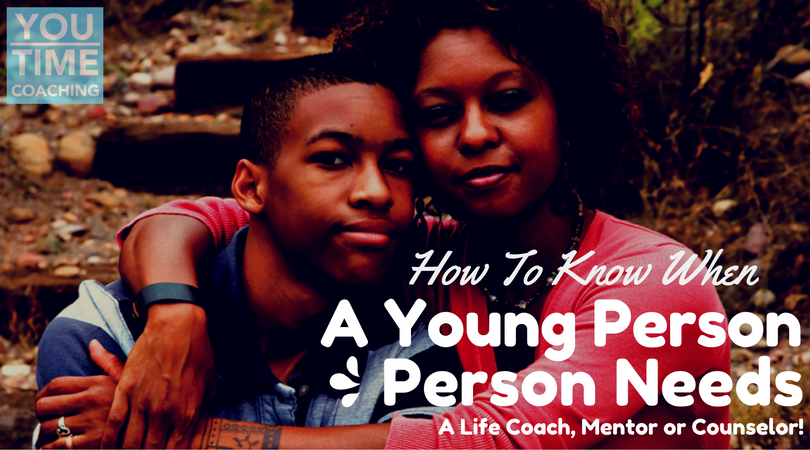
Even a healthy and well-adjusted young person will have their fair share mood swings, moments of pushing back, impulsive decisions, and overall lapses in judgement. This is why parenting a young person consistently takes the top spot in The New York Times’ list of “Top 10 Easiest Professions”… yeaaaa right.
Whether the young person is in high-school or college it can sometimes be quite challenging to distinguish between “normal” and “could use some help”. So let’s clear a couple things up first regarding “help”.
Stigma.
Yes, unfortunately “getting help” still carries a substantially heavy stigma with it. For instance, it is very easy to assume that when you seek out professional help that something is broken and needs to be fixed. The young person is not broken, and neither are you. Here are a few other stigmas that may keep you and the young person from benefiting from additional support.
Misconceptions about getting help for a high-school/college age young person:
- If I get help, I am weak.
- This means I am crazy.
- (Typically parents) This is a waste of money.
- All you do is talk about my feelings.
- I will get medicated.
- Other people will think it’s (I’m) weird.
Stigmas have the power to not only prevent a young person from getting more specialized support but in many cases can create pretty harmful negative beliefs about who they are, how they are doing, and what their options are to start feeling better.
From the very beginning of the process, YouTime Coaching implements many strategies to combat some of these misconceptions. Here are a couple:
Trust Trust Trust:
With young people, trust is huge. That is why YouTime Coaching focuses right away on building a safe, secure, and trusting relationship between the young person and their coach. We believe that the young person’s relationship with their coach within the first month will determine much of their success in their work together. The coaches use strategic communication styles, in-between session check-ins, and work hard to create an relaxed judgment free zone.
Breaking the “Parent-Young person” Dynamic:
Sometimes simply being a parent makes it challenging to talk about the “tough things” with your young person. They see you through the “parent filter”, while you see them through the “young person filter”. YouTime’s Coaches are young, genuinely compassionate, and have the natural ability to connect with young people where it may otherwise be challenging for a parent to break through.
Take a look at www.YouTimeCoach.com to learn more about the process of coaching with young person, parents, and families.
When to get specialized help for your young person?
With the exception of when the young person asks for it, knowing when to seek out help can be challenging. Having some insight to what your young person’s baseline behaviors are can be helpful in assessing their/your need for some extra support. Here are a few things to keep on your radar but keep in mind that simply because you may see a change in these areas does not not necessarily mean your young person is struggling. It just means, keep communicating with them and finding ways to meaningfully connect, all while keeping your finger on the pulse to see if more evidence points to a “would it help it get some support?” talk.
- Their social life.
Questions to think about:
Has their friend group noticeably changed?
Are they spending a lot more time on their own?
Are they now jumping pretty hard into the party scene?
Is the young person having noticeable challenges in balancing their social life with other areas?
- Communication.
Questions to think about:
Has the young person’s communication patterns (language used, frequency, depth) drastically changed?
Is the young person “asking for help” but not necessarily coming right out and saying it?
Do you notice a rapid shift in mood when communicating with the young person?
Are you lost on how to communicate with the young person?
Have others communicated their concerns with you? (friends, teachers, bosses, siblings..etc)
- Academics.
Questions to think about:
Is there a noticeable drop in grade?
Are you seeing frequent absences or tardiness at school/work?
Have you received concerned communication from teachers?
Is your young person having trouble concentrating/focusing?
*if any young person you’re with has shown open, serious, and/or committed signs of harming themselves or others, please do not hesitate, call 911 and get professional help right away.
Remember, these questions are good starting points to give you a better understanding of what conversations to have with the young person, a professional, or somebody already in their support circle.
At the end of the day, if you still feel like something may be “off” with your kid and need to further figure out a plan of action, reach out to YouTime Coaching at [email protected].