by YouTime Coaching | Mar 2, 2017 | Academics, Advice, Beliefs, Benefit, college, Decisions, high school, Preparation, steps, Success
A gap year is a year that students take between high school and college, usually doing some sort of structured, non-academic activity.
Sounds nuts. Why would anyone do this?
The reasons are many, but here are a few of the more common ones:
- A student is academically burnt out and needs a break from academics to recharge
- A student doesn’t yet have the maturity to succeed in college (did you know that the male brain and executive functioning capacity doesn’t fully mature until the late 20’s?!)
- A student has a passion that they want to pursue prior to college
- A student’s not that into the idea of college, (or parents aren’t that into the idea of dropping $200K on a “meh, I guess I’ll go” response)
- A student wants to gain more experience to then be able to make the best of college
- A student feels like they need another go at the college admissions process
Thinking the gap year might be right for your student? Here are some pros and cons to consider.
GAP YEAR: Pros
- According to an Australian study published in August in the Journal of Educational Psychology, taking a gap year is linked to higher motivation in college.
- Taking a structured Gap Year invariably serves to develop the individual into a more focused student with a better sense of purpose and engagement in the world.
- According to American Gap Association statistics, taking a gap year helped focus student academic and career paths: 84% say it helped them acquire skills to be successful in future careers, and 73% say the experience increased their college readiness.
GAP YEAR: Cons
- Some students may view the gap year as a vacation. Without a clear plan, the gap year can pass by without doing much positive good for your student. If your student isn’t willing to put in the work to plan a productive gap year, then they shouldn’t take one.
- Financial concerns can impact a student’s gap year. Not every parent can support their children completely during the gap year. Your student may need to work, or they may be able to secure a scholarship or grant from a gap year program or college.
Common Concerns
Even after discussing the pros and cons of a gap year, I typically hear three major concerns from parents:
- “Next year, my student will be ‘too old’ for college.” College isn’t high school: a college classroom often includes both lower- and upperclassmen, sometimes with graduate students or non-traditional students mixed in. Age is rarely an issue, especially a single year.
- “How do I know my student will go back to school?” This is one of my favorite excuses, because the best counter-argument is simply to wait until they work a full-time job. After 40-hour work weeks, most teenagers will beg to go back to school! In fact, according to a study, 90% of students who took a gap year ended up going back to school within a year. If you’re still concerned that your student may “drop out”, it may be wise to gain admission to a college that will allow a deferral enrollment for the following year.
- “Why should my student wait if s/he is ready now?” Adapting to a new set of academic and social responsibilities is not easy for everyone; the first semester of college is often a difficult transition. It can be fun and fulfilling to tackle these responsibilities on your own schedule, without the added burden of a strict class schedule, the stress of dorm living, or tuition. Your student may be ready intellectually now, but a gap year will likely leave them extremely prepared, not just ready.
If your student is considering a gap year, I always stress a well-rounded and structured approach, with an emphasis on personal growth. For example:
Summer: Apply for summer employment and begin planning for your upcoming fall.
September–January: You may want to participate in academic, social, and career enrichment opportunities specifically designed for gap years; some great places to find these opportunities are:
February–June:
- Apply for a job with the skills you learned from the fall, intern at a potential future workplace, or take a course at your local community college.
- You can also travel, especially if you needed the fall to help you save up for your trip.
July–September: Continue any of the opportunities you’ve started over the past year. Don’t forget to take time to relax and connect with friends!
The above plan is designed to help your student begin college after a gap year with a set of advantages: a rested mind, additional education (potentially in both the academic and career arenas), increased confidence from spending time in “the real world,” and an extra year of overall maturity. Too often, we allow personal growth to happen while we’re busy with other things. But especially during key transition times, the self should be the priority. Imagine how much more a student with a clear sense of passion and purpose can get out of the college experience!
Remember: college is ultimately about your student becoming their own person. Deferring enrollment until after a gap year can be a very rewarding stage on this personal journey, but only if it’s the right fit for your student!

Jay Bacrania CEO & Co-Founder of Signet Education
This blog was written by Signet Education’s CEO & Co-Founder, Jay Bacrania with assistance from Signet tutor, Matt Grzecki. Jay has worked extensively with both special needs and high achieving students. He has taken a broad academic path that spans the sciences and humanities. Jay holds an BA in Comparative Study of Religion from Harvard University and attended Berklee College of Music for two years for Jazz Trumpet Performance. Beyond tutoring, Jay is interested in managing and refining Signet Education. You can almost always bet on finding him there at all hours, teaching or finding ways to make Signet even better!
Signet Education provides exceptional individualized tutoring, test prep, admissions consulting, and organizational coaching for students.
by YouTime Coaching | Jan 18, 2017 | Attitudes, Behavior, Behavioral Change, Beliefs, Change, Commitment, Consistency, determination, Diet, Health, Mindset, Momentum, Preparation, Results, Therapy
Hey ladies and gentlemen, Captain Positive here to give you a dose of reality… the New Year may not be all that you are expecting. Fun fact is that people are absurdly good at reminiscing over all the good and bad things that have already happened in our past, but typically have more of an issue visualizing their future and things like New Year’s Resolutions take a major hit.
Not only do I bring you this wonderful news but I will also share with you, because it is quite important, the 3 things you can do in order to efficiently undermine your New Year’s resolutions.
After reading this blog you will basically be certified in how to teach others to properly screw up their plans for the New Year! (exciting… I know.) With this knowledge comes great power, because in order to be successful with your resolution(s) you must know what works in addition to whats makes you fall miserably on your face (and don’t worry, we all know that feeling). So the power is yours once you are done reading this. Choose how to use this information wisely.
[bctt tweet=”In order to be successful with your resolution(s) you must know what works in addition to whats makes you fall miserably on your face (and don’t worry, we all know that feeling).” username=”youtimecoaching”]
I present to you the “Reverse RPM” theory. As most of you know “RPM” stands for “revolutions per minute” and is a relative calculation of speed, so for this presentation the “Reverse RPM” theory will show you how to completely halt any forward progress, momentum, and speed you are looking to create for attaining your New Year’s goals.
Reverse RPM Theory
(R) Results
Problem:
Many of us have developed a wonderful tendency to be predominantly results and outcome driven. We start a diet and we only look to lose weight (and we better see results fast or on to the next diet found in Self Magazine).
Of the top ten most popular resolutions (Check them out here!) all of them take preparation, planning, and time. We typically undermine our resolutions by looking at them as short-term, outcome-oriented endeavors.
Solution:
A “New Year’s Resolution” is exactly that, a year-long resolution and goal. Do you stop going to the gym or eating healthy once you lose those 30 lbs. on June 21st of the new year? Well, you shouldn’t but lots of people do. Your resolution is a long-term goal that should be process-oriented, not simply outcome.
Sure you have an outcome in mind, but this outcome stays in your peripherals while the next small baby step stays in your direct line of vision. Your journey to get there needs to be clearly planned out, broken down, and assigned start/completion dates (download “My Mini Goals Worksheet” here).
(P) Preparation
Problem:
How many of you bozos knew that the new year started on a Monday? Who wants to get healthy and make changes over the weekend when you can start on Monday?! Are you going to dig yourself into a hole the weekend before or prepare yourself for an easier transition?
Assuming you already created a resolution, we can safely say that you have at least identified that there are behaviors that are problematic and stand in the way of your goals. Don’t we all! The first step after realizing you have “problem behaviors” is to prepare yourself in order to make the change. Unfortunately, our hedonistic (pleasure seeking) culture can sometimes force us into the “action stage” before proper planning. The result, 2 weeks of hard work towards your goal and reverting back to old ways (looks like your cigarettes will have their old best friend back).
Solution:
First, do a little detective work to figure out what your actual behaviors are, when they happen, and what triggers them (download “Track My Triggers and Patterns Worksheet” here). Second, really find out why you are looking to make these changes. First write down what positive benefits the change will bring to you (and others), followed by writing down how maintaining the problem behaviors have hurt you (and others).
Next, you must commit. Scream your goal from the biggest damn mountain top you can find (please don’t do this). Seriously though, tell friends and family what your intentions are with this resolution. People are more likely to feel accountable if others know what they are trying to do.
(M) Momentum
Problem:
Newton’s Law of Intertia (as it applies to New Year’s Resolutions)
An object at rest will remain at rest unless acted on by healthy and mindful decisions. An object in motion continues in motion with the same speed and in the same direction unless acted upon by your problematic behaviors.
Wait, so since I am going to be “all healthy and stuff” starting in January, that means I can shove my face with booze and food throughout the holidays and think of exercise as the walk to the bathroom. Don’t start in a hole.
Maybe I can smoke my face off and start fresh on January 1st. Or, since I will be saving so much money in the new year with my positive changes, I will definitely balance that out by spending tons of money over the holidays. Don’t start in a hole.
Don’t use December as an escape goat for your troublesome behaviors. This only will make things harder with a higher likelihood of failing to progress with your resolution.
Solution:
Start planning after the first week in December. Already into January? No problem! Part of successful goal setting is being flexible and adapting to what’s realistically going on around you. Spend 2 weeks planning out your path of success and seek out those that will support you in this (download the “My Support Team Worksheet” here). Most people try to begin their resolution after one of their most problematic months and that is a recipe for disaster! Set a realistic start date that allows you spend a couple week planning out your moves.
YouTime take home message:
Remember, knowledge is not power, it is only potential power. You have the choice in how to use it. So go on and use that huge brain of yours to properly plan or even screw up the new year and share your resolutions below!
by YouTime Coaching | Apr 15, 2014 | Beliefs, Change, choice, Growth, Life, Plant Based, Reiki, Vegan, Vegetarian
Everybody has been marginalized in their lifetime in some way.
Many involve all encompassing things such as religion, sexual orientation, and race, while others for less overt things like the way you dress, whether you like a particular sports team, what car you drive, or what job you work.
 What about the way you eat? Or even how compassionate you are?
People around the world have been marginalized for years for the very simple reason of not fitting into the mainstream “in-group”.
This blog interview illuminates and explores how an individual’s beliefs can change through their own life experience and how a little resistance from main-stream culture won’t stand in their way.
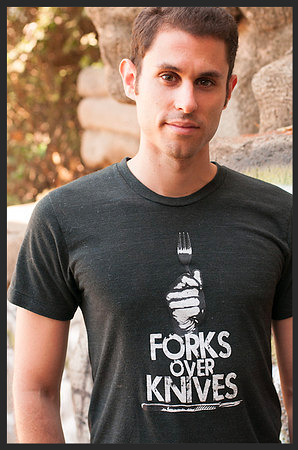
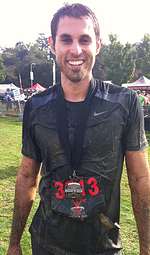 Steven Todd Smith is a Reiki Master Teacher and owner/creator of Reiki For Creative Minds. Also: a Life Nutrition Coach, Arbonne Independent Consultant, and Community Manager for Forks Over Knives.
There are a lot of “standard” questions to ask a vegan, “where do you get your protein?, “do you only eat salad?”, or “how do you not eat bacon?”. What is the oddest question you have been asked?
Because veganism is still not mainstream, even in large cities in 2014, there’s a handful of “interesting” questions that get asked here and there, mainly due to lack of information or misinformation. The oddest question I’ve been asked was “So can you still eat chicken?” A couple others: “Why do you care about animals more than humans?”, “But doesn’t that carrot you’re eating feel pain?”
I know that the number is astronomically growing, but what percentage of people are actually vegan or completely plant based?
Based on a recent Vegetarian Resource Group-commissioned Harris Interactive study, approximately 5% of the US population (≈16 million) is vegetarian and about half of that number is vegan. That ≈7.5-8 million has doubled since 2009. Even cooler is that 33% of Americans identify with eating vegan/vegetarian more often, though they are not vegan or vegetarian, according to the study. That’s 100+ million people eating plant-based on a more regular basis! Just thinking about the sweeping positive benefits in global health plus the number of animals being killed dropping brings me much joy PLUS knowing that, even though we’ve already done a good amount of damage to the planet re: factory farming’s deleterious effect on the environment, the steps we’re making to correct, to heal the planet will kick in sooner than later.
Being such a small group with a majority of people not sharing what you believe in, how do you continuously maintain your beliefs?
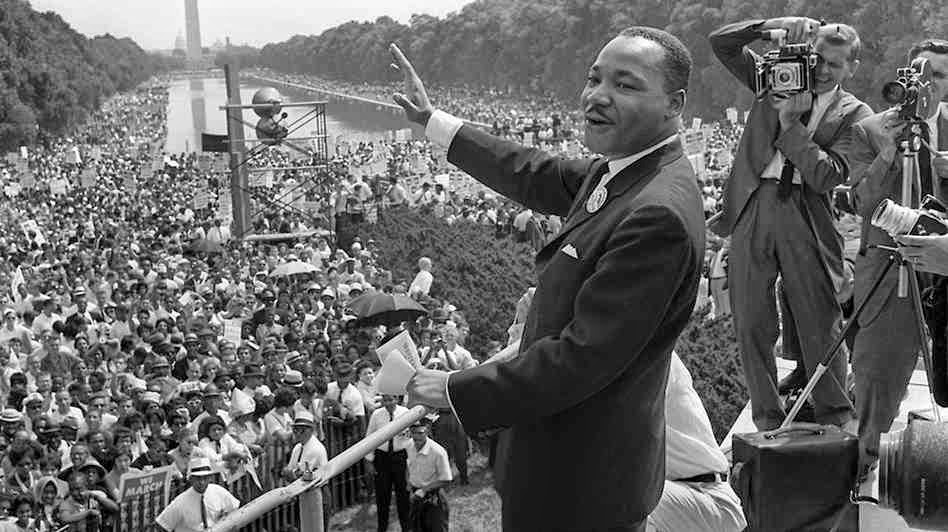
How did/has any minority group continue maintaining their beliefs? Sure, there’s a struggle, a greater wall of opposition to come up against. The Civil Rights movement, Women’s Rights movement, Gay Rights movement all believe(d) in the same thing – equality, compassion, justice, love. Same with veganism. These tenets, these beliefs are larger than life, no matter how small the overall population sharing them is. They guide me forward, giving them the amazing opportunity to share and spread them, to educate and enlighten. Once you connect to unconditional equality, justice, compassion, and love for all beings – human animals and non-human animals (obviously still in the context that non-human animals are not humans, and vice versa) – and truly believe in them, it’s impossible to go against that. And, on the surface level, I get to eat delicious food that cruelty-free and have fun with a community, that may be small overall but is locally very large!, that shares the same ideals.
Do you believe there are broader concepts and
values that could be shared amongst everybody?
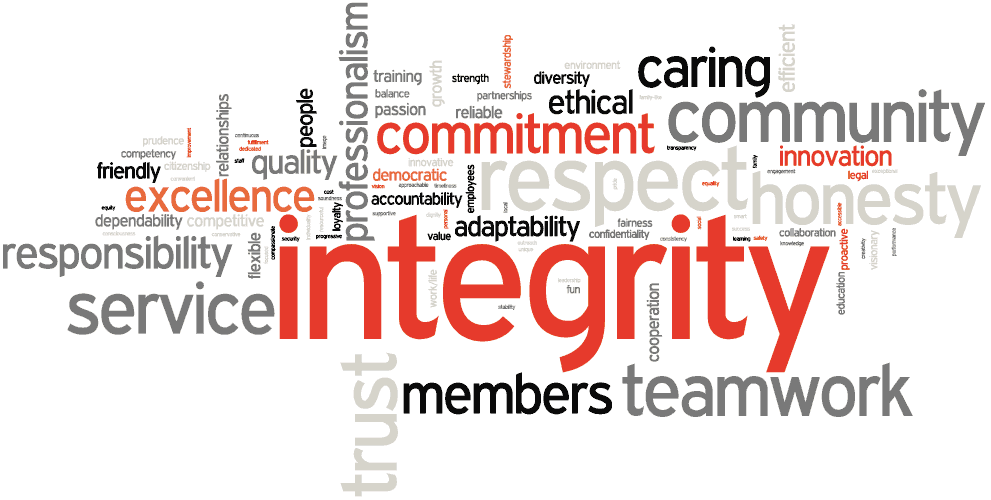 Yes, and it’s definitely worth repeating. Equality, justice, compassion, love. Also, kindness, awareness, sustainability, responsibility, living in alignment. All of these without conditions or bounds. When it comes to religion, faith, spirituality, it all comes back to love, no matter how many different twists and turns each individual one may take. And I’m not necessarily talking what’s stereotyped as “hippy-dippy kind of love,” (although, what’s wrong with that? Nothing.): I’m talking about loving your fellow Earthlings with whom you share this planet. What gives any one of us the right to confine, abuse, torture, or kill another being, whether it’s a dog, a cow, a person, a chicken, an elephant, a bear, a fish? I think love is a much stronger guide and force than hatred, than the need/want for power or greed. There are so many broader concepts and values that are already shared amongst a large majority of people in the world; the important transition/awakening happens when we realize we can extend those concepts and values to ALL living beings. Then, we’ll find ourselves truly living in alignment.
Many people find safety and security in having a firm set of beliefs. Do you find it easier to simply “live life” when you have a set of beliefs that direct your thoughts and behaviors?
I subscribe to a “strong-walled amoeba” approach. Having a set of guides/beliefs lead the way and protect me, something I can strongly and confidently connect to, while maintaining an open flexibility/receptivity to new ideas or beliefs that I may pick up and/or adopt along my life journey. I think living life in a black or white, immobile, immovable, steel box of beliefs will only prevent you from living fully, from connecting with other people and ideas on an understanding level of some sort. So, the openness and understanding from others that comes along with a solid faith allows for conversation and self-guidance. There are many benefits one will receive from living life with firm set of beliefs though, as much strength, character, individuality can be derived from them. Floating around with no foundation can be both scary and demoralizing.
You haven’t been vegan/plant-based your entire life. How hard was it to realize that your previous personal beliefs and values were in a sense “not the right ones” and how do you go about changing your beliefs?
Great question. As I’ve deepened my spiritual connection and practice and studied more what our purpose, as humans, is here on Earth during our lives, I begin to lean more toward the concept that our beliefs – we’ll say specifically of equality, compassion, justice, love – are always there; we just aren’t fully conscious and awakened to them yet. Sure, knowing what I know now, I wish I had been living vegan my whole life. But then my life wouldn’t be mine. The journey is just as important as the outcome, because it lays the foundation for the path you end up taking. The foundation – knowing your “Why?” – needs to be strong, have purpose, or any changed beliefs will easily revert back to old habits, patterns, actions, beliefs.
 While I had initial resistance because the new beliefs challenged my old ones, I entered with just the slightest openness and understanding, as mentioned above. That gave me the space to explore, learn, and experience. I had/sought support, dove into many different resources, and began to realize that veganism provided me with everything I actually was in alignment with in life. It was less of being wrong and then being right; it became my next powerful platform of growth. The difficulty came in the unknown part of the change: what will I eat?, how will I interact with others?, etc. Just like any change though – even from crawling as babies to learning/deciding to walk (not wrong to right, just the next step in personal growth) – the answers, regardless of the stumbles along the way, eventually came.
Steve, for those people out there now that question their own beliefs, what would you share to help them reach the same level of certainty you have that your beliefs are definitely the right ones for you?
It’s as easy as asking yourself: “Is this action I’m taking in
alignment with my greatest/deepest values in life?” For me, I realized contributing to an industry that promotes confinement, abuse, and killing was not in alignment with my values. I do not support confinement, abuse, and killing. Once I learned and realized I could take care of my own health, my own fulfillment, and help other beings on this planet, it became a simple decision. Sure, the journey between the question, the exploration, and the decision may be trickier and take a while (or maybe not…), but the feeling of consciously being in alignment is one of the greatest feelings you’ll experience.
So, truly ask yourself. Explore. Figure out if you’re serving both yourself and others with your beliefs; if not yourself, then it’s time to change. If not others, then it’s time to change. You can achieve both. We all can achieve both. Let go of the past (as the past is already past), tap into your present, your right now, and decide if what you are doing creates a better today AND future all around. You don’t have to know all the specifics; there’s a very good chance if the decision is in favor of equality, compassion, justice, and love, you’re heading in the optimal direction.
__________
 Steven Todd Smith is a Reiki Master Teacher and owner/creator of Reiki For Creative Minds. Also: a Life Nutrition Coach, Arbonne Independent Consultant, and Community Manager for Forks Over Knives. His passion for health, fitness, spirituality, and compassion run deep, as he’s been vegan for four and a half years and maintains an active yoga, gym, meditation, and running practice. A lover of all fun & games, especially board games, poker, and sports of almost any kind, Steven approaches life with a serious level of playfulness, always looking to infuse laughter and smiles into any situation. Has a BFA from NYU’s Tisch School of the Arts in Acting, Plant-Based Nutrition Certification from Cornell, and is a Certified Holistic Health Coach from the Institute for Integrative Nutrition. You can find out more about Reiki and Steve at www.reikiforcreativeminds.com.
by YouTime Coaching | Aug 20, 2013 | Behavior, Behavioral Change, Beliefs, Change, Energy, Focus, Outcomes, Stages of Change
Dr. John Norcross is a Professor of Psychology & Psychiatry as well as an expert on changing human behavior. With over 30 years of backed research the “Stages of Change” have been developed and have helped thousands of individual see sustainable personal/professional change.
Stemming from research based out of my undergraduate alma mater, University of Rhode Island, the “Trans-theoretical Model” became the go to formula for successful change.
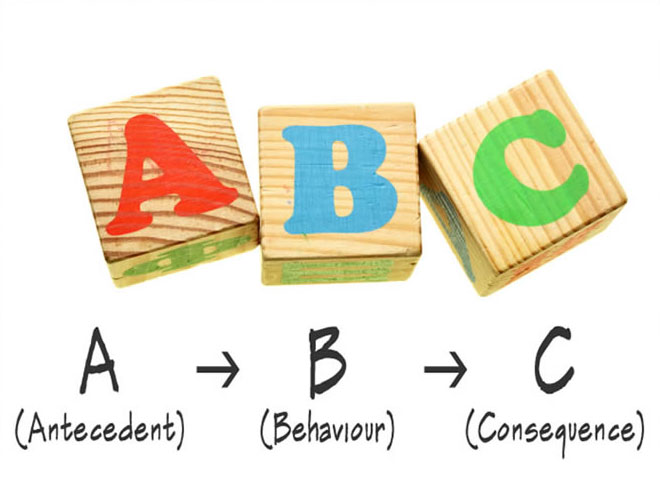
One aspect of change is to conduct a little detective work in identifying what may be wrong and why it is happening in the first place. This is commonly referred to as your “Behavioral Chain”.
A Little Bit About the ABC’s
Antecedents
- Occurs prior to the event and may trigger you to act a particular way.
- Can include your environment, the people around you, the interaction with the individuals with you, and your mood.
- Some detective questioning could include; Who are you with when you experience this behavior? What mood are you in when this behavior presents itself (sad, stressed, happy, bored, anxious…etc)? What time of day does this behavior typically come out (morning, day, night)?
Behavior
- The problem behavior
- Also, the healthy alternatives to the problem behavior.
Consequence
- Occur after the problem and usually rely on what the specific problem is.
- *BEWARE* Short-term consequences can be very rewarding (taste good, relaxing…etc)
- *BEWARE* Long-term consequences can be painful and destructive (heart disease, stroke, cancers, obesity, diabetes…etc)
- We favor instant gratification rather then delayed gratification.
- Recording long-term consequences is just as important as recording the short-term.
A few tips on how to use the ABC’s to change your behavior
- Explore the antecedents to your behavior and find healthy alternative environments and social groups to prevent triggers that promote your problem behavior.
- Create new healthier alternatives and substitutes to meet your need for variety, fun, and freedom. Learn a new relaxation technique or coping skills to get you through triggering antecedents.
- Reverse the consequence to your problem behavior and work backward through the ABC’s to see what new antecedents and behaviors are necessary to end up with this new outcome.
Check out this great worksheet for your
ABC’s and behavioral chain:
*Derived from Changeology By: John Norcross, PhD
by YouTime Coaching | Aug 13, 2013 | Beliefs, Change, Insight, Insight Fallacy, Motivation, Problems, Stages of Change, steps, Understanding
Have you ever explained something to a friend or family member and their response is, “I know, I know, I know”? They seem to fully grasp the idea, concept, or reason for something that is happening around them all too well.
Have you ever seen that same friend or family member that “understood” what and why something was happening, never change anything about it? Well, there’s a name for that.
In the field of Psychology it is referred to as the “Insight Fallacy”.
Insight Fallacy: The belief that understanding a problem will solve the problem.
When gaining insight into a problem it may help us by,
- Providing comfort, security, and safety in understanding what is wrong.
- Assisting in the development of new problem-solving strategies.
- Giving meaningful new understanding which will create harmony between our thoughts, emotions, and actions.
However nice this may sound, insight alone will not change the problem. In order to take effective steps in changing the problem, you must first identify a few things by answering these questions.
- Is there a problem at all? If so, what is it?
- Have a tried changing this problem in the past 6 months?
- Do I plan on doing something about this within the next 30 days?
If you have not identified a problem, you are most likely not going to do anything about it, besides saying “I know, I know, I know”. If you said “YES” to there being a problem, you must start thinking about how you are going to try and change it. Take a look at the “Stages of Change” and get a feel for where you may be.
For each stage there are different tasks to complete, so make sure you are honest in which one you may be in. Being in the wrong stage at the wrong time will lead to frustration, relapse, and a decline in confidence.
Take it one stage at a time, be patient with yourself, and know that there will be bumps in the journey.
You got this.
by YouTime Coaching | May 9, 2013 | Beliefs, Boston Marathon, Boston Strong, Confidence, Connections, Distress, Fear, Growth, Post Traumatic Growth, Post Traumatic Stress, Stress, Success, Support, The One Fund
In light of the recent bombings at the Boston Marathon and the massive numbers of individuals returning from war, our culture has become all too familiar with the term “post traumatic stress”. What most people are not as familiar with is the concept of
“Post Traumatic Growth”
Research involving individuals and their relationship to stress, pain, fear, and trauma have been around for thousands of years but the interest in Post Traumatic Growth began to steal some of the limelight in the 1990’s.
Post Traumatic Growth involves an individual’s path in adapting to sets of negative experiences that would normally cause psychological distress or harm. These events could include experiences with death, abuse, serious injury, natural disasters, relationships, accidents, and other potentially traumatic events.
Simply looking at this list you can understand why some individuals experience post traumatic stress.
BUT
What if there were a way to experience growth following traumatic events like those mentioned above?
Post Traumatic Growth Characteristics:
- Greater appreciation for life
- Shift in sense of priorities
- More genuine connections and relationships
- Increase sense of personal strength
- Recognition of new life paths and possibilities
Are you sold yet?
How can I get some Post Traumatic Growth?
1. First, you must have a belief system that supports growth.
Spirituality is a characteristic that has been closely linked to experiencing post traumatic growth, but the core concept behind this connection are the empowering beliefs a spiritual individual may possess.
Keep these in mind:
BELIEVE that you can grow from this
and
You are capable of this change.
2. You must have support
Support systems have been linked in post traumatic growth on many levels. Therapists, counselors, and life coaches (with proper training) can have great impacts on your ability to experience this growth, post traumatic event.
Surround yourself with genuine, insightful, and caring individuals that you feel comfortable sharing your life with. This could be the difference between growth and stress.
Conclusion:
- Be confident and open to being able to grow
- Develop a belief system that empowers and supports you in experiencing growth.
- Seek out opportunity to develop new genuine relationships and connections.
- Sniff out your most precious support systems and use them.
Lastly,
During the Boston Marathon I was watching the race in Kenmore Square (15 minute walk to the finish line), when I had heard what happened followed by a massive number of text messages, phone calls, and emails making sure I was okay. I want to thank those individuals and extend my heart and support to the families that were affected by these horrible events.
There is hope and there is strength within you to grow from this. Never loose sight of that.
All the best,
Jonathan B. Wolf, Ed.M.
Vitality, Performance, and Parent Coach
YouTime Coaching
Boston, MA
Contact:
[email protected]
(856)905-5410
If you would like to donate to The One Fund click the ribbon above: