
by Jonathan Wolf | Apr 17, 2025 | ADHD, Advice, Behavior, college, Communication, Consistency, Energy, Expectations, Focus, Mindset, Motivation, parents, Sports, Teenagers
ADHD and Why It Matters in Sports
ADHD (Attention Deficit Hyperactivity Disorder) affects millions of students — and a growing number of high school and college athletes. We can get one thing straight: ADHD isn’t just about forgetting homework or bouncing off walls — it also shows up on the field, court, track, or wherever your kid is trying to shine in sports.
While ADHD is often discussed in academic settings, it plays a big role in how athletes focus, train, compete, and recover. If your high school or college athlete has ADHD, you’ve probably seen it already. One second, they’re crushing it; the next, they’re staring into space while their coach explains a drill for the third time.
If you’re a parent of a student-athlete with ADHD, a high school or college athlete managing symptoms, or a coach working with neurodiverse players, understanding how ADHD impacts sports is crucial. Let’s talk about how ADHD messes with (and sometimes boosts) sports performance — and what to do about it.
Whether the young person is in middle-school, high-school or college it can sometimes be quite challenging to distinguish between “normal” and “could use some help” (especially these days). So let’s clear a couple things up first regarding “help”.
How ADHD Affects Athletic Performance
Athletes with ADHD may bring a ton of passion and energy to the field — but they also face unique challenges. Here’s how ADHD can influence sports:
INCONSISTENT FOCUS
- Trouble following multi-step instructions
- Drifting attention during plays, drills, or team meetings
- Zoning out at key moments
IMPULSIVE BEHAVIOR
- Jumping the gun on plays
- Taking risks without thinking them through
- Higher rates of fouls or penalties
EMOTIONAL REACTIVITY
- Frustration can spiral quickly after mistakes
- Trouble bouncing back from criticism or losses
- Difficulty regulating emotions under stress
SLEEP AND RECOVERY STRUGGLES
- Many athletes with ADHD have disrupted sleep cycles
- Poor sleep = slower reaction times, lower energy, and higher injury risk
INCREASED INJURY RISK
A study in Sports Health found that college athletes with ADHD are more likely to get injured — likely due to impulsivity or distraction during play.
ADHD Strengths in Sports
It’s not all challenges. In fact, ADHD can be a superpower in the right athletic environment.
- High energy: Ideal for high-intensity or endurance sports
- Hyper-focus: Being locked in and maintaining a deep concentration during games
- Creativity: Thinking outside the box can lead to smart and unexpected plays
Practical Strategies for Success
FOR STUDENT-ATHLETES WITH ADHD:
Use short-term goals:
Break practice into 10-15 minute mental time blocks with “missions” for each block.
Create a pre-game routine:
Use the same warm-up (include mental rehearsal, paced breathing, progressive muscle relaxation, and an inner-dialogue script to help cue/prime), create a “hype” and “chill” playlist, and be consistent because consistency = less chaos
Ask questions to get clarity:
Don’t pretend to understand a play — clarify it with one of the coaches or another player. Ask for DIRECTIONS or a different way of explaining something if you need it.
Move during downtime:
Stretch, pace, or shake out between drills
Cool down mentally:
Journal, breathe or debrief after games or practices
Prioritize sleep:
No screens in bed, and try to keep
consistent sleep/wake times
Work with your doctor on meds:
Timing matters for performance (with both stimulant and non-stimulant medications)
FOR coaches working WITH athletes who have ADHD:
keep instruction clear and short.
Adhd impacts working memory and sustained attention. Communicating in this way will help reduce some of those added challenges.
repeat key information or provide an ADDITIONAL visual or kinesthetic example
most people learn through a combination of teaching styles. some players may need you or a teammate to physically demonstrate, write directions down, or HAVE a visual cue, and others may need directions repeated.
allow movement between drills
Movement can help with focus. Come up with a couple of exercises and movements that are appropriate for the environment. the goal is to provide structure and support that will allow for self-regulation while minimizing distractions for others.
Don’t over-personalize the behaviors:
frequently, fidgeting AND quick/intense EMOTIONS can be perceived as disrespect. with someone who has adhd, it is typically far from the truth.
help build emotional resilience after setbacks:
Journal, breathe, or debrief after games and practices.
connection over consequence:
ask how you can support them, not just discipline them.
FOR parents of athletes with ADHD:
Build routines at home:
Focus on establishing routines around getting your gear together, meals and snacks, and bedtime
Talk to your kid(s) about how adhd can show up in sports:
Use this article or the resources at the end to guide your conversation.
normalize needing extra support
adhd is a NEURODEVELOPMENTAL disorder, not a character flaw. there are plenty of professional athletes facing the same struggle and need extra support.
advocate with coaches and school staff:
adhd support doesn’t stop in the classroom. plus, someone with adhd needs to have that advocacy muscle to flex. leading by example provides positive modeling for the young person.
focus on progress, not perfection:
Your kid’s inner critic is likely already too harsh, so focus on progress and the process VS. outcomes and perfection. adhd minds frequently have issues with “all or nothing thinking, “ so teach them to live in the gray sometimes.
Helpful ADHD Resources for Student-Athletes and Families
Helpful ADHD Resources for Student-Athletes and Families
Final Takeaway: ADHD Isn’t a Limitation — It’s a Playbook You Need to Learn
Whether you’re a parent, a coach, or an athlete on the field, understanding ADHD is the key to unlocking performance, potential, and peace of mind.
ADHD athletes are not broken—they’re just built differently. They can reach their optimal performance with the right structure, support, and mindset.
If you would like to find out more about our coaching, visit the ‘GET HELP NOW‘ page by clicking above or sending us a message below. You can also reach out to YouTime Coaching at [email protected].

by YouTime Coaching | Aug 22, 2017 | Mindset
The feeling when…
Somebody tells you to calm down when you’re angry.
When somebody is playing their music out loud on their cell phone in a public place.
When you are finished washing dishes and your significant other/mom/dad/sibling comes over with a dish they forgot to put in the sink.
When you are telling your kid something and they are obviously not listening.
When you are telling your parent something and they are obviously not listening.
When somebody’s rationale is “because I said so” or “this is my house”.
When you are trying to joke around but others are taking you seriously.
Sweating the small stuff?
Many people that do in fact sweat the small stuff. They will look at that list and come up with reasons why these items aren’t “small”. A case can be made for almost everything, but looking at these items from a third-party perspective (an outsider that has no skin in the game), this is the small stuff.
When we are exposed to these experiences our mind goes on a rampage. During that rampage, it can sometimes feel nearly impossible to regulate the weather going on inside your mind. Two executive functioning skills that get hit pretty hard are flexibility and emotional regulation. It is possible that you are predisposed to irritation, frustration, and anger but it is also possible that your reaction to these triggers is so automatic and fast that you don’t stand a chance in responding (versus reacting) differently.
If you feel like this, you also may also feel stuck in your ways. During a recent conversation with a client, I asked them, “What are you truly risking?”, in reference to anxiety-based behaviors. They responded, “feeling stupid and anxious”. My reply, “Feeling stupid and anxious is your fear, but not the real risk. The real risk is not developing healthy and positive relationships with people. The real risk is feeling like you aren’t part of something bigger and feel disconnected. All things that you have said you would like in your life.” Within one hour this client had a new perspective to see through and a greater feeling of importance to make necessary changes. What they really needed to see things differently was time and space from the issue.
A little extra time and mental space during these moments of frustration, stress, irritation, and anger can have a major impact. Follow these three steps to help better manage the “small stuff”.
LEARN MORE ABOUT YOUR BUTTONS
We have them and they get pressed from time to time. Maybe you know what sets you off, but take a few moments to write down the people, places, and things that you know are trouble zones. Being more aware of the triggers will better equip you to intervene.
PICTURE IT AND PREPARE FOR IT
If you know that you will be in a situation that could be triggering, try visualizing it before you are actually there. Take a look at The Swish Technique: click here
GET BACK IN TOUCH
We all know how to have a little compassion when a puppy has an accident, a baby spills their food, or when a 10-year-old says, “I’m stupid”. Practice showing compassion to yourself and the others around you by looking at them as a person, not just a comment or a trigger. Keep in mind that you are allowed to experience these emotions, so show some compassion to yourself as well. This could be through acknowledging and labeling what you are feeling as “frustration”, “anger”, or “irritation” instead of saying “I’m irritated”. These emotions do not define you and are only temporary states. Lastly, if you need some space, take it.
With gripping emotions such as irritation, frustration, and anger there are a lack of finger snapping solutions, but If you do try snapping your fingers during a moment of anger and it works, please call us and share your magic. Above are some solid steps to make positive changes with the relationships around you.

by YouTime Coaching | Jan 18, 2017 | Attitudes, Behavior, Behavioral Change, Beliefs, Change, Commitment, Consistency, determination, Diet, Health, Mindset, Momentum, Preparation, Results, Therapy
Hey ladies and gentlemen, Captain Positive here to give you a dose of reality… the New Year may not be all that you are expecting. Fun fact is that people are absurdly good at reminiscing over all the good and bad things that have already happened in our past, but typically have more of an issue visualizing their future and things like New Year’s Resolutions take a major hit.
Not only do I bring you this wonderful news but I will also share with you, because it is quite important, the 3 things you can do in order to efficiently undermine your New Year’s resolutions.
After reading this blog you will basically be certified in how to teach others to properly screw up their plans for the New Year! (exciting… I know.) With this knowledge comes great power, because in order to be successful with your resolution(s) you must know what works in addition to whats makes you fall miserably on your face (and don’t worry, we all know that feeling). So the power is yours once you are done reading this. Choose how to use this information wisely.
[bctt tweet=”In order to be successful with your resolution(s) you must know what works in addition to whats makes you fall miserably on your face (and don’t worry, we all know that feeling).” username=”youtimecoaching”]
I present to you the “Reverse RPM” theory. As most of you know “RPM” stands for “revolutions per minute” and is a relative calculation of speed, so for this presentation the “Reverse RPM” theory will show you how to completely halt any forward progress, momentum, and speed you are looking to create for attaining your New Year’s goals.
Reverse RPM Theory
(R) Results
Problem:
Many of us have developed a wonderful tendency to be predominantly results and outcome driven. We start a diet and we only look to lose weight (and we better see results fast or on to the next diet found in Self Magazine).
Of the top ten most popular resolutions (Check them out here!) all of them take preparation, planning, and time. We typically undermine our resolutions by looking at them as short-term, outcome-oriented endeavors.
Solution:
A “New Year’s Resolution” is exactly that, a year-long resolution and goal. Do you stop going to the gym or eating healthy once you lose those 30 lbs. on June 21st of the new year? Well, you shouldn’t but lots of people do. Your resolution is a long-term goal that should be process-oriented, not simply outcome.
Sure you have an outcome in mind, but this outcome stays in your peripherals while the next small baby step stays in your direct line of vision. Your journey to get there needs to be clearly planned out, broken down, and assigned start/completion dates (download “My Mini Goals Worksheet” here).
(P) Preparation
Problem:
How many of you bozos knew that the new year started on a Monday? Who wants to get healthy and make changes over the weekend when you can start on Monday?! Are you going to dig yourself into a hole the weekend before or prepare yourself for an easier transition?
Assuming you already created a resolution, we can safely say that you have at least identified that there are behaviors that are problematic and stand in the way of your goals. Don’t we all! The first step after realizing you have “problem behaviors” is to prepare yourself in order to make the change. Unfortunately, our hedonistic (pleasure seeking) culture can sometimes force us into the “action stage” before proper planning. The result, 2 weeks of hard work towards your goal and reverting back to old ways (looks like your cigarettes will have their old best friend back).
Solution:
First, do a little detective work to figure out what your actual behaviors are, when they happen, and what triggers them (download “Track My Triggers and Patterns Worksheet” here). Second, really find out why you are looking to make these changes. First write down what positive benefits the change will bring to you (and others), followed by writing down how maintaining the problem behaviors have hurt you (and others).
Next, you must commit. Scream your goal from the biggest damn mountain top you can find (please don’t do this). Seriously though, tell friends and family what your intentions are with this resolution. People are more likely to feel accountable if others know what they are trying to do.
(M) Momentum
Problem:
Newton’s Law of Intertia (as it applies to New Year’s Resolutions)
An object at rest will remain at rest unless acted on by healthy and mindful decisions. An object in motion continues in motion with the same speed and in the same direction unless acted upon by your problematic behaviors.
Wait, so since I am going to be “all healthy and stuff” starting in January, that means I can shove my face with booze and food throughout the holidays and think of exercise as the walk to the bathroom. Don’t start in a hole.
Maybe I can smoke my face off and start fresh on January 1st. Or, since I will be saving so much money in the new year with my positive changes, I will definitely balance that out by spending tons of money over the holidays. Don’t start in a hole.
Don’t use December as an escape goat for your troublesome behaviors. This only will make things harder with a higher likelihood of failing to progress with your resolution.
Solution:
Start planning after the first week in December. Already into January? No problem! Part of successful goal setting is being flexible and adapting to what’s realistically going on around you. Spend 2 weeks planning out your path of success and seek out those that will support you in this (download the “My Support Team Worksheet” here). Most people try to begin their resolution after one of their most problematic months and that is a recipe for disaster! Set a realistic start date that allows you spend a couple week planning out your moves.
YouTime take home message:
Remember, knowledge is not power, it is only potential power. You have the choice in how to use it. So go on and use that huge brain of yours to properly plan or even screw up the new year and share your resolutions below!
by YouTime Coaching | Jul 22, 2012 | Action, Anxiety, Beliefs, Certainty, Direction, Doc Wayne, Human Needs, Jobs, Mindset, Results, Tony Robbins |
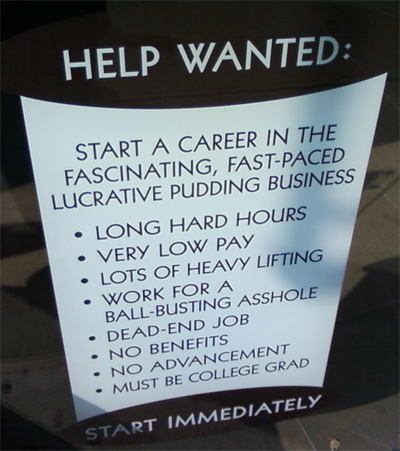
Remember when graduating from a College or University was a big deal for you and your family?
A decade later a belief that getting a Master’s degree was the new undergraduate degree?
And now, is getting a Doctorate the new norm?
The point is, WE DO NOT KNOW.
All of the assumptions about job certainty, salary, and the freedom to find enjoyable employment are up in the air with whatever degree you have. I was just forwarded the other day an article about how there is a massive increase in PhD level individuals that are receiving food stamps!
That screams uncertainty.
Last time I checked, “Certainty” was one of our 6 Humans Needs that we constantly try to fulfill.
When individuals, like you and I, do not have Certainty we have a higher tendency to be anxious, fearful, and stressed, which will very rarely help you find a job.
 |
| In the interview, notice how much focus is on Growth and Contribution for Becky. |
Today I want to share with you an great example of a success story.
Her name is Rebekah and she has a job she loves. Rebekah and I sat down for a wonderful interview about her search for meaningful employment, how tough it was, her mindset going into the experience, and what results she saw. ENJOY!
Keep this quote in mind as you read the interview with Becky:
“When you know somebody’s strategy, you can duplicate ANYTHING great that has ever been done”
– Tony Robbins, Peak Performance Strategist
YouTime: Becky, you graduated from Boston University with a Master’s degree in Counseling with a specialization in Sport Psychology, did you believe finding a job would be an easy task?
Becky: Well, while I was in school I thought it would be easy but as I started hearing from professors, advisers, and peers that finding a job in the Sport Psychology field was very tough and that you would need to develop your own niche, I began to think twice.
YouTime: So after getting some of that feedback, how did it affect your mindset and beliefs about finding employment after graduation?
Becky: It was important that I stayed positive but had to be realistic about what I was about to dive into. The realistic part allowed me to go outside of getting the “perfect job”. I started to think of different types of jobs that I would be willing to work at. In the end, this helped widen my scope of possibilities.
 |
| Seem all too familiar? |
YouTime: After you shifted your mindset and beliefs to being more positive and realistic, how did the job search actually play out?
Becky: It was a lot of work. I spent a lot of time connecting with the resources around me, friends, family, old colleagues, LinkedIn, and online job sites to find opportunities. I put in a lot of time doing searches, sending out materials, and following up.
YouTime: It sounds like you took a lot of action.
Becky: After school I was ready to move on to work and it definitely helped motivate me.
YouTime: So what kind of results did you see from the work you put in?
Becky: I had 5 interviews in 5 days and got a job within a month of graduating. I ultimately found the job on Craigslist.
YouTime: Those are some pretty impressive results! I am sure it felt great to have all your hard work pay off.
Becky: It definitely did. It was funny, I had to choose between a few different opportunities and decided to take a job I was supposedly “over-qualified” for and payed the least.
YouTime: What motivated you to make that decision?
Becky: When I went for the interview and found out more details about the job, which was a position in an all girls residential facility, I knew that I could help these kids without even meeting them. I couldn’t quite put my finger on it, but I knew a could contribute something great to their lives. It worked out great, this is how I connected with Doc Wayne and began working for them.
YouTime: Now you are the General Manager at the Doc Wayne Athletic League and have such an integral role in many youth’s lives. That must be very rewarding. Do you feel as though the role at Doc Wayne allows you to grow as an individual?
Becky: Before coming here I didn’t know my strengths as well and I didn’t have much self-confidence. I felt like I was just one person in a group of people with the same skills and strengths. Doc Wayne has helped me find my specialization in working with people and my strengths (once fears) of public speaking, working with trauma victims, and adolescent girls. When I was told I would be the “voice of the kids” the anxiety of public speaking left and I knew now that I had to advocate for them.
This is Becky, somebody who truly believes in their work.
What we can learn from Becky, her mindset, and experience is:
1. Your beliefs will directly impact your results
2. A massive amount of action must be taken
3. A shift in beliefs may be necessary to reach your outcome.
4. Look for something you enjoy, just because you are good at it doesn’t mean you will enjoy it.
5. Understand how it helps you grow and contribute outside of yourself.
- Neglect/Abuse Victims
- Under-served Kids
- Sexually Exploited and Trafficked Kids
- Impoverished Kids
- Mentally Ill kids
- Differently-Abled
- Truant Kids
Rebekah Conway Roulier, Ed.M. is the General Manager at the Doc Wayne Athletic League, Inc. a 501 (c)(3) and is responsible for sports programs and training of coaches in current and future markets, the enhancement of the organization’s do the good (DtG) therapeutic curriculum and management of the monitoring and evaluation systems. She comes to the Doc Wayne with an Ed.M. in Counseling with a Specialization in Sport Psychology and with extensive experience in coaching and work in youth services.
Rebekah has a B.A and Ed.M. from Boston University. Rebekah’s work with victims of complex trauma and underserved children includes experience in a residential treatment center, a position as an identity building consultant, and instructor for a positive psychology and sports program serving children and adolescents in the California juvenile justice system. She recently presented at The Northeast Atlantic Sport Psychology Conference (Philadelphia, PA) on “The Use of Sport in the Behavioral Health Treatment of Youth,” was a panelist on “Young Minds Behind Bars: The State of Mental Health Care within the Juvenile Justice System” sponsored by Wheelock College and presented on the ethics of sport at Moving Traditions Celebr8-U Conference.