by YouTime Coaching | Jun 25, 2019 | Advice, Anxiety, Arguments, Behavior, Emotions, Expectations, Failure, parenting, parents, Uncategorized
The gymnastics of raising a child is one of the most memorable and rewarding experiences even when the role of being a parent challenges us to the core. Reactive Parenting is a direct response to those challenges.
Parenting is unique as it tests your boundaries on a daily basis and those tests frequently evolve. As a kid develops from infancy through adolescence and early adulthood, they will provide a parent with plenty of opportunities to carve out their own style of handling all that is thrown at them.
The way that a parent communicates and interacts with their child can affect their overall functioning and development in a multitude of ways. While there are pros and cons to various existing parenting techniques, one of the most detrimental is reactive parenting. Keep in mind that parents exhibit a variety of parenting styles and this is not an “all or nothing” discussion. We are talking about when reactive parenting dominates the household, drives most of the interactions, and is (for whatever reason) the most frequent “go to” response.
Reactive parenting is where a parent, acts on
their emotions when responding to a child’s
behavior.
This often times results in interactions fueled by anger, aggression, irritation, and hostility. Some examples of reactive parenting include using the phrases, “Stop” or “Right. We will not be going to/doing that” or constantly using commanding language like “Do/don’t do that”. These types of interactions will find their way into day to day life with a child and in some cases are necessary.
As someone who was born in 1985, I am very aware of the “snowflake” argument. Some parents attempt to raise their kids without reprimanding them, avoiding the use of words such as “no” or “bad (girl/boy)”. While the solution in many minds is likely quite simple, the problems are typically a little more complex. Parents verbalizing criticisms will not disappear any time soon and this is not inherently the problem. Projecting you’re own anger, impatience, and frustrations onto a child is an issues that falls in-line with reactive parenting and will usually come with direct side effects. So, what are some of the reasons for why a parent might be more reactive instead of proactive in their approach to parenting?
Three reasons for being prone to reactive parenting:
- Feeling overwhelmed
One of the most frequent things you hear from new parents is that there is a severe lack of sleep. Now that the kids are a little more grown up it doesn’t mean that things like work, relationships, money, or other sources of stress won’t interrupt your sleep cycle. Lack of sleep is a huge contributor to stress and anxiety.
Just think of visiting a friend who just got a puppy. It small, fuzzy, cuddly, cute and screams, “take me home” with their eyes. Suddenly, it pees on the ground. Do you, A) Point your finger at it and yell “bad dog” and stick their nose in it, B) Hit and yell at the puppy, C) Not get angry, because after all it’s not your house, not your puppy, and not your problem. So you just let the owner know what happened (please choose “C”). You are able to do this because you are able to separate yourself from the emotions around the puppy having an accident. You create space for objectivity. Also, keep in mind that the catalyst for being stressed/overwhelmed could be something unrelated to your kid (but your kid won’t know this).
2. H.A.L.T.: Feeling Hunger, Anger, Loneliness, and/or Tiredness
The H.A.L.T. strategy can help identify times where you need to take a step back, create some space, satisfy an underlying need, and re-approach more strategically. When you first wake up, come home from work, had a late night, had an argument (you get it), simply ask yourself if you are hungry, angry, lonely, or tired. If so, find a way to meet that need before moving forward with any other major decisions, conversations, or interactions.
3. Negatively reinforced learned behavior from other parental figures
This is just one of the reasons why reactive parenting is so detrimental to child behavior. The parent-child relationship is the first major relationship to develop in a child’s life and shapes the child’s perspective of what healthy relationships should look like. You are a parent, but at one point was a child with parents that had particular parenting styles. Sometimes particular behaviors are replicated when that was what you were raised like, while others are sometimes overcompensated to “prevent” feelings that you had growing up. These forces that impact our behaviors or sometimes invisible to us, so take a second to think about how your biography is shaping your child’s prologue.
Reactive parenting could lead children into thinking that negative and even abusive relationships are normal when they really are not. Children learn a substantial amount of how the world works and how they should behave in the world from their parents. Therefore, parents who use reactive parenting are teaching their children that reacting with anger and frustration towards their children is the correct way to parent.
Curious about your parenting style? Try Psych Central’s Parenting Style Quiz HERE.
by YouTime Coaching | May 9, 2019 | Academics, Advice, alcohol, Anxiety, Arguments, Behavior, Certainty, Children, Communication, Confidence, Depression, Expectations, Fear, happiness, Motivation, parenting, parents, Relationships, Sadness, Self-Esteem, Teenagers, Uncategorized, Uncertainty
As hard as it is to admit, when I was in high-school, I bullied kids. Let me explain…
I didn’t take their lunches (I was a 6ft lanky fella who could have easily been beat up), get in physical fights, give out wedgies and hang them up by their underwear, or shove people into lockers. I was into sports, had popular friends, usually had a popular girlfriend, was invited to junior and senior parties as a freshman and sophomore, and dressed nice.
On the inside, none of that shit really mattered. I was incredibly anxious, insecure (pro at hiding it), constantly questioned where I stood in the eyes of others and typically felt inadequate because of self-comparison.
My bullying method of choice in high-school was mental warfare. I would insult other people about how they looked, moved, ate, spoke, and just about anything else they was available for others to see. In my insecure teenage mind, if I put someone down 10 social/confidence points then I would go up 10 points and so on. Making fun of others to feel better about myself was the currency and I was rich in that respect, but oh was I super fucking poor in more important areas.
You see, I had convinced myself that this was the fast way to feeling confident, happy, accepted, and comfortable. Unfortunately, this method breeds the opposite feelings and sets you on a really challenging trajectory.
A kid’s search for acceptance is very messy.
As a parent, you may not agree with the decisions your kid is making and that is completely fine. Coming from a place of, “I can understand why you would do this but it doesn’t make it excusable”, is a healthy mindset.
As a Freshman on Varsity soccer and baseball, I was hanging out with the “super cool” Juniors and Seniors. I started smoking weed, drinking, and finding ways to “fit in” with others because I wasn’t sure at all about myself. I managed to get “good enough” grades so people would stay off my back and expect just a little less out of me compared to others. I got into trouble at home and in school, with the exception being sports. Sports was special because I was able to channel many of the tough emotions (anger/sadness) into physical output. It was the closet thing I knew to a direct correlation between how much personal effort I put in and how much positive feedback I got out of it. It kept me more in line than anything else at the time.
One thing I know for sure is that if you put all your eggs in one basket for support, as a crutch, and tie it to your identify then you run the risk of a crisis down the line. That’s what happened next.
After high-school graduation, I moved up to New England to play baseball for the University of Rhode Island (notice how I didn’t say “to be a student” or “to major in…”). On September 17th, which just so happened to be my birthday as well as two weeks after I moved-in and less than a week before training started, I broke my left pitching elbow. Getting my legs taken out from under me playing (sober) soccer on a basketball court did me in. It was the ending of baseball career before if started and the beginning of a crisis.
I have to be a student now?
That’s not what I signed up for but it was my new reality. It caused significant anxiety, panic attacks, a desire to isolate myself. Since I’m left handed and broke that elbow, I couldn’t write and so I stopped going to a lot of classes or just never took notes which led to my gpa being an impressive 2.4.
Things got a little worse before they got massively better and I credit where I’m at today with reaching out for outside support.
In the final two years of undergrad, my gpa was almost a 4.0. The first year out I worked psych research with detained adolescence, got accepted and went to Boston University’s Sport Psychology and Counseling Master’s program (on a 75% scholarship and finishing with a 3.9 gpa), and have been running a Youth, Family, and Adult Life Coaching company for 10+ years.
We live in a world where it’s all too common for kids to be shamed for their weirdness and uniqueness. It teaches them to turn AWAY from their uniqueness and TOWARD… acceptance.
With kids, this basically means trying to “fit in”, conform, and act within the group norms. Conformity has its appropriate place and time as does groups norms, but having kids turn AWAY from their weirdness and uniqueness because of shame, uncertainty of what their social status will be, or whether they think others (including parents) will accept them will in no doubt backfire for them in the future.
Every week, I see the impact this has on young people. I hear them share perspectives and stories on how they feel as though they are “putting on a show”, “don’t know who they are”, “will lose friends in a second if they don’t…[insert superficial factor]”, how they “don’t feel good enough”, and how they “feel that they can’t act like themselves around their parents and most of their friends”.
I see a little bit of me in each of them.
It’s sad, but it’s real and the solution starts at home. Parenting is tough, being a kid is tough, and it’s not about placing your kid in a bubble. No bulldozer, helicopter, or tiger parenting here. We need to get back to a place where we put down our screens, have them put theirs down too, listen and communicate with empathy and honesty, find out what kinds of weirdness/uniqueness they have, help them explore it, and teach them ways to persevere.
Parents need to have boundaries (which are seen as a source of love from kids), talk about the tough topics, incentivize healthy behavior but also (appropriately) discipline poor choices. Yes, this can be done compassionately and keeping in tact the message that you love and support them.
This can happen anywhere, but it starts in the home.
by YouTime Coaching | Mar 14, 2019 | Academics, Children, college, determination, Emotions, Focus, Motivation, parenting, parents, Support
Will your kid struggle as a freshman in college? Absolutely. Does the experience always need to be negative and feel like nothing good comes from it? Absolutely not.
When a kid is sent to college the exodus from being a child and living within their parent’s home to being a young adult truly begins. One major problem… teenagers being forced into an adult world, without being mentally equipped and prepared like an adult can lead to a lot of… [parents, fill in the blank]
Now Mom and Dad, please sit down and take three deep breathes because things are going to be alright.
Download our free parent assessment to see if your kid is truly
struggling and needs some additional support:
The Skinny On Your Freshman’s Struggle
Sure, your freshman kid could sustain some physical and emotional wounds during their college experience, but you kind of signed them up for it. Listen, all those nights you got on them for watching tv and making sure they started studying, the nights you made them their favorite dinner, those times you washed/dried their clothes (and probably folded), and the genuine efforts to hold to an 11pm curfew has all finally paid off.
They will have to do most or all of these things on their own now! [cue horror film music]
The question isn’t, “will my kid struggle?” it is, “how will they struggle and how will we respond?”.
To help you out a bit, here are some of the top re-occurring struggles for college students. I’ll include some pointers and a few “heads-up”.
[bctt tweet=”Kid struggling at school? Tweet us about it with the hashtag #thestruggleisreal” username=”@YouTimeCoaching”]
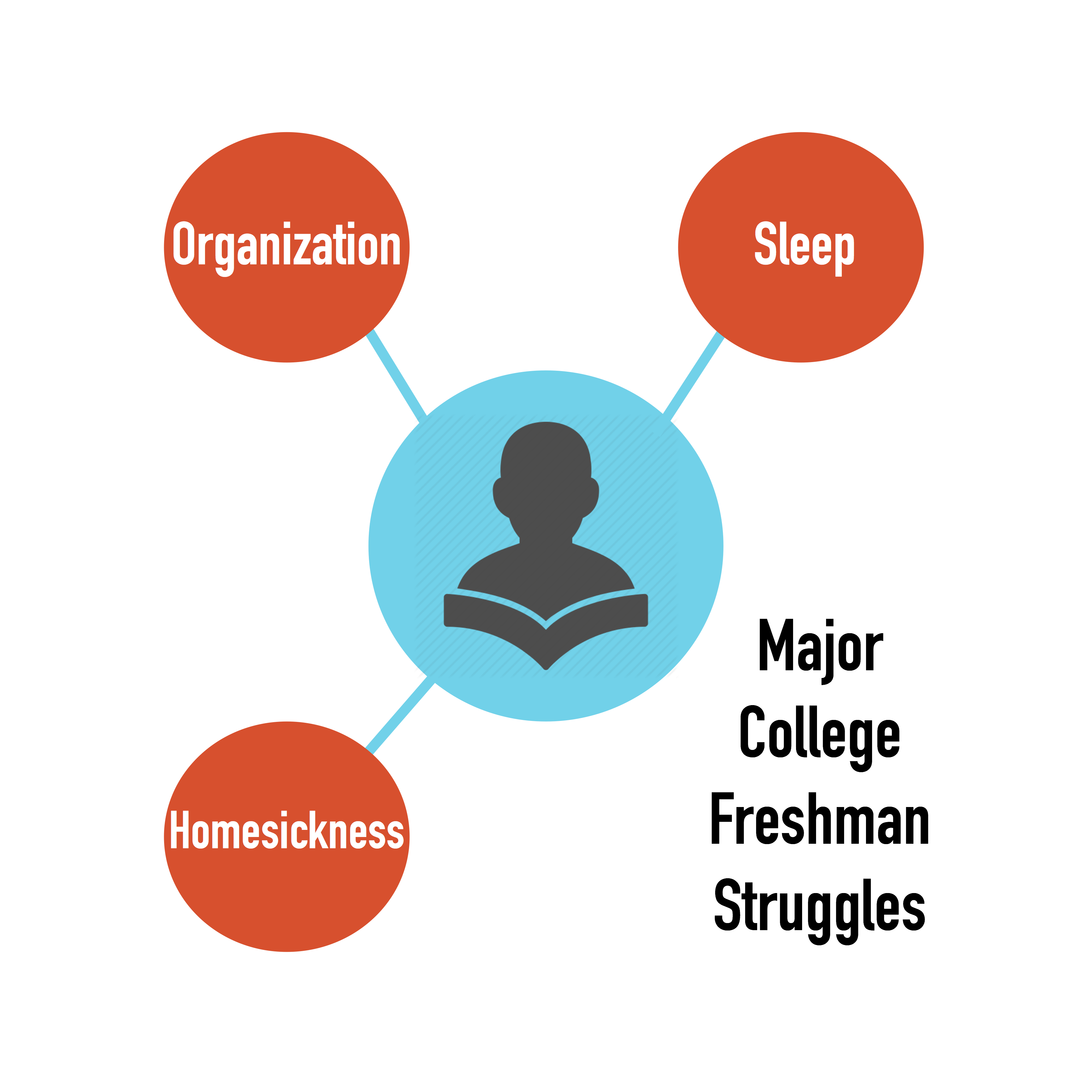
A FEW TOP COLLEGE STRUGGLES:
 1. Homesickness
Some parents love the fact that their kid misses home, while also sympathizing with them. Keep in mind that homesickness is just as much about needs that are not being met at school as it is missing what they used to have. When you do get the coveted phone call from your freshman kid at school, listen to them closely and just maybe you will be able to see if their homesickness is a result of having challenging classes, finding it hard to connect with others, or if they simply want a care package mailed to them (always a winner).
2. Organization
College is typically more demanding than high-school in terms of work and very frequently much less structured in terms of homework/study time. This transition can be challenging for freshman and It is common to see a slip in grades because of this in addition to managing all their new freedoms. From frequently losing their cell phone or homework to their train of thought, organization can impact both physical and mental arenas. If your freshman kid shows signs of struggle with their organization skills, don’t panic. Together, look into a coaching program like www.YouTimeCoach.com and/or looking into the schools learning center services.
3. Sleep
When we are the ones lacking sleep, it is easy to notice the difference. Freshmen in college have this notion that they must perform at least 4 all-nighters the first semester, set a world record for cups of coffee or red bulls in a night, and put their ZZZ’s on the back burner. The reason behind this could be school work, a noisy environment, health issues, or higher priorities (pretty much everything). The college experience has so much to offer a freshman student, but this can create some priority confusion and FOMO (fear of missing out). A little trick, as your kid comes back for the holiday, take note of their sleep patterns. Typically the kids pulling late night study (or party) sessions will sleep in pretty late the first few nights home.
Keep these pieces of information handy for when your kid shows signs and symptoms of struggle. The best thing you can do for your kid is to be supportive, actively listen to them, empathize, and practice the skill of being non-judgmental. The pay off will be far greater than reacting through fear and anxiety.
Any questions regarding your kid, college, and their struggles?
Please email [email protected] or go to www.YouTimeCoach.com and click on the “Hire Us” page.

by YouTime Coaching | Feb 28, 2019 | Behavior, behavioral issues, Brain, Children, Control, Health, parenting
If you, a friend, family member, significant other, or even an imaginary friend have ADHD, then you know a couple things to be true.
First, chronic procrastination, disorganization, and poor sleep habits are at the core. Even so, please don’t let this fool you.
Let’s face the truth, there are stigmas, biases, and stereotypes about anyone with ADHD (kids and adults with ADHD have their own “special” stigmas…etc). Looking at someone else’s eight or ten year old kid and saying, “Well, glad thats not my problem.”, “That kid needs to be on meds.”, “Their parents need to really control them better.”…. and you get the point.
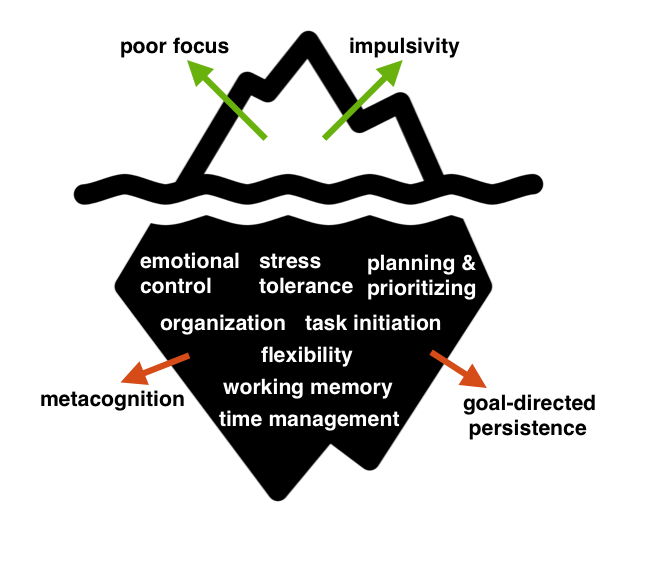
ADHD is like an iceberg.
I know you have all heard the analogies about icebergs, and at this point it may be getting old, but for your kid’s sake stick with me because the each iceberg analogy equally deserves its own attention, especially when we are talking about a disorder that effects sustained attention. You can do it. I think you get the point… below the surface can get messy.
Practice: Acknowledge and let go of your assumptions
Assumptions can lead us down some slippery paths, but more importantly it drastically affects our approach to problems and challenges. When we make assumptions, it impacts the experience of everyone involved.
Use your imagination and visualize any tough situation for your kid. Don’t go for the home run on this, simply choose something that brings up moderate levels of emotion. Now just sit there, think about this scenario, and complete a couple exercises.
• Take a second and write down what feelings come up for you (stress, irritation, anger…etc).
• Make a list of the reasons why you believe caused this to happen (laziness, not being motivated…etc).
• Sit down for one minute and breathe. Focus on your lungs expanding on your in breathe and your muscles softening on your out breathe. If your mind drifts to a distraction, bring yourself back to your breathe. Just one minute.
• After your minute of breathing ask yourself, could there be any other reason behind my child’s behavior? Could your child’s intentions behind the behavior be different than you thought?
At the end of the day, you can afford to take a minute and step away from an emotionally charged situation. This time away can help you gain just a little more clarity and open-mindedness, which last time I checked can go a long way to a kid.
*this blog was derived from the amazing book Mindful Parenting for ADHD by Dr. Mark Bertin.
by YouTime Coaching | Feb 24, 2019 | Growth, parenting, positive reinforcement
“My ADHD child never gets angry.”, said nobody ever.
We will keep this article short and sweet. When your child gets irritated, upset, and loses their cool it totally takes a toll on a parent’s emotional balance. While your child is busy making themselves feel heard and noticed, you may also feel inclined to do so.
Regardless of how irrational or unpredictable your child’s defiance or anger may be, there is one thing we know to be true. Whether you like it or not, when your kid “falls apart” it is very easy and common for parents to “fall apart” as well.
[bctt tweet=”When your child gets irritated, upset, and loses their cool it totally takes a toll on a parent’s emotional balance, but there are ways to handle it properly!” username=”@youtimecoaching”]
This can present itself in a few ways…
• You start yelling or “not using your regular tone of voice”.
• There’s an increased inclination to punish your kid.
• More susceptible to excusing broken boundaries (avoidance conflict mode)
• The parent can shut down and stop communication (ex. “I don’t have time for this!”)
• You stop listening to your kid altogether.
DOWNLOAD: 10 Parenting Strategies For Raising Children With ADHD….
That Actually Work!
Don’t get me wrong, this is not putting all of it on the parents. In the end, you want to be the best support possible for your child, while also keeping your head screwed on straight and staying within your skill-set. Doing this will bring you BOTH relief.
[bctt tweet=”Tips to bring you and your children relief when parenting your angry kid with #ADHD.” username=”@youtimecoaching”]
Having a child with ADHD means they may already struggle with impulsive behaviors, trouble regulating emotions, or could have a low-stress tolerance. Remember in many cases, how your child perceives the situation could be at the heart of the anger.
First, ask yourself, why is my child upset?
… they don’t feel heard or noticed
… they don’t fully understand the problem (needs help processing it)
… they can’t see other options to the issue
… there is a “layered stress effect” from other things going on in their life
… they are hungry, lonely, or tired
While I am sure you can come up with more (I have been amazed at what upsets young people), the point is that the source can be many things.
As a parent, I will throw you a bone.
Here are two things you need to know and practice when your child is “falling apart”.
1. Don’t fall apart. Be the tone.
Sorry, I had to say it. The truth is that when your child is going through this moment of suffering you can practice observing with a nonjudgmental approach. Take a breath and listen to them, EVEN if their anger seems to be turned towards you (parents typically take the brunt of the storm #truth). Set the tone with your child and practice patience, understanding, and observe their moment of suffering (I know it is occasionally hard to feel empathetic/sympathetic towards your kid during these times, and that is more about the moment of suffering you are experiencing. Be kind to yourself, by being calm and patient, and the effects will spread to your kid.
2. Know your “tendencies” when you reach your limits.
Some parents completely disengage from their kids when they have had enough. We call it the “whatever” parent (if you are a “whatever” parents, email info@youtimecoaching ASAP). Other parents will tend to assign harsher punishments as a sign that they have had enough. Discipline is much more effective than punishments. Look at the previous punishments you have assigned and see the effectiveness (…does your kid still leave his crap all of the place? Probably.). With discipline, you are shaping your child’s behaviors and reinforcing the desired ones. If they are yelling, remain calm, do not react to it, listen to what they are saying (and where it is coming from), and model the voice tone and language you wish to hear. You may even have to ask them calmly to speak softer or have this conversation in a different environment.
Parenting quote for the day:
“Don’t yell at your kids. Lean in real close and whisper, it’s much scarier.”
DOWNLOAD: 10 Parenting Strategies For Raising Children With ADHD….
That Actually Work!