The stress of being a full-time teenager has recently changed.
Parenting and being a teen looks very different today than compared to 6 months ago. Being a teenager stuck at home, with all of these imposed changes and not as many obvious outlets can be a disastrous equation. It is not easy. Between the pressures of everyday life as well as their developmental change, it is normal for teenagers to experience what seems to be crazy levels of stress.
It beats being in school.
I’ve recently heard this statement from clients a number of times. Of course, there is truth to it and you have to acknowledge this point as a parent. There are three specific things to keep in mind when it comes to your teen during what could be an extremely challenging time. (not all may apply to your teen and it varies to what degree they may experience them)
THE FIRST POINT: Teens can struggle to see “the bigger picture”. I refer to this as metacognition. When working with teens, they honestly don’t give a shit about hearing the actual word (metacognition) and in fact, are quite bored by words that are unnecessarily long, hard to spell, and don’t seem personally relevant. So, I spend very little time on the word itself and jump into the concepts of “bigger picture”, “taking a step back”, and objective thinking. The visual of being able to experience your (stress/anxiety/depression) “storm” through looking out of a window inside the house versus being in the middle of the storm itself.
Right now, there are plenty of opportunities to be swept away in the sea of news, social media, fear, uncertainty, and imposed lifestyle changes. When a teen has trouble really seeing the bigger picture, it typically forces them to pursue things that are more based on instant gratification and avoidance. Here enters the wonderful world of technology and my second point.
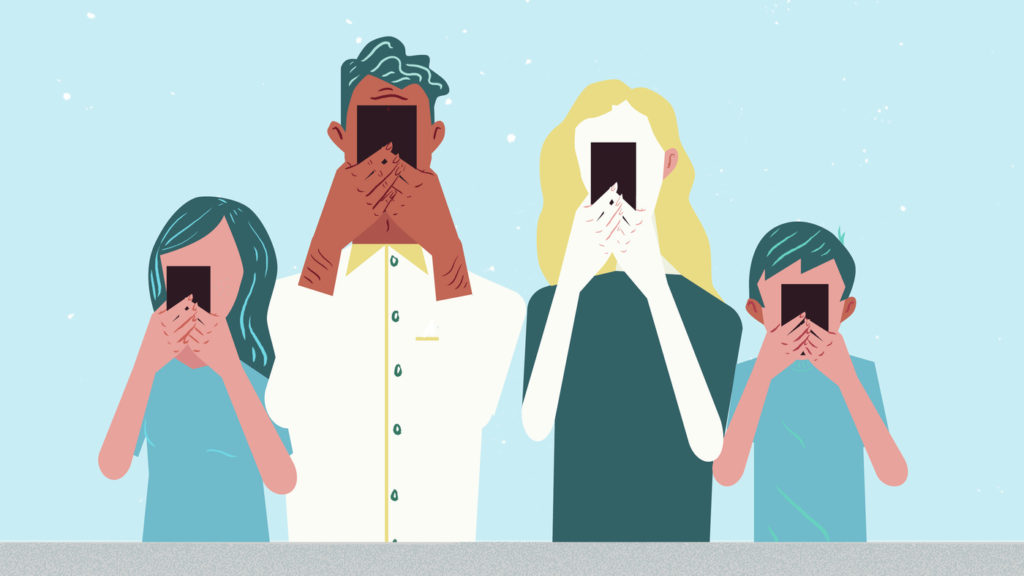
THE SECOND POINT:Be prepared for a major spike in cell-phone, video game, computer, and tv time. This may be obvious and already underway for many families. Here are the concerns. While you can always throw out the “correlation doesn’t equal causation” defense, there are clear indicators that social media and screen time affects the relationship teens have with anxiety and depression. More specifically, there are plenty of reasons (and data) to support the fact that it is closely tied to increased depression and anxiety in teens (Child Mind Institute Article / Anxiety and Depression Associaton of America Article).
For kids who already have anxiety/depression (who doesn’t?!) and ADHD, this moment in time and the coming weeks could likely be an uphill battle for most parents. Check out our blog, “HelpI’m a Reactive Parent“ to gain some strategies to better handle the more contested topics of conversation.
THE THIRD POINT: If your teen already has trouble with Anxiety/Depression or ADHD, you may startto see how this really affects them over the course of a day (and you may not like what you see).
Most parents have a block of time where their children are off at school, being monitored by other adults, and don’t witness first hand just how your child goes about sustaining themselves over the entire day. Many kids hold their shit together as much as possible while at school, only to “let loose” as soon as they get home. Our current circumstances now have everyone in relatively close quarters, a fraction of the freedom to “get out of the house”, and the bonus… most high-schools (that tried to make the online thing work) aren’t grading assignments, don’t expect them to be turned in, or even for kids to really learn the concepts. This is happening for many reasons, but it leaves us with a fundamental problem.
Kids are at home, can’t leave, and aren’t expected to do school-work. Let’s give a warm welcome the countless hours of video games, social media, youtube videos, and screen time that your teen is going to get. I am on the Advisory Panel for Phase2Parenting, a site that is geared towards providing top-notch advice and resources to parents of teens and tweens. Check out Phase2Parenting’s article, “How Much is Too Much: Technology Addiction and How to Manage It” and get some support while your kids are couped up in the house.
Small amounts of stress are manageable and even beneficial at times, stress can quickly become overwhelming and can result in decreased physical and mental health for your teenager.
Email us at [email protected] if you need to talk, have questions, or would like to know how to make this a little easier.
The gymnastics of raising a child is one of the most memorable and rewarding experiences even when the role of being a parent challenges us to the core. Reactive Parenting is a direct response to those challenges.
Parenting is unique as it tests your boundaries on a daily basis and those tests frequently evolve. As a kid develops from infancy through adolescence and early adulthood, they will provide a parent with plenty of opportunities to carve out their own style of handling all that is thrown at them.
The way that a parent communicates and interacts with their child can affect their overall functioning and development in a multitude of ways. While there are pros and cons to various existing parenting techniques, one of the most detrimental is reactive parenting. Keep in mind that parents exhibit a variety of parenting styles and this is not an “all or nothing” discussion. We are talking about when reactive parenting dominates the household, drives most of the interactions, and is (for whatever reason) the most frequent “go to” response.
Reactive parenting is where a parent, acts on
their emotions when responding to a child’s
behavior.
This often times results in interactions fueled by anger, aggression, irritation, and hostility. Some examples of reactive parenting include using the phrases, “Stop” or “Right. We will not be going to/doing that” or constantly using commanding language like “Do/don’t do that”. These types of interactions will find their way into day to day life with a child and in some cases are necessary.
As someone who was born in 1985, I am very aware of the “snowflake” argument. Some parents attempt to raise their kids without reprimanding them, avoiding the use of words such as “no” or “bad (girl/boy)”. While the solution in many minds is likely quite simple, the problems are typically a little more complex. Parents verbalizing criticisms will not disappear any time soon and this is not inherently the problem. Projecting you’re own anger, impatience, and frustrations onto a child is an issues that falls in-line with reactive parenting and will usually come with direct side effects. So, what are some of the reasons for why a parent might be more reactive instead of proactive in their approach to parenting?
Three reasons for being prone to reactive parenting:
Feeling overwhelmed
One of the most frequent things you hear from new parents is that there is a severe lack of sleep. Now that the kids are a little more grown up it doesn’t mean that things like work, relationships, money, or other sources of stress won’t interrupt your sleep cycle. Lack of sleep is a huge contributor to stress and anxiety.
Just think of visiting a friend who just got a puppy. It small, fuzzy, cuddly, cute and screams, “take me home” with their eyes. Suddenly, it pees on the ground. Do you, A) Point your finger at it and yell “bad dog” and stick their nose in it, B) Hit and yell at the puppy, C) Not get angry, because after all it’s not your house, not your puppy, and not your problem. So you just let the owner know what happened (please choose “C”). You are able to do this because you are able to separate yourself from the emotions around the puppy having an accident. You create space for objectivity. Also, keep in mind that the catalyst for being stressed/overwhelmed could be something unrelated to your kid (but your kid won’t know this).
The H.A.L.T. strategy can help identify times where you need to take a step back, create some space, satisfy an underlying need, and re-approach more strategically. When you first wake up, come home from work, had a late night, had an argument (you get it), simply ask yourself if you are hungry, angry, lonely, or tired. If so, find a way to meet that need before moving forward with any other major decisions, conversations, or interactions.
3. Negatively reinforced learned behavior from other parental figures
This is just one of the reasons why reactive parenting is so detrimental to child behavior. The parent-child relationship is the first major relationship to develop in a child’s life and shapes the child’s perspective of what healthy relationships should look like. You are a parent, but at one point was a child with parents that had particular parenting styles. Sometimes particular behaviors are replicated when that was what you were raised like, while others are sometimes overcompensated to “prevent” feelings that you had growing up. These forces that impact our behaviors or sometimes invisible to us, so take a second to think about how your biography is shaping your child’s prologue.
Reactive parenting could lead children into thinking that negative and even abusive relationships are normal when they really are not. Children learn a substantial amount of how the world works and how they should behave in the world from their parents. Therefore, parents who use reactive parenting are teaching their children that reacting with anger and frustration towards their children is the correct way to parent.
As hard as it is to admit, when I was in high-school, I bullied kids. Let me explain…
I didn’t take their lunches (I was a 6ft lanky fella who could have easily been beat up), get in physical fights, give out wedgies and hang them up by their underwear, or shove people into lockers. I was into sports, had popular friends, usually had a popular girlfriend, was invited to junior and senior parties as a freshman and sophomore, and dressed nice.
On the inside, none of that shit really mattered. I was incredibly anxious, insecure (pro at hiding it), constantly questioned where I stood in the eyes of others and typically felt inadequate because of self-comparison.
How did I bully people?
My bullying method of choice in high-school was mental warfare. I would insult other people about how they looked, moved, ate, spoke, and just about anything else they was available for others to see. In my insecure teenage mind, if I put someone down 10 social/confidence points then I would go up 10 points and so on. Making fun of others to feel better about myself was the currency and I was rich in that respect, but oh was I super fucking poor in more important areas.
You see, I had convinced myself that this was the fast way to feeling confident, happy, accepted, and comfortable. Unfortunately, this method breeds the opposite feelings and sets you on a really challenging trajectory.
A kid’s search for acceptance is very messy.
As a parent, you may not agree with the decisions your kid is making and that is completely fine. Coming from a place of, “I can understand why you would do this but it doesn’t make it excusable”, is a healthy mindset.
As a Freshman on Varsity soccer and baseball, I was hanging out with the “super cool” Juniors and Seniors. I started smoking weed, drinking, and finding ways to “fit in” with others because I wasn’t sure at all about myself. I managed to get “good enough” grades so people would stay off my back and expect just a little less out of me compared to others. I got into trouble at home and in school, with the exception being sports. Sports was special because I was able to channel many of the tough emotions (anger/sadness) into physical output. It was the closet thing I knew to a direct correlation between how much personal effort I put in and how much positive feedback I got out of it. It kept me more in line than anything else at the time.
One thing I know for sure is that if you put all your eggs in one basket for support, as a crutch, and tie it to your identify then you run the risk of a crisis down the line. That’s what happened next.
After high-school graduation, I moved up to New England to play baseball for the University of Rhode Island (notice how I didn’t say “to be a student” or “to major in…”). On September 17th, which just so happened to be my birthday as well as two weeks after I moved-in and less than a week before training started, I broke my left pitching elbow. Getting my legs taken out from under me playing (sober) soccer on a basketball court did me in. It was the ending of baseball career before if started and the beginning of a crisis.
I have to be a student now?
That’s not what I signed up for but it was my new reality. It caused significant anxiety, panic attacks, a desire to isolate myself. Since I’m left handed and broke that elbow, I couldn’t write and so I stopped going to a lot of classes or just never took notes which led to my gpa being an impressive 2.4.
Things got a little worse before they got massively better and I credit where I’m at today with reaching out for outside support.
In the final two years of undergrad, my gpa was almost a 4.0. The first year out I worked psych research with detained adolescence, got accepted and went to Boston University’s Sport Psychology and Counseling Master’s program (on a 75% scholarship and finishing with a 3.9 gpa), and have been running a Youth, Family, and Adult Life Coaching company for 10+ years.
We live in a world where it’s all too common for kids to be shamed for their weirdness and uniqueness. It teaches them to turn AWAY from their uniqueness and TOWARD… acceptance.
With kids, this basically means trying to “fit in”, conform, and act within the group norms. Conformity has its appropriate place and time as does groups norms, but having kids turn AWAY from their weirdness and uniqueness because of shame, uncertainty of what their social status will be, or whether they think others (including parents) will accept them will in no doubt backfire for them in the future.
Every week, I see the impact this has on young people. I hear them share perspectives and stories on how they feel as though they are “putting on a show”, “don’t know who they are”, “will lose friends in a second if they don’t…[insert superficial factor]”, how they “don’t feel good enough”, and how they “feel that they can’t act like themselves around their parents and most of their friends”.
I see a little bit of me in each of them.
It’s sad, but it’s real and the solution starts at home. Parenting is tough, being a kid is tough, and it’s not about placing your kid in a bubble. No bulldozer, helicopter, or tiger parenting here. We need to get back to a place where we put down our screens, have them put theirs down too, listen and communicate with empathy and honesty, find out what kinds of weirdness/uniqueness they have, help them explore it, and teach them ways to persevere.
Parents need to have boundaries (which are seen as a source of love from kids), talk about the tough topics, incentivize healthy behavior but also (appropriately) discipline poor choices. Yes, this can be done compassionately and keeping in tact the message that you love and support them.
This can happen anywhere, but it starts in the home.
Traditional therapy in an office setting can work for many, but for some, it’s tough to get off the ground. Don’t give up, because, for those that have tried or are adverse to traditional therapy, there are many options. One great option is Animal-Assisted Therapy (AAT). It’s possible you have heard about this type of therapy on Dr. Phil, The Doctors, or Dr. Oz, but it’s your lucky day. Read on as Charlsey Gentile, Owner of Life Is Golden Coaching and practitioner of Animal Assisted Therapy explains a bit more about AAT.
Imagine this — you are taking an enjoyable walk on a cool autumn afternoon where the leaves are changing and the sun is shining. While on your walk you see someone sitting on a bench. What do you do:
Walk by?
Say Hello?
Smile?
Pay no attention at all?
Approach the person and engage in conversation?
In Comes Animal Assisted Therapy (AAT):
New scenario — it starts the same way, yet the only difference is that the person sitting on the bench is with their dog. Do you react differently in this situation than in the one above? Research shows that people are more inclined to approach an/or engage with others if they have a dog with them (UCLA’s Findings on Animal Assisted Therapy).
Now imagine you or maybe your child, are about to embark upon a first counseling session. This can often make one feel vulnerable. As humans, we tend to be judgemental of ourselves and feel that others may also be judging us. Now imagine that a dog is at the counseling session. Did you smile or maybe feel less nervous about the situation? Does this sound like a welcomed addition to counseling? If so, you are in luck! This practice actually exists and it is called Animal-Assisted Therapy (AAT).
AAT is when a professional in a specific field pair with a trained and certified animal to help enhance his or her practice. For counseling, dogs can function as a distraction, a point of common interest to start the conversation, help in developing the counseling relationship, and be a non-judgemental (albeit passive) participant in the sessions.
Benefits of AAT:
To top it all off, the presence of an animal and/or the act of petting an animal can do the following:
Release feel-good hormones
Help reduce anxiety
Provide comfort
Be an icebreaker
Lower blood pressure
Slow down breathing and heart rate
Create a more enjoyable counseling environment.
For those who love (or even like dogs) or have children who do this can be a wonderful option when looking for support in your own journey.
Working with teenagers is great. One day, we are discussing their struggles in class or playing time on their sports team. Other days it’s how their parents are mad at them for smoking weed, vaping, playing too much Fortnite, or not putting enough energy into school work. As parents, I’m sure being a little more like Buddha in how we communicate with our kids could have great payoffs.
The way we communicate with a 5-year-old is much different than that of a 12-year-old. While this may not be up for debate, many parents get the urge to “amp up” the pressure once high-school starts. In sessions, kids tell me their parents are constantly telling them, “this is when it really starts to count”, “you need to really buckle down on studying and apply yourself”, “colleges will see this”, and “you really need to set yourself apart from others”.
To simplify things, there are two types of pressure when it comes to kids. “Actual pressure” is expressed through more overt actions like telling your child that they need to get particular grades in school or telling them they need to participate in a certain activity even if they don’t enjoy it. “Perceived pressure” is when a kid sees their successful parent and feels the need follow in their footsteps, regardless of what you may be telling them.
Inherently, the pressure is neither good or bad, but how we communicate our messages can be the defining factors. There is a teaching in Buddhism known as, “The Four Elements of Right Speech”. Using them as a guideline to communicate with your teen or young adult can help you shift from a place of defensiveness and anger to a place of patience and understanding.
The Four Elements of Right Speech:
1. Tell the truth. Don’t lie or turn the truth upside down.
I’ve found in my practice that parents tend to either lean towards being the, “I’m going to lay it all out there and tell it straight up” type of truth-telling parent or the, “I don’t want to hurt them so I’ll either minimize it or not mention anything at all” type of parent.
Communicating the truth to your kid can frequently be seen as conflict and that will immediately make a person go into “conflict mode” (have your own conflict mode assessment done by YouTime Coaching here). Telling the truth is crucial but doing so in a skillful and compassionate way is paramount. Check yourself before communicating the truth to your kid and make sure you are doing so in a way that doesn’t make your kid feel threatened, so they can have the ability to listen.
2. Don’t exaggerate.
Kids always seem to be slipping up and making mistakes. Sometimes (yes, even you!), the mistake is made into some much more worse than it actually may be. When parents do this they are typically trying to justify their own anger.
Exaggerating mistakes paints a very specific image for your kid to see themselves through. In many cases, it can affect their self-image. Like with many aspects of parenting, the impact may be unintentional but it can quickly affect trust within the relationship (on both sides). Again, check yourself and your own emotions before communicating with your kid.
3. Be consistent.
“You did it when you were my age!”
Parents LOVE telling their teenagers what they can’t do. “You are not allowed to drink, smoke weed, and you need to do well in school”. Those same parents typically can turn around and reminisce with their significant other about the times they went to parties in high-school or got in trouble for staying out too late. The things you did at their age are not an open invitation for them to participate but it is a point of reference you need to consider in order to handle the situation.
“You let (insert brother or sister’s name) do it!”
Teenagers and young adults love making comparisons and while treating each child the same is literally impossible keeping some consistency between siblings is important. Sometimes this may come down to communication and explaining why certain siblings get different treatment. Just keep in mind that having a base of “this goes for everyone”, is very important for parents.
For teens, the inconsistencies are typically seen as a conflict. It creates a division between parents and kids. Be consistent in how you communicate your concerns and praises.
4. Use “smart” language.
Take two seconds and think about how your parents spoke to you when you were a teenager. What ways made you angry, sad, or happy? It is pretty crazy how quickly we forget this when communicating to your own child. “Smart” language functions through choosing the words and a tone that will help your kid stay open to discussion rather than being argumentative and going into shut down mode. “Smart” language means not using insulting, cruel, abusive, or condemning words when speaking with your kid.
Again, remind yourself that most (not all) of the issues you are dealing with as parents are situations that need to be managed and not problems that can be just solved. Choose your actual words wisely.
Remember:
Teens are typically self-critical with rampant negative self-talk. The communicate tips above will help prevent you, as a parent, from layering on more criticism and judgment which usually puts your kid in a state that is not efficient for any type of productivity. Keep in mind that you still model to your child how to handle emotions. Remember that the first to yell loses the fight and that these strategies are used to support your child in their own self-improvement.
We hear it all the time… helicopter parenting and that the millennial generation is being raised tooprotected from struggle, diversity, and overcoming “normal” life-stage challenges. Wherever you stand on this doesn’t necessarily matter because both sides need to learn from how they are experiencing struggle both directly and indirectly. Your college freshman will undoubtedly be faced with challenges, but it will not be everything your anxiety is telling you it will be.
There are some important takeaways and a crucial reminder.
JUST BECAUSE STRUGGLE AND YOUR CHILD’S NAME ARE IN THE SAME SENTENCE DOESN’T MEAN IT IS A CUE TO STEP IN.Understand that taking a supportive backseat versus getting into the driver seat can be quite valuable. Not only does it give your child a chance to build confidence in their abilities to navigate tough situations or seek out help but it allows parents invaluable time to build trust in their kid’s ability to handle struggle.
For parents that just sent their kids away for their first year of college here are some things you should know about what may be going on and the struggles that freshman most commonly face.