by Jonathan Wolf | Apr 17, 2025 | ADHD, Advice, Behavior, college, Communication, Consistency, Energy, Expectations, Focus, Mindset, Motivation, parents, Sports, Teenagers
ADHD and Why It Matters in Sports
ADHD (Attention Deficit Hyperactivity Disorder) affects millions of students — and a growing number of high school and college athletes. We can get one thing straight: ADHD isn’t just about forgetting homework or bouncing off walls — it also shows up on the field, court, track, or wherever your kid is trying to shine in sports.
While ADHD is often discussed in academic settings, it plays a big role in how athletes focus, train, compete, and recover. If your high school or college athlete has ADHD, you’ve probably seen it already. One second, they’re crushing it; the next, they’re staring into space while their coach explains a drill for the third time.
If you’re a parent of a student-athlete with ADHD, a high school or college athlete managing symptoms, or a coach working with neurodiverse players, understanding how ADHD impacts sports is crucial. Let’s talk about how ADHD messes with (and sometimes boosts) sports performance — and what to do about it.
Whether the young person is in middle-school, high-school or college it can sometimes be quite challenging to distinguish between “normal” and “could use some help” (especially these days). So let’s clear a couple things up first regarding “help”.
How ADHD Affects Athletic Performance
Athletes with ADHD may bring a ton of passion and energy to the field — but they also face unique challenges. Here’s how ADHD can influence sports:
INCONSISTENT FOCUS
- Trouble following multi-step instructions
- Drifting attention during plays, drills, or team meetings
- Zoning out at key moments
IMPULSIVE BEHAVIOR
- Jumping the gun on plays
- Taking risks without thinking them through
- Higher rates of fouls or penalties
EMOTIONAL REACTIVITY
- Frustration can spiral quickly after mistakes
- Trouble bouncing back from criticism or losses
- Difficulty regulating emotions under stress
SLEEP AND RECOVERY STRUGGLES
- Many athletes with ADHD have disrupted sleep cycles
- Poor sleep = slower reaction times, lower energy, and higher injury risk
INCREASED INJURY RISK
A study in Sports Health found that college athletes with ADHD are more likely to get injured — likely due to impulsivity or distraction during play.
ADHD Strengths in Sports
It’s not all challenges. In fact, ADHD can be a superpower in the right athletic environment.
- High energy: Ideal for high-intensity or endurance sports
- Hyper-focus: Being locked in and maintaining a deep concentration during games
- Creativity: Thinking outside the box can lead to smart and unexpected plays
Practical Strategies for Success
FOR STUDENT-ATHLETES WITH ADHD:
Use short-term goals:
Break practice into 10-15 minute mental time blocks with “missions” for each block.
Create a pre-game routine:
Use the same warm-up (include mental rehearsal, paced breathing, progressive muscle relaxation, and an inner-dialogue script to help cue/prime), create a “hype” and “chill” playlist, and be consistent because consistency = less chaos
Ask questions to get clarity:
Don’t pretend to understand a play — clarify it with one of the coaches or another player. Ask for DIRECTIONS or a different way of explaining something if you need it.
Move during downtime:
Stretch, pace, or shake out between drills
Cool down mentally:
Journal, breathe or debrief after games or practices
Prioritize sleep:
No screens in bed, and try to keep
consistent sleep/wake times
Work with your doctor on meds:
Timing matters for performance (with both stimulant and non-stimulant medications)
FOR coaches working WITH athletes who have ADHD:
keep instruction clear and short.
Adhd impacts working memory and sustained attention. Communicating in this way will help reduce some of those added challenges.
repeat key information or provide an ADDITIONAL visual or kinesthetic example
most people learn through a combination of teaching styles. some players may need you or a teammate to physically demonstrate, write directions down, or HAVE a visual cue, and others may need directions repeated.
allow movement between drills
Movement can help with focus. Come up with a couple of exercises and movements that are appropriate for the environment. the goal is to provide structure and support that will allow for self-regulation while minimizing distractions for others.
Don’t over-personalize the behaviors:
frequently, fidgeting AND quick/intense EMOTIONS can be perceived as disrespect. with someone who has adhd, it is typically far from the truth.
help build emotional resilience after setbacks:
Journal, breathe, or debrief after games and practices.
connection over consequence:
ask how you can support them, not just discipline them.
FOR parents of athletes with ADHD:
Build routines at home:
Focus on establishing routines around getting your gear together, meals and snacks, and bedtime
Talk to your kid(s) about how adhd can show up in sports:
Use this article or the resources at the end to guide your conversation.
normalize needing extra support
adhd is a NEURODEVELOPMENTAL disorder, not a character flaw. there are plenty of professional athletes facing the same struggle and need extra support.
advocate with coaches and school staff:
adhd support doesn’t stop in the classroom. plus, someone with adhd needs to have that advocacy muscle to flex. leading by example provides positive modeling for the young person.
focus on progress, not perfection:
Your kid’s inner critic is likely already too harsh, so focus on progress and the process VS. outcomes and perfection. adhd minds frequently have issues with “all or nothing thinking, “ so teach them to live in the gray sometimes.
Helpful ADHD Resources for Student-Athletes and Families
Helpful ADHD Resources for Student-Athletes and Families
Final Takeaway: ADHD Isn’t a Limitation — It’s a Playbook You Need to Learn
Whether you’re a parent, a coach, or an athlete on the field, understanding ADHD is the key to unlocking performance, potential, and peace of mind.
ADHD athletes are not broken—they’re just built differently. They can reach their optimal performance with the right structure, support, and mindset.
If you would like to find out more about our coaching, visit the ‘GET HELP NOW‘ page by clicking above or sending us a message below. You can also reach out to YouTime Coaching at [email protected].
by YouTime Coaching | Jun 25, 2019 | Advice, Anxiety, Arguments, Behavior, Emotions, Expectations, Failure, parenting, parents, Uncategorized
The gymnastics of raising a child is one of the most memorable and rewarding experiences even when the role of being a parent challenges us to the core. Reactive Parenting is a direct response to those challenges.
Parenting is unique as it tests your boundaries on a daily basis and those tests frequently evolve. As a kid develops from infancy through adolescence and early adulthood, they will provide a parent with plenty of opportunities to carve out their own style of handling all that is thrown at them.
The way that a parent communicates and interacts with their child can affect their overall functioning and development in a multitude of ways. While there are pros and cons to various existing parenting techniques, one of the most detrimental is reactive parenting. Keep in mind that parents exhibit a variety of parenting styles and this is not an “all or nothing” discussion. We are talking about when reactive parenting dominates the household, drives most of the interactions, and is (for whatever reason) the most frequent “go to” response.
Reactive parenting is where a parent, acts on
their emotions when responding to a child’s
behavior.
This often times results in interactions fueled by anger, aggression, irritation, and hostility. Some examples of reactive parenting include using the phrases, “Stop” or “Right. We will not be going to/doing that” or constantly using commanding language like “Do/don’t do that”. These types of interactions will find their way into day to day life with a child and in some cases are necessary.
As someone who was born in 1985, I am very aware of the “snowflake” argument. Some parents attempt to raise their kids without reprimanding them, avoiding the use of words such as “no” or “bad (girl/boy)”. While the solution in many minds is likely quite simple, the problems are typically a little more complex. Parents verbalizing criticisms will not disappear any time soon and this is not inherently the problem. Projecting you’re own anger, impatience, and frustrations onto a child is an issues that falls in-line with reactive parenting and will usually come with direct side effects. So, what are some of the reasons for why a parent might be more reactive instead of proactive in their approach to parenting?
Three reasons for being prone to reactive parenting:
- Feeling overwhelmed
One of the most frequent things you hear from new parents is that there is a severe lack of sleep. Now that the kids are a little more grown up it doesn’t mean that things like work, relationships, money, or other sources of stress won’t interrupt your sleep cycle. Lack of sleep is a huge contributor to stress and anxiety.
Just think of visiting a friend who just got a puppy. It small, fuzzy, cuddly, cute and screams, “take me home” with their eyes. Suddenly, it pees on the ground. Do you, A) Point your finger at it and yell “bad dog” and stick their nose in it, B) Hit and yell at the puppy, C) Not get angry, because after all it’s not your house, not your puppy, and not your problem. So you just let the owner know what happened (please choose “C”). You are able to do this because you are able to separate yourself from the emotions around the puppy having an accident. You create space for objectivity. Also, keep in mind that the catalyst for being stressed/overwhelmed could be something unrelated to your kid (but your kid won’t know this).
2. H.A.L.T.: Feeling Hunger, Anger, Loneliness, and/or Tiredness
The H.A.L.T. strategy can help identify times where you need to take a step back, create some space, satisfy an underlying need, and re-approach more strategically. When you first wake up, come home from work, had a late night, had an argument (you get it), simply ask yourself if you are hungry, angry, lonely, or tired. If so, find a way to meet that need before moving forward with any other major decisions, conversations, or interactions.
3. Negatively reinforced learned behavior from other parental figures
This is just one of the reasons why reactive parenting is so detrimental to child behavior. The parent-child relationship is the first major relationship to develop in a child’s life and shapes the child’s perspective of what healthy relationships should look like. You are a parent, but at one point was a child with parents that had particular parenting styles. Sometimes particular behaviors are replicated when that was what you were raised like, while others are sometimes overcompensated to “prevent” feelings that you had growing up. These forces that impact our behaviors or sometimes invisible to us, so take a second to think about how your biography is shaping your child’s prologue.
Reactive parenting could lead children into thinking that negative and even abusive relationships are normal when they really are not. Children learn a substantial amount of how the world works and how they should behave in the world from their parents. Therefore, parents who use reactive parenting are teaching their children that reacting with anger and frustration towards their children is the correct way to parent.
Curious about your parenting style? Try Psych Central’s Parenting Style Quiz HERE.
by YouTime Coaching | May 9, 2019 | Academics, Advice, alcohol, Anxiety, Arguments, Behavior, Certainty, Children, Communication, Confidence, Depression, Expectations, Fear, happiness, Motivation, parenting, parents, Relationships, Sadness, Self-Esteem, Teenagers, Uncategorized, Uncertainty
As hard as it is to admit, when I was in high-school, I bullied kids. Let me explain…
I didn’t take their lunches (I was a 6ft lanky fella who could have easily been beat up), get in physical fights, give out wedgies and hang them up by their underwear, or shove people into lockers. I was into sports, had popular friends, usually had a popular girlfriend, was invited to junior and senior parties as a freshman and sophomore, and dressed nice.
On the inside, none of that shit really mattered. I was incredibly anxious, insecure (pro at hiding it), constantly questioned where I stood in the eyes of others and typically felt inadequate because of self-comparison.
My bullying method of choice in high-school was mental warfare. I would insult other people about how they looked, moved, ate, spoke, and just about anything else they was available for others to see. In my insecure teenage mind, if I put someone down 10 social/confidence points then I would go up 10 points and so on. Making fun of others to feel better about myself was the currency and I was rich in that respect, but oh was I super fucking poor in more important areas.
You see, I had convinced myself that this was the fast way to feeling confident, happy, accepted, and comfortable. Unfortunately, this method breeds the opposite feelings and sets you on a really challenging trajectory.
A kid’s search for acceptance is very messy.
As a parent, you may not agree with the decisions your kid is making and that is completely fine. Coming from a place of, “I can understand why you would do this but it doesn’t make it excusable”, is a healthy mindset.
As a Freshman on Varsity soccer and baseball, I was hanging out with the “super cool” Juniors and Seniors. I started smoking weed, drinking, and finding ways to “fit in” with others because I wasn’t sure at all about myself. I managed to get “good enough” grades so people would stay off my back and expect just a little less out of me compared to others. I got into trouble at home and in school, with the exception being sports. Sports was special because I was able to channel many of the tough emotions (anger/sadness) into physical output. It was the closet thing I knew to a direct correlation between how much personal effort I put in and how much positive feedback I got out of it. It kept me more in line than anything else at the time.
One thing I know for sure is that if you put all your eggs in one basket for support, as a crutch, and tie it to your identify then you run the risk of a crisis down the line. That’s what happened next.
After high-school graduation, I moved up to New England to play baseball for the University of Rhode Island (notice how I didn’t say “to be a student” or “to major in…”). On September 17th, which just so happened to be my birthday as well as two weeks after I moved-in and less than a week before training started, I broke my left pitching elbow. Getting my legs taken out from under me playing (sober) soccer on a basketball court did me in. It was the ending of baseball career before if started and the beginning of a crisis.
I have to be a student now?
That’s not what I signed up for but it was my new reality. It caused significant anxiety, panic attacks, a desire to isolate myself. Since I’m left handed and broke that elbow, I couldn’t write and so I stopped going to a lot of classes or just never took notes which led to my gpa being an impressive 2.4.
Things got a little worse before they got massively better and I credit where I’m at today with reaching out for outside support.
In the final two years of undergrad, my gpa was almost a 4.0. The first year out I worked psych research with detained adolescence, got accepted and went to Boston University’s Sport Psychology and Counseling Master’s program (on a 75% scholarship and finishing with a 3.9 gpa), and have been running a Youth, Family, and Adult Life Coaching company for 10+ years.
We live in a world where it’s all too common for kids to be shamed for their weirdness and uniqueness. It teaches them to turn AWAY from their uniqueness and TOWARD… acceptance.
With kids, this basically means trying to “fit in”, conform, and act within the group norms. Conformity has its appropriate place and time as does groups norms, but having kids turn AWAY from their weirdness and uniqueness because of shame, uncertainty of what their social status will be, or whether they think others (including parents) will accept them will in no doubt backfire for them in the future.
Every week, I see the impact this has on young people. I hear them share perspectives and stories on how they feel as though they are “putting on a show”, “don’t know who they are”, “will lose friends in a second if they don’t…[insert superficial factor]”, how they “don’t feel good enough”, and how they “feel that they can’t act like themselves around their parents and most of their friends”.
I see a little bit of me in each of them.
It’s sad, but it’s real and the solution starts at home. Parenting is tough, being a kid is tough, and it’s not about placing your kid in a bubble. No bulldozer, helicopter, or tiger parenting here. We need to get back to a place where we put down our screens, have them put theirs down too, listen and communicate with empathy and honesty, find out what kinds of weirdness/uniqueness they have, help them explore it, and teach them ways to persevere.
Parents need to have boundaries (which are seen as a source of love from kids), talk about the tough topics, incentivize healthy behavior but also (appropriately) discipline poor choices. Yes, this can be done compassionately and keeping in tact the message that you love and support them.
This can happen anywhere, but it starts in the home.
by YouTime Coaching | Sep 26, 2017 | Advice, Anxiety, Attitudes, boundaries, Children, Communication, Compromise, Consistency, Decisions, Emotions, Expectations, Failure, Fear, Fighting, Focus, Life Coaching, Listening, parenting, parents, positive reinforcement, Trust
As a parent, ever wonder what is going on inside your kid’s mind?
Through the positive work we have completed with adolescence, young adults, and families we’ve heard and seen almost everything. Kids want their freedom (sometimes without responsibility) and respect, while parents struggle with communication, setting boundaries, and timing.
Here are ten real thoughts direct from clients about their parents.
#1 I can’t talk to them because they will just get angry at me.
#2 All they care about are grades.
#3 They tell me to stop doing things that they do all the time and it’s bullshit.
#4 They won’t understand if I told them or will make me feel like it isn’t important.
#5 They choose when it’s convenient to say no and get upset.
#6 I don’t want to be like them.
#7 I tell them what they want to hear.
#8 When I actually try to talk to them about something that happened, I just get in trouble.
#9 When you start lecturing, I stop listening.
#10 When you trash my friends, I start disliking you, not them.
Remember, parenting is an imperfect process and so is being a kid. We are not sharing this list so you can take on all of the items one by one, instead, use it as a guide to see where more attention could be placed. When it comes to your kid’s motivation things can drastically change as they get older but if you’re able to adapt with the times, stay hip, and simultaneously hold true to healthy principles then this process could be easier on you.
Here’s just one easier way to think about motivation. Remember, in parenting, effort counts.
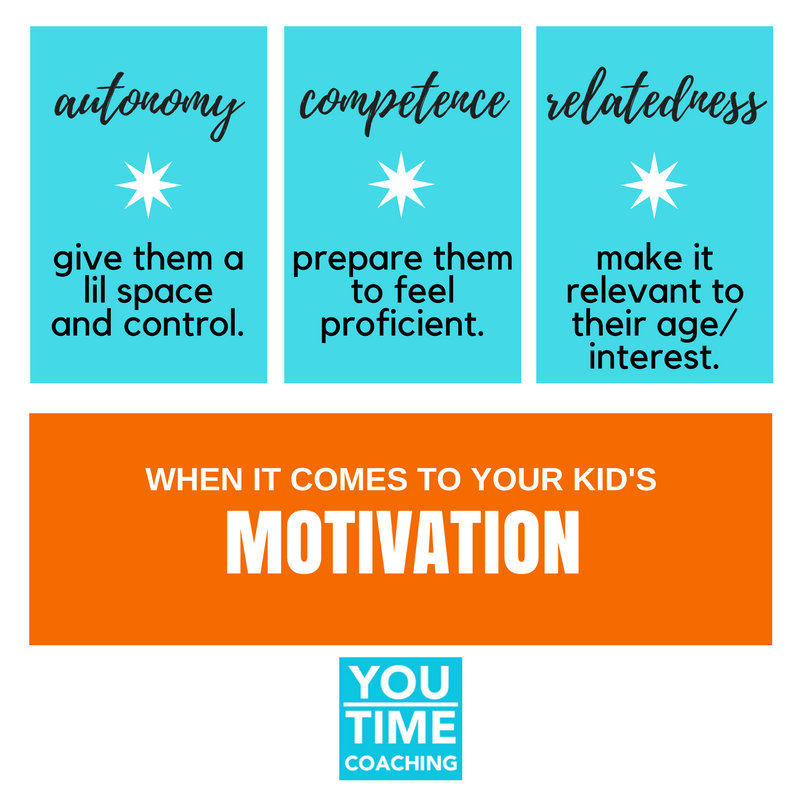
What goes into your kid’s motivation?
Just like when a kid doesn’t get their way, the thoughts kids have about their parents are changing by the minute. The importance behind these thoughts is where the focus should lay. Communication is typically always an underlying relationship issue between parents and kids. Check out these other blogs for helpful tips on communication with your teens, How to Love Your Kids When They Are Tough to Love and Do NOT Try to be Your Child’s Best Friend.
Feel free to leave comments below or on any of our social media pages to get a conversation going!
by YouTime Coaching | Feb 16, 2014 | Anthony Robbins, Appreciation, Commitment, Consistency, Creativity, Dreams, Expectations, Fear, happiness, Love, Quotes, Regret |
A good quote can motivate somebody to try something new, persist through tough times, or make necessary changes in their life. Quotes are so powerful because they embody an entire mindset, image, story, and lifestyle within one single sentence.
In my perspective, what makes a quote set itself apart is if it actually motivates you to take action with your life simply by the burning desire it ignited in you. Sounds powerful and somewhat unbelievable, huh? It happens and it will right now.
Following the quotes below will include a very small and incredibly manageable exercise to complete. Do this and consider you day a success.
1.
Exercise: Since scheduling makes it real, lets schedule! Think about something that you enjoy doing, that is positive for you, or brings you great vibes and schedule it for the very near future. Set this in your calendar, with as many reminds as possible, and lets make this real!
2.
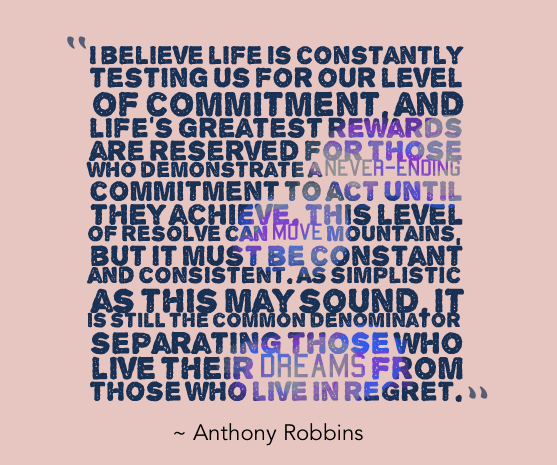
Exercise: Keep it simple stupid. What we are constant and consistent with, as simple as it sounds, is what makes the real difference. Choose something right now, that is once again extremely manageable and positive (requires minimal time, minimal resources, and minimal excuses) and agree to do it every day for 30 days. Some people may choose taking one deep breath a day, drinking a glass of water in the morning, or saying hello to one stranger.
Whatever you choose, stay consistent and constant.
3.
Exercise: For this exercise, I want you to do two things.
First, write down something you love doing.
Second, write down something you could do with more love.
4.
Exercise: Wrong? Never! For this exercise I want you to write down or state out loud something that you have been wrong about. After all, we all have been wrong at some point in our life.
5.
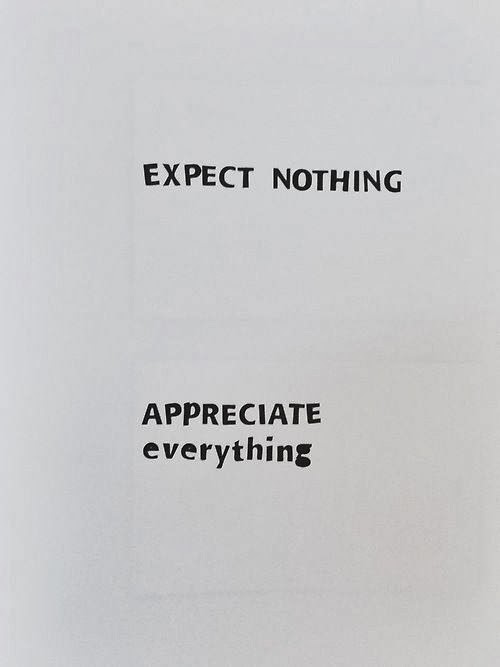
Exercise: If you don’t appreciate what life has offered you, you begin to take it for granted. Write down 5 things that you appreciate in your life (if you have more then 5 keep the list going!).
Congratulations! If you followed the exercises then you have had one successful day.
Take this message with you,
Live your life by continuing to grow through your actions, being consistent, appreciating everything, not fearing being wrong, and most of all, live your life with love.