by YouTime Coaching | May 21, 2014 | Change, happiness, Positive, Self-Change, Stages of Change, Support, Tracking Progress
The “Self-Help” field is a multi-billion dollar a year industry. By the figures alone, most people are consistently trying to improve themselves, experience change, and accomplish goals.
There is potential for significant harm when simply picking up a self-help book in the local bookstore. Here is a great clip of
Dr. John Norcross (one of the leading researchers in personal and professional change), sharing how there are actually only a couple, literally, a couple resources out there proven to work and how others can cause serious harm to you.
If you skipped down to this before watching the clip, don’t try taking a short-cut (that may say something about how you also approach your own personal and professional change). Go back and watch it.
Okay, so you have watched the clip and I want to now provide you with what I believe are 3 of the most important researched and proven to work strategies that will be vital to any self-change.
Strategy 1:
“Nobody wants to achieve the negative”
Imagine setting a goal, such as,
“I want to stop procrastinating”
“I want to not overeat”
“I want to stop being attracted to jerks”
“I don’t want to work a miserable job”
Does this sound all too familiar?
A huge number of individuals fall short in a fundamental piece to goal setting, which is, DO NOT SET NEGATIVE GOALS. Nobody wants to achieve a negative goal or move forward with it.
Almost sounds conflicting…”I am going to achieve and make progress with the negative”
When setting your goal, make sure to set it in a “positive-frame” rather than a “negative frame”. I will list some examples.
“I will stop procrastinating” (negative frame)
“i will be more pro-active and assertive” (positive frame)
“I don’t want to overeat” (negative frame)
“I will be more mindful and conscious regarding my meals” (positive frame)
Moving towards something positive and something “gained” has a far more positive impact then trying to “avoid the negative” or “delete” something out of your life. The “positive frame” will help with your mental and physical endurance while pursuing the goal!
![]()
Strategy 2:
“Nobody wants to be alone”
Sure we all want to think that we can make changes, reach goals, and live amazing lives all by ourselves. As much as this sounds nice and empowering, research shows that it is absolutely necessary to have a support team along the way.
Your social support team will not only help you progress with your goals, but is actually a huge factor in an individuals happiness!
This is what you need to do.
- Make a list of specific ways you need support in achieving your change.
- Number the specific ways so you know exactly how many people you need on your “team”.
- Start fielding a team by contacting people you know and specifically asking for their help in the way that you need it. (remember that some may not be comfortable, knowledgeable, or willing to help out for many reasons. It is important you are clear with them about what you are trying to accomplish and ask them if they can support you in that way)
- Keep your team updated throughout the process and stay connected! (communicate with them if you need check ins, help with accountability…etc)
Things to think about regarding support:
- There are different types of support, so different people should be included as each person offers something new.
- Some people aren’t able to provide the support you need, so be clear with them about your needs and respect if they aren’t able to help out.
- You are not looking for friends and family to coach you. Many people would like to add their “5 cents” to the conversation. This is not the support you are looking for. That support comes from a trained and experienced Life Coach.
Strategy 3:
“If you take steps backwards, you will want to stop walking”
So you establish a specific, attainable, realistic, and timely goal that is in line with your values, now what?
One of the pieces I purposely left out of the above equation is making your goal “measurable”.
You MUST find ways to measure your progress.
Research shows that measuring progress can increase your self-confidence, motivation to continue, and happiness. On a simple level, take a second and think about why anybody would desire to continue pursuing something that you are not showing improvement or making progress on.
Truth is, they don’t want to continue!
In this day and age, technology can be your friend and help you track progress. Here is a link that will provide apps that help you track progress on numerous types of goals.
![]()
YouTime Coaching provides Life Coaching and Therapeutic Mentoring to individuals and families. YouTime Coaching works side by side with individuals to help create direction, passion, and produce lasting personal and professional change. Together we create an environment for clients that truly delivers the necessary “YOU” time needed to regain focus, motivation, and the desire to grow. Together, we will discover what truly motivates and drives your most successful decisions and behaviors.
YouTime Coaching will help define your goals, support systems, purpose and value to change, help find multiple ways of achieving it, and make the necessary shifts in body, language, and focus to get you there. Through working with a diverse population of clients, YouTime Coaching has successfully helped many adolescents, adults, parents, athletes, and those in the performing arts with building resiliency, motivation, confidence, and lasting personal and professional change.
by YouTime Coaching | Aug 20, 2013 | Behavior, Behavioral Change, Beliefs, Change, Energy, Focus, Outcomes, Stages of Change
Dr. John Norcross is a Professor of Psychology & Psychiatry as well as an expert on changing human behavior. With over 30 years of backed research the “Stages of Change” have been developed and have helped thousands of individual see sustainable personal/professional change.

Stemming from research based out of my undergraduate alma mater, University of Rhode Island, the “Trans-theoretical Model” became the go to formula for successful change.
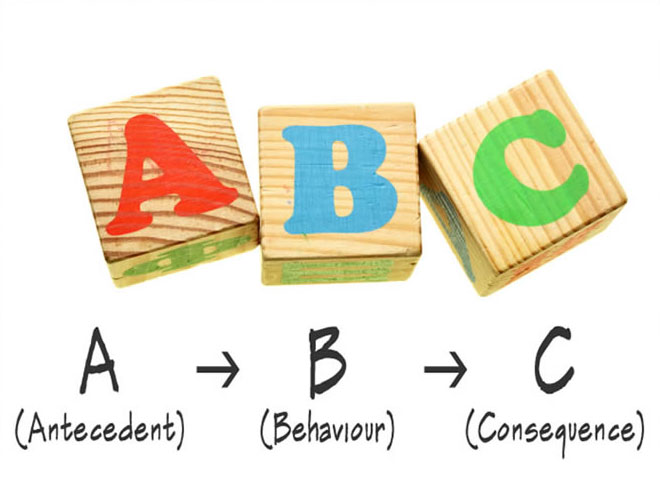
One aspect of change is to conduct a little detective work in identifying what may be wrong and why it is happening in the first place. This is commonly referred to as your “Behavioral Chain”.
A Little Bit About the ABC’s
Antecedents
- Occurs prior to the event and may trigger you to act a particular way.
- Can include your environment, the people around you, the interaction with the individuals with you, and your mood.
- Some detective questioning could include; Who are you with when you experience this behavior? What mood are you in when this behavior presents itself (sad, stressed, happy, bored, anxious…etc)? What time of day does this behavior typically come out (morning, day, night)?
Behavior
- The problem behavior
- Also, the healthy alternatives to the problem behavior.
Consequence
- Occur after the problem and usually rely on what the specific problem is.
- *BEWARE* Short-term consequences can be very rewarding (taste good, relaxing…etc)
- *BEWARE* Long-term consequences can be painful and destructive (heart disease, stroke, cancers, obesity, diabetes…etc)
- We favor instant gratification rather then delayed gratification.
- Recording long-term consequences is just as important as recording the short-term.
A few tips on how to use the ABC’s to change your behavior
- Explore the antecedents to your behavior and find healthy alternative environments and social groups to prevent triggers that promote your problem behavior.
- Create new healthier alternatives and substitutes to meet your need for variety, fun, and freedom. Learn a new relaxation technique or coping skills to get you through triggering antecedents.
- Reverse the consequence to your problem behavior and work backward through the ABC’s to see what new antecedents and behaviors are necessary to end up with this new outcome.
Check out this great worksheet for your
ABC’s and behavioral chain:
*Derived from Changeology By: John Norcross, PhD
by YouTime Coaching | Aug 13, 2013 | Beliefs, Change, Insight, Insight Fallacy, Motivation, Problems, Stages of Change, steps, Understanding
Have you ever explained something to a friend or family member and their response is, “I know, I know, I know”? They seem to fully grasp the idea, concept, or reason for something that is happening around them all too well.
Have you ever seen that same friend or family member that “understood” what and why something was happening, never change anything about it? Well, there’s a name for that.
In the field of Psychology it is referred to as the “Insight Fallacy”.
Insight Fallacy: The belief that understanding a problem will solve the problem.
When gaining insight into a problem it may help us by,
- Providing comfort, security, and safety in understanding what is wrong.
- Assisting in the development of new problem-solving strategies.
- Giving meaningful new understanding which will create harmony between our thoughts, emotions, and actions.
However nice this may sound, insight alone will not change the problem. In order to take effective steps in changing the problem, you must first identify a few things by answering these questions.
- Is there a problem at all? If so, what is it?
- Have a tried changing this problem in the past 6 months?
- Do I plan on doing something about this within the next 30 days?
If you have not identified a problem, you are most likely not going to do anything about it, besides saying “I know, I know, I know”. If you said “YES” to there being a problem, you must start thinking about how you are going to try and change it. Take a look at the “Stages of Change” and get a feel for where you may be.
For each stage there are different tasks to complete, so make sure you are honest in which one you may be in. Being in the wrong stage at the wrong time will lead to frustration, relapse, and a decline in confidence.
Take it one stage at a time, be patient with yourself, and know that there will be bumps in the journey.
You got this.