The stress of being a full-time teenager has recently changed.
Parenting and being a teen looks very different today than compared to 6 months ago. Being a teenager stuck at home, with all of these imposed changes and not as many obvious outlets can be a disastrous equation. It is not easy. Between the pressures of everyday life as well as their developmental change, it is normal for teenagers to experience what seems to be crazy levels of stress.
It beats being in school.
I’ve recently heard this statement from clients a number of times. Of course, there is truth to it and you have to acknowledge this point as a parent. There are three specific things to keep in mind when it comes to your teen during what could be an extremely challenging time. (not all may apply to your teen and it varies to what degree they may experience them)
THE FIRST POINT: Teens can struggle to see “the bigger picture”. I refer to this as metacognition. When working with teens, they honestly don’t give a shit about hearing the actual word (metacognition) and in fact, are quite bored by words that are unnecessarily long, hard to spell, and don’t seem personally relevant. So, I spend very little time on the word itself and jump into the concepts of “bigger picture”, “taking a step back”, and objective thinking. The visual of being able to experience your (stress/anxiety/depression) “storm” through looking out of a window inside the house versus being in the middle of the storm itself.
Right now, there are plenty of opportunities to be swept away in the sea of news, social media, fear, uncertainty, and imposed lifestyle changes. When a teen has trouble really seeing the bigger picture, it typically forces them to pursue things that are more based on instant gratification and avoidance. Here enters the wonderful world of technology and my second point.
THE SECOND POINT:Be prepared for a major spike in cell-phone, video game, computer, and tv time. This may be obvious and already underway for many families. Here are the concerns. While you can always throw out the “correlation doesn’t equal causation” defense, there are clear indicators that social media and screen time affects the relationship teens have with anxiety and depression. More specifically, there are plenty of reasons (and data) to support the fact that it is closely tied to increased depression and anxiety in teens (Child Mind Institute Article / Anxiety and Depression Associaton of America Article).
For kids who already have anxiety/depression (who doesn’t?!) and ADHD, this moment in time and the coming weeks could likely be an uphill battle for most parents. Check out our blog, “HelpI’m a Reactive Parent“ to gain some strategies to better handle the more contested topics of conversation.
THE THIRD POINT: If your teen already has trouble with Anxiety/Depression or ADHD, you may startto see how this really affects them over the course of a day (and you may not like what you see).
Most parents have a block of time where their children are off at school, being monitored by other adults, and don’t witness first hand just how your child goes about sustaining themselves over the entire day. Many kids hold their shit together as much as possible while at school, only to “let loose” as soon as they get home. Our current circumstances now have everyone in relatively close quarters, a fraction of the freedom to “get out of the house”, and the bonus… most high-schools (that tried to make the online thing work) aren’t grading assignments, don’t expect them to be turned in, or even for kids to really learn the concepts. This is happening for many reasons, but it leaves us with a fundamental problem.
Kids are at home, can’t leave, and aren’t expected to do school-work. Let’s give a warm welcome the countless hours of video games, social media, youtube videos, and screen time that your teen is going to get. I am on the Advisory Panel for Phase2Parenting, a site that is geared towards providing top-notch advice and resources to parents of teens and tweens. Check out Phase2Parenting’s article, “How Much is Too Much: Technology Addiction and How to Manage It” and get some support while your kids are couped up in the house.
Small amounts of stress are manageable and even beneficial at times, stress can quickly become overwhelming and can result in decreased physical and mental health for your teenager.
Email us at [email protected] if you need to talk, have questions, or would like to know how to make this a little easier.
The gymnastics of raising a child is one of the most memorable and rewarding experiences even when the role of being a parent challenges us to the core. Reactive Parenting is a direct response to those challenges.
Parenting is unique as it tests your boundaries on a daily basis and those tests frequently evolve. As a kid develops from infancy through adolescence and early adulthood, they will provide a parent with plenty of opportunities to carve out their own style of handling all that is thrown at them.
The way that a parent communicates and interacts with their child can affect their overall functioning and development in a multitude of ways. While there are pros and cons to various existing parenting techniques, one of the most detrimental is reactive parenting. Keep in mind that parents exhibit a variety of parenting styles and this is not an “all or nothing” discussion. We are talking about when reactive parenting dominates the household, drives most of the interactions, and is (for whatever reason) the most frequent “go to” response.
Reactive parenting is where a parent, acts on
their emotions when responding to a child’s
behavior.
This often times results in interactions fueled by anger, aggression, irritation, and hostility. Some examples of reactive parenting include using the phrases, “Stop” or “Right. We will not be going to/doing that” or constantly using commanding language like “Do/don’t do that”. These types of interactions will find their way into day to day life with a child and in some cases are necessary.
As someone who was born in 1985, I am very aware of the “snowflake” argument. Some parents attempt to raise their kids without reprimanding them, avoiding the use of words such as “no” or “bad (girl/boy)”. While the solution in many minds is likely quite simple, the problems are typically a little more complex. Parents verbalizing criticisms will not disappear any time soon and this is not inherently the problem. Projecting you’re own anger, impatience, and frustrations onto a child is an issues that falls in-line with reactive parenting and will usually come with direct side effects. So, what are some of the reasons for why a parent might be more reactive instead of proactive in their approach to parenting?
Three reasons for being prone to reactive parenting:
Feeling overwhelmed
One of the most frequent things you hear from new parents is that there is a severe lack of sleep. Now that the kids are a little more grown up it doesn’t mean that things like work, relationships, money, or other sources of stress won’t interrupt your sleep cycle. Lack of sleep is a huge contributor to stress and anxiety.
Just think of visiting a friend who just got a puppy. It small, fuzzy, cuddly, cute and screams, “take me home” with their eyes. Suddenly, it pees on the ground. Do you, A) Point your finger at it and yell “bad dog” and stick their nose in it, B) Hit and yell at the puppy, C) Not get angry, because after all it’s not your house, not your puppy, and not your problem. So you just let the owner know what happened (please choose “C”). You are able to do this because you are able to separate yourself from the emotions around the puppy having an accident. You create space for objectivity. Also, keep in mind that the catalyst for being stressed/overwhelmed could be something unrelated to your kid (but your kid won’t know this).
The H.A.L.T. strategy can help identify times where you need to take a step back, create some space, satisfy an underlying need, and re-approach more strategically. When you first wake up, come home from work, had a late night, had an argument (you get it), simply ask yourself if you are hungry, angry, lonely, or tired. If so, find a way to meet that need before moving forward with any other major decisions, conversations, or interactions.
3. Negatively reinforced learned behavior from other parental figures
This is just one of the reasons why reactive parenting is so detrimental to child behavior. The parent-child relationship is the first major relationship to develop in a child’s life and shapes the child’s perspective of what healthy relationships should look like. You are a parent, but at one point was a child with parents that had particular parenting styles. Sometimes particular behaviors are replicated when that was what you were raised like, while others are sometimes overcompensated to “prevent” feelings that you had growing up. These forces that impact our behaviors or sometimes invisible to us, so take a second to think about how your biography is shaping your child’s prologue.
Reactive parenting could lead children into thinking that negative and even abusive relationships are normal when they really are not. Children learn a substantial amount of how the world works and how they should behave in the world from their parents. Therefore, parents who use reactive parenting are teaching their children that reacting with anger and frustration towards their children is the correct way to parent.
Will your kid struggle as a freshman in college? Absolutely. Does the experience always need to be negative and feel like nothing good comes from it? Absolutely not.
When a kid is sent to college the exodus from being a child and living within their parent’s home to being a young adult truly begins. One major problem… teenagers being forced into an adult world, without being mentally equipped and prepared like an adult can lead to a lot of… [parents, fill in the blank]
Now Mom and Dad, please sit down and take three deep breathes because things are going to be alright.
Download our free parent assessment to see if your kid is truly
struggling and needs some additional support:
The Skinny On Your Freshman’s Struggle
Sure, your freshman kid could sustain some physical and emotional wounds during their college experience, but you kind of signed them up for it. Listen, all those nights you got on them for watching tv and making sure they started studying, the nights you made them their favorite dinner, those times you washed/dried their clothes (and probably folded), and the genuine efforts to hold to an 11pm curfew has all finally paid off.
They will have to do most or all of these things on their own now! [cue horror film music]
The question isn’t, “will my kid struggle?” it is, “how will they struggle and how will we respond?”.
To help you out a bit, here are some of the top re-occurring struggles for college students. I’ll include some pointers and a few “heads-up”.
[bctt tweet=”Kid struggling at school? Tweet us about it with the hashtag #thestruggleisreal” username=”@YouTimeCoaching”]
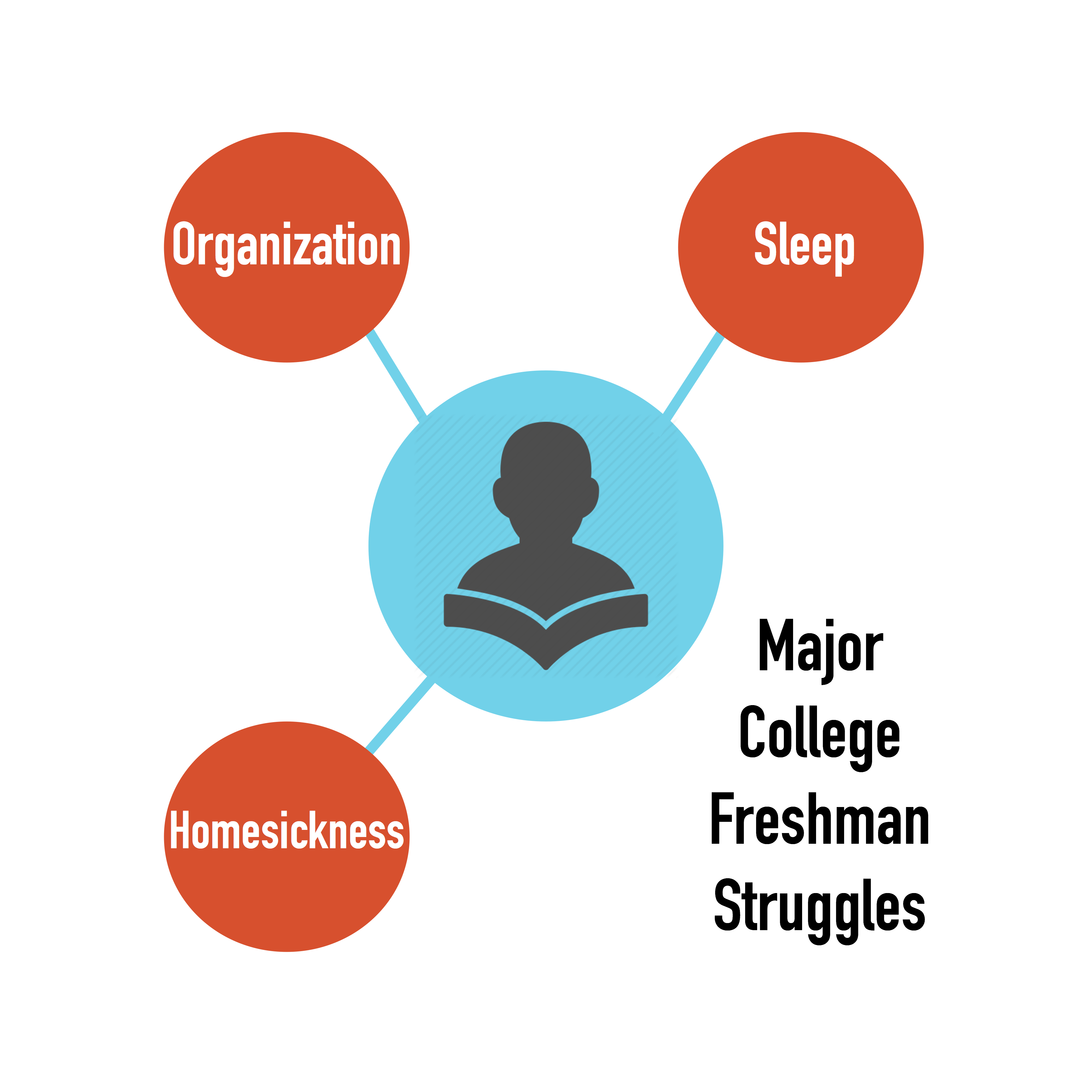
A FEW TOP COLLEGE STRUGGLES:
1. Homesickness
Some parents love the fact that their kid misses home, while also sympathizing with them. Keep in mind that homesickness is just as much about needs that are not being met at school as it is missing what they used to have. When you do get the coveted phone call from your freshman kid at school, listen to them closely and just maybe you will be able to see if their homesickness is a result of having challenging classes, finding it hard to connect with others, or if they simply want a care package mailed to them (always a winner).
2. Organization
College is typically more demanding than high-school in terms of work and very frequently much less structured in terms of homework/study time. This transition can be challenging for freshman and It is common to see a slip in grades because of this in addition to managing all their new freedoms. From frequently losing their cell phone or homework to their train of thought, organization can impact both physical and mental arenas. If your freshman kid shows signs of struggle with their organization skills, don’t panic. Together, look into a coaching program like www.YouTimeCoach.com and/or looking into the schools learning center services.
3. Sleep
When we are the ones lacking sleep, it is easy to notice the difference. Freshmen in college have this notion that they must perform at least 4 all-nighters the first semester, set a world record for cups of coffee or red bulls in a night, and put their ZZZ’s on the back burner. The reason behind this could be school work, a noisy environment, health issues, or higher priorities (pretty much everything). The college experience has so much to offer a freshman student, but this can create some priority confusion and FOMO (fear of missing out). A little trick, as your kid comes back for the holiday, take note of their sleep patterns. Typically the kids pulling late night study (or party) sessions will sleep in pretty late the first few nights home.
Keep these pieces of information handy for when your kid shows signs and symptoms of struggle. The best thing you can do for your kid is to be supportive, actively listen to them, empathize, and practice the skill of being non-judgmental. The pay off will be far greater than reacting through fear and anxiety.
Any questions regarding your kid, college, and their struggles?
As a parent, ever wonder what is going on inside your kid’s mind?
Through the positive work we have completed with adolescence, young adults, and families we’ve heard and seen almost everything. Kids want their freedom (sometimes without responsibility) and respect, while parents struggle with communication, setting boundaries, and timing.
Here are ten real thoughts direct from clients about their parents.
#1 I can’t talk to them because they will just get angry at me.
#2 All they care about are grades.
#3 They tell me to stop doing things that they do all the time and it’s bullshit.
#4 They won’t understand if I told them or will make me feel like it isn’t important.
#5 They choose when it’s convenient to say no and get upset.
#6 I don’t want to be like them.
#7 I tell them what they want to hear.
#8 When I actually try to talk to them about something that happened, I just get in trouble.
#9 When you start lecturing, I stop listening.
#10 When you trash my friends, I start disliking you, not them.
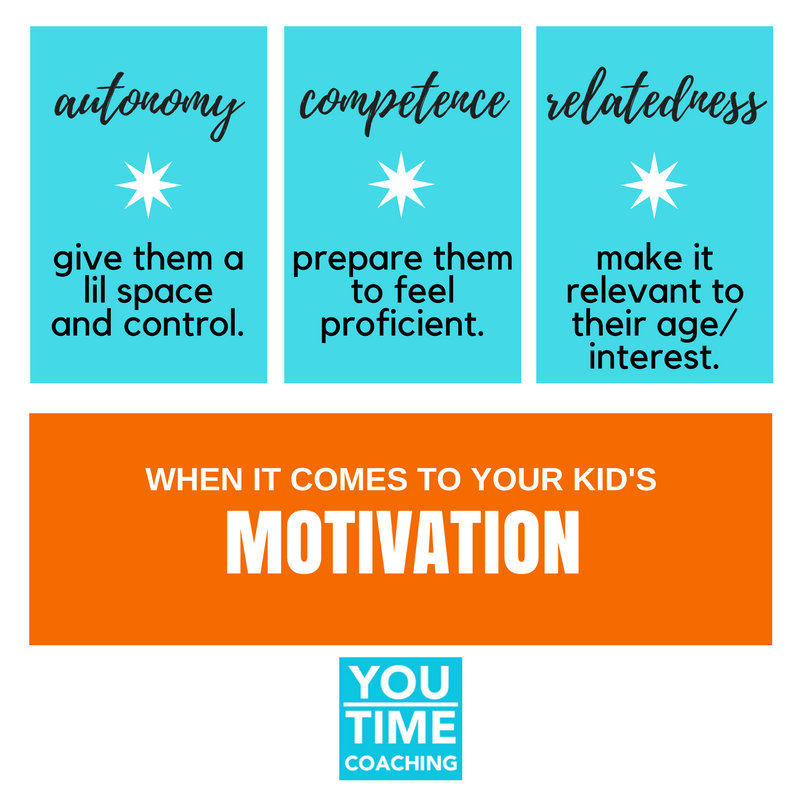
Remember, parenting is an imperfect process and so is being a kid. We are not sharing this list so you can take on all of the items one by one, instead, use it as a guide to see where more attention could be placed. When it comes to your kid’s motivation things can drastically change as they get older but if you’re able to adapt with the times, stay hip, and simultaneously hold true to healthy principles then this process could be easier on you.
Here’s just one easier way to think about motivation. Remember, in parenting, effort counts.
What goes into your kid’s motivation?
Just like when a kid doesn’t get their way, the thoughts kids have about their parents are changing by the minute. The importance behind these thoughts is where the focus should lay. Communication is typically always an underlying relationship issue between parents and kids. Check out these other blogs for helpful tips on communication with your teens, How to Love Your Kids When They Are Tough to Love and Do NOT Try to be Your Child’s Best Friend.
Feel free to leave comments below or on any of our social media pages to get a conversation going!
Nobody said that raising a teenager would be easy and some parents may even think they should be rewarded a medal once they survive it. Statements that are made about adolescence and teenage years such as, “Surviving it“, “Getting through it”, are the real area of concern.
Although these times can be filled with risk-taking behaviors, a surge of independence, what seams to be minimal communication, and an abundance of “pushing back”, they must remain open to “the work” of the adolescent years.
WHAT’S “THE WORK” OF ADOLESCENCE?
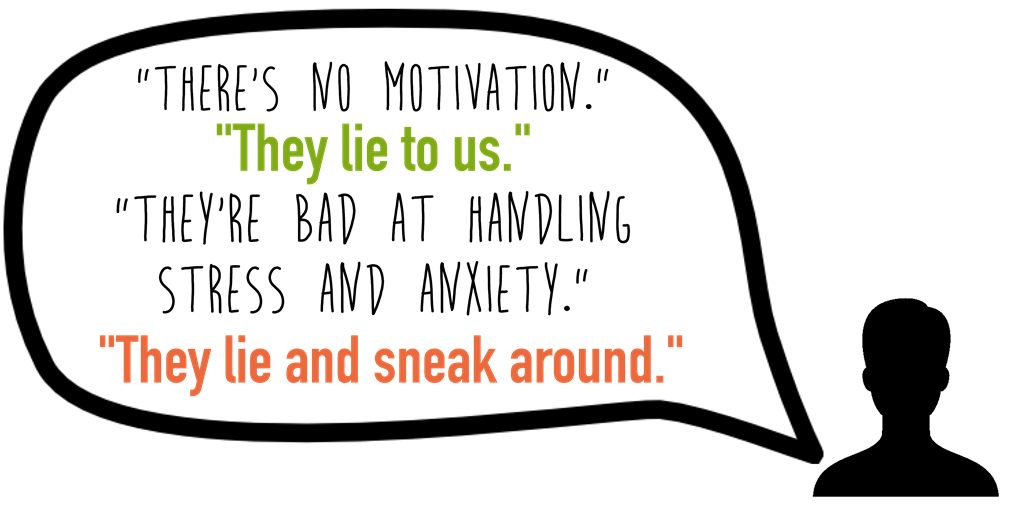
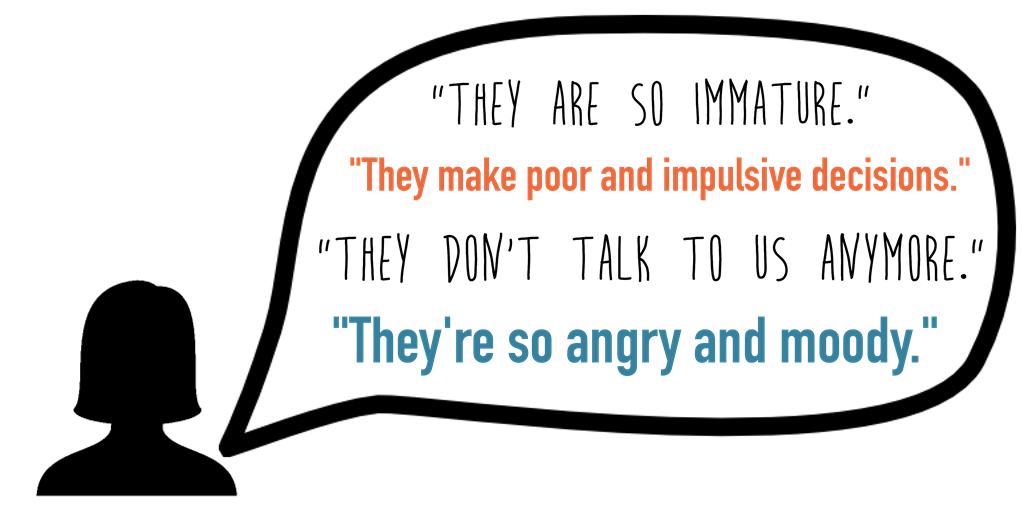
Emerging science is proving at great lengths that some of the ways we used to think about adolescence may be quite off. On a weekly basis YouTime Coaching receives emails and phone calls that very honestly communicate the frustrations of being a parent to an adolescent.
Here’s what the conversation topics look like…
Here are a few things you need to know about the what the science is telling us.
“THEY JUST NEED TO GROW UP” MENTALITY WILL NOT HELP.
This line of thinking has existed for years and rightfully so, adolescence is a time of immaturity. The problem that lies within this way of thinking is that it frames adolescence as a period of time in which you must survive, simply try and get through, endure, and come out with minimal long-term scars.
Here’s a helpful change of perspective… Adolescence is not simply about maturity vs immaturity. During adolescence the brain goes through a rapid growth period and because of these changes new behaviors and abilities present themselves. All of those common “frustrations” (above) that we hear from parents aren’t just things that you need to endure but are newly developed abilities that will end up laying the groundwork for core personality traits your child will develop for use in adulthood.
Pushing boundaries, exploring decision making, getting a taste for independence, and being emotional may drive you crazy and caused tons of stress, but are all integral building blocks that each adolescent must go through. Use this time to cultivate positive experiences and lessons from those frustrations. Most importantly, be an active part of “the work” that goes into these crucial developmental period in your child’s life.
KNOW THE UPSIDES AND DOWNSIDES TO ADOLESCENCE.
Parent’s tend to have a keen eye for a child’s impulsive decision making, risky-behaviors, pushing boundaries with sources of authority, and their kids not wanting to spend time with them. What all of these behaviors have in common… they have an upside and a downside.
Novelty seeking and reward driven behaviors can motivate a child to explore new ways of doing things, allow them to keep an open mind to additional perspectives, and be open to change. The downside could lead to risky behaviors without a major thought or concern for the outcome, which leaves a child vulnerable.
Adolescence spending a lot of time with friend (and therefor little time with their parents) could help them develop strong social connections and support networks which are heavily correlated with happiness and mental wellness. The downside is that not being around adults and only being around peers increases their chances of risky behavior and minimizes the opportunity for guidance and knowledge from an adult figure, in turn increasing risky behaviors.
You see, each new ability and behavior that is formed during adolescence can have a profound impact on their develop towards adulthood. Stay engaged, but be aware of these new found abilities that your child may possess.
The inspiration for this blog came from an article written by Dr. Daniel Siegel. Dr. Siegel is a world renowned scientist and expert in the field of mindfulness. He has a wonderful ability to take complicated scientific findings and communicate them in a way that makes them practical and exciting. Please read his article “The Amazing, Tumultuous, Wild, Wonderful, Teenage Brain.” on mindful.org.
P.S.
If you are a parent or a young person who has had some challenges and would like to share your story, let us know in the comment section below! If you have any questions, and we mean any, you can send them right over to [email protected] or visit our page at www.YouTimeCoach.com.
Sure he looks calm, cool, and collective, because he has to be! Former FBI negotiator Gary Noesner explains to us how to get anybody on your side. There are 6 keys steps that Gary shares with us. It is important to hit all of them as best as you can. If you feel like you can’t manage that (not a big deal and not a simple task at the beginning) than simply tackle a couple that you are confident you can handle. Step 1: Don’t Try to Win In a hostage situation, we never go in saying “We’re gonna wink and this person’s gonna lose.” Its not about getting you to comply with what I want or accept my point of view. It’s about us working together to reach the best agreement we can. A win is a mutual thing. *YouTime Practical Applications* Your relationship with your spouse, boss, or any other meaningful relationship.
Step 2:
Keep Your Emotions In Check
Self-control is essential when trying to influence someone’s decision-making process. If you get angry or display frustration, if your body language says you’re pissed off, you’ve lost already. But if you behave in positive ways, it has a tendency to be mimicked. It’s hard to have a two-way argument when only one person is arguing.
*YouTime Practice Applications* Once again any meaningful relationships, when you are having a “bad day”, when you need something from somebody. Interested in the science of mimicking? Check out this interesting article on mirror neurons. The Mind’s Mirror – American Psychological Association Step 3: Keep Their Emotions In Check When people are argumentative and raising their voices, what they are really saying is, “I want you to hear me, I’m angry.” So acknowledge that. “You sound like you are really upset.” Slow down and wait to articulate your point of view. Imagine a child’s teeter-totter at an angle: When emotions are high rationality is low. Before you can gain cooperation, you have to lower emotions. *YouTime Practical Applications* At the beginning of arguments to establish acceptance, to normalize somebody’s feelings, when you absolutely need people to hear your valid points, and definitely use this you are considered “a bad listener”. Step 4: Be a Good Listener
Take the time to understand the other person’s point of view and you’re much more likely to be successful in getting what you want. Be open physically too: Face the person, make good eye contact, be attentive and smile – it’s one of the most powerful influencing tools we know.
*YouTime Practical Applications* Use when speaking with a female (the love listeners) and effective during communicating sensitive topics. Step 5: Start Small
If you treat an argument like a zero-sum game, it prevents you from taking a more appropriate intermediate step, which is, let’s find some common areas. Tackle the issue that has the best chance for compromise. Lock that one down, then move on to the more difficult ones, knowing they may not be solvable. *YouTime Practical Application* When arguing with “bigger concept” type people, when compromise is what you are looking for, and when the issue you are dealing with is a longer term “process” problem.
Step 6:
Give to Receive
If you demonstrate a willingness to be open and flexible – that you’re willing to meet halfway, that there are aspects of your position you might modify – it puts a burden on them. It’s like saying, “It’s your turn to show that you, too, can be sensible.” Most reasonable, intelligent people will say, “OK, this person has stepped to on the a limb, they’re are willing to work with me. Now I have to show something.” *YouTime Practical Application* Use when dealing with reasonable people, somebody that is rigid may not take well to this method. Use if you are communicating to somebody that believes you are a rigid person. Always give to receive, the law of reciprocity is on your side.
*This article was adapted and sourced from Men’s Journal, April 2014. The article was written by Maria Fontoura.






 1. Homesickness