
by YouTime Coaching | Feb 28, 2019 | Behavior, behavioral issues, Brain, Children, Control, Health, parenting
If you, a friend, family member, significant other, or even an imaginary friend have ADHD, then you know a couple things to be true.
First, chronic procrastination, disorganization, and poor sleep habits are at the core. Even so, please don’t let this fool you.
Let’s face the truth, there are stigmas, biases, and stereotypes about anyone with ADHD (kids and adults with ADHD have their own “special” stigmas…etc). Looking at someone else’s eight or ten year old kid and saying, “Well, glad thats not my problem.”, “That kid needs to be on meds.”, “Their parents need to really control them better.”…. and you get the point.
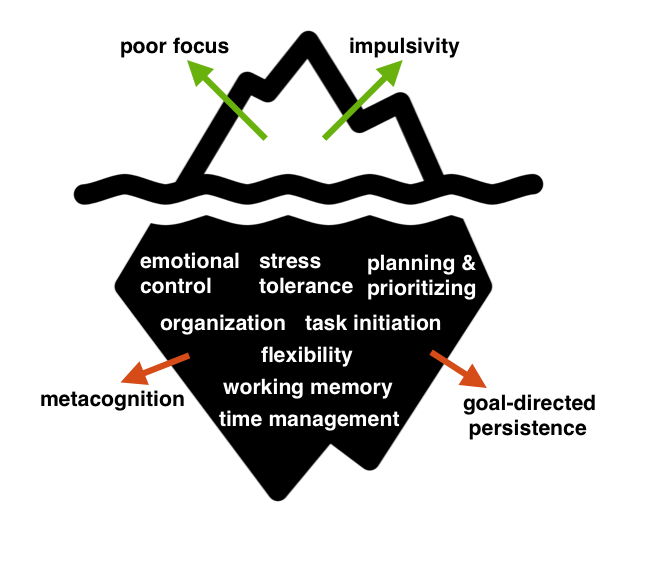
ADHD is like an iceberg.
I know you have all heard the analogies about icebergs, and at this point it may be getting old, but for your kid’s sake stick with me because the each iceberg analogy equally deserves its own attention, especially when we are talking about a disorder that effects sustained attention. You can do it. I think you get the point… below the surface can get messy.
Practice: Acknowledge and let go of your assumptions
Assumptions can lead us down some slippery paths, but more importantly it drastically affects our approach to problems and challenges. When we make assumptions, it impacts the experience of everyone involved.
Use your imagination and visualize any tough situation for your kid. Don’t go for the home run on this, simply choose something that brings up moderate levels of emotion. Now just sit there, think about this scenario, and complete a couple exercises.
• Take a second and write down what feelings come up for you (stress, irritation, anger…etc).
• Make a list of the reasons why you believe caused this to happen (laziness, not being motivated…etc).
• Sit down for one minute and breathe. Focus on your lungs expanding on your in breathe and your muscles softening on your out breathe. If your mind drifts to a distraction, bring yourself back to your breathe. Just one minute.
• After your minute of breathing ask yourself, could there be any other reason behind my child’s behavior? Could your child’s intentions behind the behavior be different than you thought?
At the end of the day, you can afford to take a minute and step away from an emotionally charged situation. This time away can help you gain just a little more clarity and open-mindedness, which last time I checked can go a long way to a kid.
*this blog was derived from the amazing book Mindful Parenting for ADHD by Dr. Mark Bertin.
by YouTime Coaching | Feb 24, 2019 | Growth, parenting, positive reinforcement
“My ADHD child never gets angry.”, said nobody ever.
We will keep this article short and sweet. When your child gets irritated, upset, and loses their cool it totally takes a toll on a parent’s emotional balance. While your child is busy making themselves feel heard and noticed, you may also feel inclined to do so.
Regardless of how irrational or unpredictable your child’s defiance or anger may be, there is one thing we know to be true. Whether you like it or not, when your kid “falls apart” it is very easy and common for parents to “fall apart” as well.
[bctt tweet=”When your child gets irritated, upset, and loses their cool it totally takes a toll on a parent’s emotional balance, but there are ways to handle it properly!” username=”@youtimecoaching”]
This can present itself in a few ways…
• You start yelling or “not using your regular tone of voice”.
• There’s an increased inclination to punish your kid.
• More susceptible to excusing broken boundaries (avoidance conflict mode)
• The parent can shut down and stop communication (ex. “I don’t have time for this!”)
• You stop listening to your kid altogether.
DOWNLOAD: 10 Parenting Strategies For Raising Children With ADHD….
That Actually Work!
Don’t get me wrong, this is not putting all of it on the parents. In the end, you want to be the best support possible for your child, while also keeping your head screwed on straight and staying within your skill-set. Doing this will bring you BOTH relief.
[bctt tweet=”Tips to bring you and your children relief when parenting your angry kid with #ADHD.” username=”@youtimecoaching”]
Having a child with ADHD means they may already struggle with impulsive behaviors, trouble regulating emotions, or could have a low-stress tolerance. Remember in many cases, how your child perceives the situation could be at the heart of the anger.
First, ask yourself, why is my child upset?
… they don’t feel heard or noticed
… they don’t fully understand the problem (needs help processing it)
… they can’t see other options to the issue
… there is a “layered stress effect” from other things going on in their life
… they are hungry, lonely, or tired
While I am sure you can come up with more (I have been amazed at what upsets young people), the point is that the source can be many things.
As a parent, I will throw you a bone.
Here are two things you need to know and practice when your child is “falling apart”.
1. Don’t fall apart. Be the tone.
Sorry, I had to say it. The truth is that when your child is going through this moment of suffering you can practice observing with a nonjudgmental approach. Take a breath and listen to them, EVEN if their anger seems to be turned towards you (parents typically take the brunt of the storm #truth). Set the tone with your child and practice patience, understanding, and observe their moment of suffering (I know it is occasionally hard to feel empathetic/sympathetic towards your kid during these times, and that is more about the moment of suffering you are experiencing. Be kind to yourself, by being calm and patient, and the effects will spread to your kid.
2. Know your “tendencies” when you reach your limits.
Some parents completely disengage from their kids when they have had enough. We call it the “whatever” parent (if you are a “whatever” parents, email info@youtimecoaching ASAP). Other parents will tend to assign harsher punishments as a sign that they have had enough. Discipline is much more effective than punishments. Look at the previous punishments you have assigned and see the effectiveness (…does your kid still leave his crap all of the place? Probably.). With discipline, you are shaping your child’s behaviors and reinforcing the desired ones. If they are yelling, remain calm, do not react to it, listen to what they are saying (and where it is coming from), and model the voice tone and language you wish to hear. You may even have to ask them calmly to speak softer or have this conversation in a different environment.
Parenting quote for the day:
“Don’t yell at your kids. Lean in real close and whisper, it’s much scarier.”
DOWNLOAD: 10 Parenting Strategies For Raising Children With ADHD….
That Actually Work!