by YouTime Coaching | May 9, 2019 | Academics, Advice, alcohol, Anxiety, Arguments, Behavior, Certainty, Children, Communication, Confidence, Depression, Expectations, Fear, happiness, Motivation, parenting, parents, Relationships, Sadness, Self-Esteem, Teenagers, Uncategorized, Uncertainty
As hard as it is to admit, when I was in high-school, I bullied kids. Let me explain…
I didn’t take their lunches (I was a 6ft lanky fella who could have easily been beat up), get in physical fights, give out wedgies and hang them up by their underwear, or shove people into lockers. I was into sports, had popular friends, usually had a popular girlfriend, was invited to junior and senior parties as a freshman and sophomore, and dressed nice.
On the inside, none of that shit really mattered. I was incredibly anxious, insecure (pro at hiding it), constantly questioned where I stood in the eyes of others and typically felt inadequate because of self-comparison.
My bullying method of choice in high-school was mental warfare. I would insult other people about how they looked, moved, ate, spoke, and just about anything else they was available for others to see. In my insecure teenage mind, if I put someone down 10 social/confidence points then I would go up 10 points and so on. Making fun of others to feel better about myself was the currency and I was rich in that respect, but oh was I super fucking poor in more important areas.
You see, I had convinced myself that this was the fast way to feeling confident, happy, accepted, and comfortable. Unfortunately, this method breeds the opposite feelings and sets you on a really challenging trajectory.
A kid’s search for acceptance is very messy.
As a parent, you may not agree with the decisions your kid is making and that is completely fine. Coming from a place of, “I can understand why you would do this but it doesn’t make it excusable”, is a healthy mindset.
As a Freshman on Varsity soccer and baseball, I was hanging out with the “super cool” Juniors and Seniors. I started smoking weed, drinking, and finding ways to “fit in” with others because I wasn’t sure at all about myself. I managed to get “good enough” grades so people would stay off my back and expect just a little less out of me compared to others. I got into trouble at home and in school, with the exception being sports. Sports was special because I was able to channel many of the tough emotions (anger/sadness) into physical output. It was the closet thing I knew to a direct correlation between how much personal effort I put in and how much positive feedback I got out of it. It kept me more in line than anything else at the time.
One thing I know for sure is that if you put all your eggs in one basket for support, as a crutch, and tie it to your identify then you run the risk of a crisis down the line. That’s what happened next.
After high-school graduation, I moved up to New England to play baseball for the University of Rhode Island (notice how I didn’t say “to be a student” or “to major in…”). On September 17th, which just so happened to be my birthday as well as two weeks after I moved-in and less than a week before training started, I broke my left pitching elbow. Getting my legs taken out from under me playing (sober) soccer on a basketball court did me in. It was the ending of baseball career before if started and the beginning of a crisis.
I have to be a student now?
That’s not what I signed up for but it was my new reality. It caused significant anxiety, panic attacks, a desire to isolate myself. Since I’m left handed and broke that elbow, I couldn’t write and so I stopped going to a lot of classes or just never took notes which led to my gpa being an impressive 2.4.
Things got a little worse before they got massively better and I credit where I’m at today with reaching out for outside support.
In the final two years of undergrad, my gpa was almost a 4.0. The first year out I worked psych research with detained adolescence, got accepted and went to Boston University’s Sport Psychology and Counseling Master’s program (on a 75% scholarship and finishing with a 3.9 gpa), and have been running a Youth, Family, and Adult Life Coaching company for 10+ years.
We live in a world where it’s all too common for kids to be shamed for their weirdness and uniqueness. It teaches them to turn AWAY from their uniqueness and TOWARD… acceptance.
With kids, this basically means trying to “fit in”, conform, and act within the group norms. Conformity has its appropriate place and time as does groups norms, but having kids turn AWAY from their weirdness and uniqueness because of shame, uncertainty of what their social status will be, or whether they think others (including parents) will accept them will in no doubt backfire for them in the future.
Every week, I see the impact this has on young people. I hear them share perspectives and stories on how they feel as though they are “putting on a show”, “don’t know who they are”, “will lose friends in a second if they don’t…[insert superficial factor]”, how they “don’t feel good enough”, and how they “feel that they can’t act like themselves around their parents and most of their friends”.
I see a little bit of me in each of them.
It’s sad, but it’s real and the solution starts at home. Parenting is tough, being a kid is tough, and it’s not about placing your kid in a bubble. No bulldozer, helicopter, or tiger parenting here. We need to get back to a place where we put down our screens, have them put theirs down too, listen and communicate with empathy and honesty, find out what kinds of weirdness/uniqueness they have, help them explore it, and teach them ways to persevere.
Parents need to have boundaries (which are seen as a source of love from kids), talk about the tough topics, incentivize healthy behavior but also (appropriately) discipline poor choices. Yes, this can be done compassionately and keeping in tact the message that you love and support them.
This can happen anywhere, but it starts in the home.

by YouTime Coaching | Sep 26, 2017 | Advice, Anxiety, Attitudes, boundaries, Children, Communication, Compromise, Consistency, Decisions, Emotions, Expectations, Failure, Fear, Fighting, Focus, Life Coaching, Listening, parenting, parents, positive reinforcement, Trust
As a parent, ever wonder what is going on inside your kid’s mind?
Through the positive work we have completed with adolescence, young adults, and families we’ve heard and seen almost everything. Kids want their freedom (sometimes without responsibility) and respect, while parents struggle with communication, setting boundaries, and timing.
Here are ten real thoughts direct from clients about their parents.
#1 I can’t talk to them because they will just get angry at me.
#2 All they care about are grades.
#3 They tell me to stop doing things that they do all the time and it’s bullshit.
#4 They won’t understand if I told them or will make me feel like it isn’t important.
#5 They choose when it’s convenient to say no and get upset.
#6 I don’t want to be like them.
#7 I tell them what they want to hear.
#8 When I actually try to talk to them about something that happened, I just get in trouble.
#9 When you start lecturing, I stop listening.
#10 When you trash my friends, I start disliking you, not them.
Remember, parenting is an imperfect process and so is being a kid. We are not sharing this list so you can take on all of the items one by one, instead, use it as a guide to see where more attention could be placed. When it comes to your kid’s motivation things can drastically change as they get older but if you’re able to adapt with the times, stay hip, and simultaneously hold true to healthy principles then this process could be easier on you.
Here’s just one easier way to think about motivation. Remember, in parenting, effort counts.
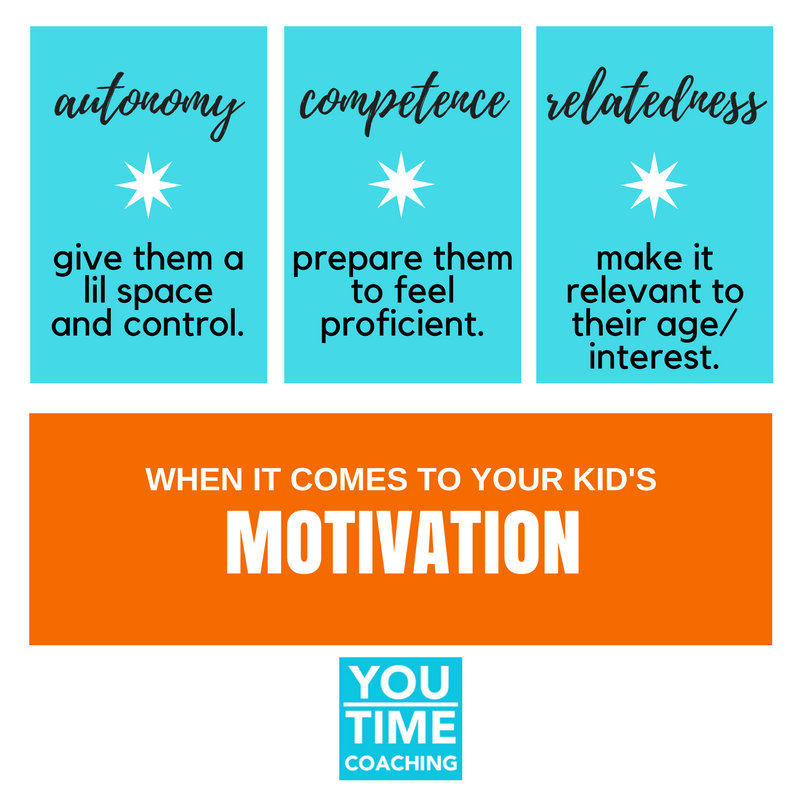
What goes into your kid’s motivation?
Just like when a kid doesn’t get their way, the thoughts kids have about their parents are changing by the minute. The importance behind these thoughts is where the focus should lay. Communication is typically always an underlying relationship issue between parents and kids. Check out these other blogs for helpful tips on communication with your teens, How to Love Your Kids When They Are Tough to Love and Do NOT Try to be Your Child’s Best Friend.
Feel free to leave comments below or on any of our social media pages to get a conversation going!

by YouTime Coaching | Feb 8, 2017 | Academics, Anxiety, Change, Confidence, Fear, Focus, Life Coaching, Mental Health, Outcomes, Positive Psychology, Results, Stress
It’s natural for students to feel nervous as standardized tests approach.
But it’s also very easy for this anxiety to spiral out of control and affect their overall well-being. No test is worth that! (Not to mention that being paralyzed by fear is not the ideal condition for a test-taking brain.) Test anxiety can be rooted in a lack of mastery of the material, uncertainty about test-taking conditions, and/or dread of the long-term consequences of falling short—and often, some combination of the three.
If your student is suffering, take heart: test stress is not inevitable!
Each of these anxieties can be dealt with and you can minimizing test stress. Here are some strategies that can apply to almost any student preparing for almost any test.
- Own the fear. Telling a student their fear is “all in their head” is counterproductive. Of course it is—all emotions are in our heads! Instead, help your student determine what they should and should not worry about. If your student lacks mastery in a subject, their test anxiety may be very real. If they worry over material they’ve already mastered, then you’re dealing with a different type of anxiety entirely.
- One step at a time. Gradually acclimating your student to test pressures can help normalize the test-taking process for them. Completing practice tests, working under timed conditions, and learning to work in noisy environments can all help your student prepare for their experience in the testing center. A coffee shop or library—where they will have to work through sniffling, conversations, street noise, and other things that fray nerves—is a great place to prepare.
- Think outside the test. Sometimes the very format of the standardized test causes panic. In this case, help your student develop skills with something other than the test. Developing reading comprehension questions using a novel or newspaper article, or applying geometry skills by designing a bookcase or coffee table, may help your student master skills in a fun, non-threatening way.
- Practice good test hygiene. Habits can make or break a test-taker. Set routines for your student. For example, if the test will happen on a Saturday morning, set aside every Saturday morning for test prep. Work on maintaining good posture and a positive but aggressive attitude toward the test. Finally, consider mindfulness exercises that will help your student quiet their inner critic.
More than anything, emphasize keeping things in perspective. Though the SAT or ACT may seem all-important, remember that most students take the test two or three times, and there’s much more to a college application than just test scores!

This blog was written by Signet Education’s Director of Education, Sheila Akbar. Sheila is also Signet’s resident admissions and test prep expert. She has been preparing students for the SAT, ACT, and GRE for over ten years in both one-on-one and in classroom settings. Sheila holds both a BA and an MA in Near Eastern Languages and Civilizations from Harvard University and holds two PhDs from Indiana University in Comparative Literature and Near Eastern Languages and Cultures.

Signet Education provides individualized tutoring, test prep, admissions consulting, and organizational coaching for students.
by YouTime Coaching | Feb 25, 2014 | Affect, Anxiety, Depression, Emotional Clutter, Emotions, Fear, happiness, Law of Attraction, Memories, Peanuts, Pig-Pen, Sadness, Suppression
Let me introduce you to my old friend “Pig-Pen”.
Pig-Pen is special in many ways but as you notice he carries a cloud of dirt around with him. No matter how hard he tries to clean himself the cloud of dirt almost magically reappears.
It is almost as if this individual is a magnet for dirt.
Individuals, like you and me, have the magnificent ability to attract specific things into our lives. Sometimes we invite genuine new friendships and connections, while other times we attract chaotic relationships and environments to live in.
You can almost say that humans have a magnetic field for these things.
I am going to walk you through a map I came up with. This map will help you see if you and Pig-Pen have a couple things in common.
What drives human behavior?
EMOTIONS!
When your happy, ecstatic, and empowered you can accomplish amazing things at incredible speeds. At the same time, when you are sad, irritated, and aggravated an individual can cause detriment very quickly to themselves and those in their environment. Emotions drive us. It is our fuel, empowering and disempowering.
What happens when you experience many emotions at one time?
Build-up, Suppression, and Inability to Properly Process
You all have most likely had a time in your life when you were experiencing multiple emotions at one time. Maybe at the time one emotion really stood out to you (anger, sadness…etc). Or possibly you felt confused and didn’t know what to feel.
What does this put you at risk for?
“Emotional Clutter”
Emotional Clutter are the thoughts, beliefs, events, memories, experiences, and feedback that we have received or been through in the past that have not passed through us but have simply become stuck in our mind and body.
Who does this affect?
1. You
2. The individuals around you
Is the “cloud” always visible to us?
No, not at all. Ever feel like you have “processed” or “gotten past” something and one day it creeps back into your life? Well, that is simply the “cloud” rearing its invisible ugly head.
What does it affect?
This cloud will filter and affect;
1. Everything we think about (our mental focus).
2. Everyone we meet (and the type of people we meet).
3. What we do (and what we don’t do).
3 Things You Must Know About “Emotional Clutter”
1. Our “cloud” can combine with other people’s clouds (others perceptions, agendas, world views).
2. Our “cloud” attracts more clutter (from friends, family, new connections, environments).
3. Our “cloud” leaves debris for others to pick up
One Opposing Force to “Emotional Clutter”
The Law of Attraction:
“Like attracts Like”
Events are attracted by you and the energy that you send out to the world, the environment you exist in, and the people around you. Individuals receive the positive or negative energy you send out. In order to oppose Pig-Pen’s magnetic attraction for dirt, he must focus and manifest positive energy to getting clean.
In human talk, take some time to really think hard about what you want, your intentions behind it, and ask for it!
2 More Techniques to Release the “Clutter”
1. Find one behavior to release
What is one negative behavior you feel safe and secure releasing? Find one and focus on just that.
2. Focus on the process more then the outcome.
It is simple for most to identify where they would like to be in life. Sometimes requiring a little bit of thought. What many people don’t realize is that the process to get their is just as, if not more important than the outcome.
“Emotional Clutter” is made up of individual strands. Focus on the individual strands to detangle the “clutter”. Maintaining focus on the entire “cloud” will become overwhelming, stress inducing, and harmful to your success.
I think we both can see the smile on Pig-Pen’s cloudless face now.
Resources for your “Emotional Clutter”:
Thanks for reading!
All the Best,
Jonathan
by YouTime Coaching | Feb 16, 2014 | Anthony Robbins, Appreciation, Commitment, Consistency, Creativity, Dreams, Expectations, Fear, happiness, Love, Quotes, Regret |
A good quote can motivate somebody to try something new, persist through tough times, or make necessary changes in their life. Quotes are so powerful because they embody an entire mindset, image, story, and lifestyle within one single sentence.
In my perspective, what makes a quote set itself apart is if it actually motivates you to take action with your life simply by the burning desire it ignited in you. Sounds powerful and somewhat unbelievable, huh? It happens and it will right now.
Following the quotes below will include a very small and incredibly manageable exercise to complete. Do this and consider you day a success.
1.
Exercise: Since scheduling makes it real, lets schedule! Think about something that you enjoy doing, that is positive for you, or brings you great vibes and schedule it for the very near future. Set this in your calendar, with as many reminds as possible, and lets make this real!
2.
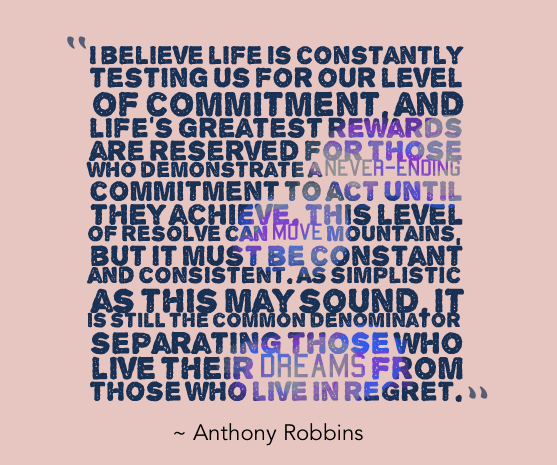
Exercise: Keep it simple stupid. What we are constant and consistent with, as simple as it sounds, is what makes the real difference. Choose something right now, that is once again extremely manageable and positive (requires minimal time, minimal resources, and minimal excuses) and agree to do it every day for 30 days. Some people may choose taking one deep breath a day, drinking a glass of water in the morning, or saying hello to one stranger.
Whatever you choose, stay consistent and constant.
3.
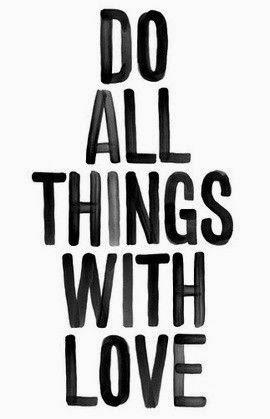
Exercise: For this exercise, I want you to do two things.
First, write down something you love doing.
Second, write down something you could do with more love.
4.
Exercise: Wrong? Never! For this exercise I want you to write down or state out loud something that you have been wrong about. After all, we all have been wrong at some point in our life.
5.
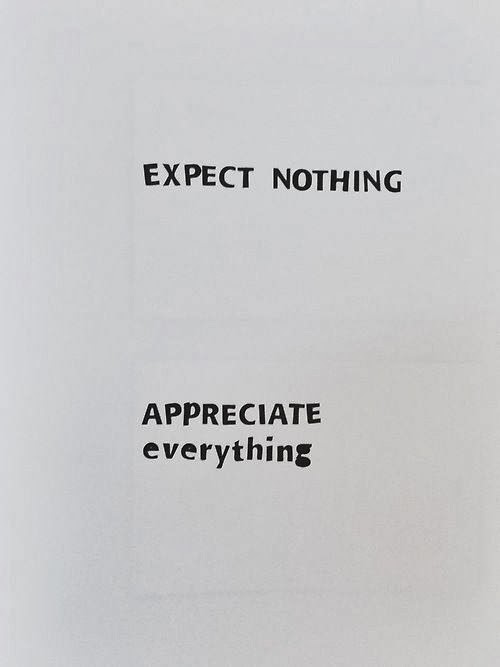
Exercise: If you don’t appreciate what life has offered you, you begin to take it for granted. Write down 5 things that you appreciate in your life (if you have more then 5 keep the list going!).
Congratulations! If you followed the exercises then you have had one successful day.
Take this message with you,
Live your life by continuing to grow through your actions, being consistent, appreciating everything, not fearing being wrong, and most of all, live your life with love.
by YouTime Coaching | Feb 7, 2014 | Abuse, Benefit, Fear, Healthy, Positive, Reaction, steps, Tolerate
On Pinterest you can find nearly anything. From wedding ideas, workout routines, recipes, cute animal pictures, to quotes. If I had a specialty on Pinterest it would be finding unique, meaningful, and stimulating quotes to sit down and really think about (maybe even do something about). I know half of the population on social media believes, they are the quote gurus! I say, there can be many gurus.
I came across a quote a while back,
After reading this I thought for a moment about myself and some of the things that I allow to “slide by” throughout my day and week. What really grabbed me though, as seen through the work I do with clients, is that people tolerate very toxic things in their lives.
“Examine what you tolerate”. In other words, take a deeper look at what things you allow to exist, occur, and be done within your own life that you have convinced yourself are for your best interest. i
Individuals choose to tolerate a wide range of things in their lives that are believed to be for your benefit but are actually toxic to your life.
Major “tolerated” toxic events;
- Having friends that put you down
- Being lied to frequently
- Being in a relationship that is abusive (verbal, physical, sexually, and neglectful)
- Negative treatment because “you are not good enough”
- Bullying because “you deserve it”
- Consistently giving up on going to the gym or your diet because it “won’t make a difference”
- Bad habits (tolerated by the individual with the habit and others in their environment)
People tolerate all types of things as result of low self-worth and image, fear of others reactions, fear of “not being good enough”, fear of “the unknown and uncertainty”, the perceived consequences of not tolerating the event, and conditioning to tolerate these events from prior relationships.
This month set-up an appointment with yourself for a real gut check. Ask yourself what types of things do you tolerate that may be limiting you and why do you tolerate them?
We all have our faults, imperfections, bad habits, and things to work on. Let’s start by being your own detective and asking these four questions.
- What are the incredibly obvious things I tolerate in my life right now?
- What are the tougher, more painful, and complicated pieces that you tolerate in your life? (true gut check)
- What is the cost of continuing to tolerate these things?
- What is the benefit of taking steps to stop tolerating these events?
When working on some of the events I have mentioned above you want to be under the supervision of a trained Mental Health Professional. If you feel as though this is the time make some of those changes use the link below.