
by YouTime Coaching | May 9, 2019 | Academics, Advice, alcohol, Anxiety, Arguments, Behavior, Certainty, Children, Communication, Confidence, Depression, Expectations, Fear, happiness, Motivation, parenting, parents, Relationships, Sadness, Self-Esteem, Teenagers, Uncategorized, Uncertainty
As hard as it is to admit, when I was in high-school, I bullied kids. Let me explain…
I didn’t take their lunches (I was a 6ft lanky fella who could have easily been beat up), get in physical fights, give out wedgies and hang them up by their underwear, or shove people into lockers. I was into sports, had popular friends, usually had a popular girlfriend, was invited to junior and senior parties as a freshman and sophomore, and dressed nice.
On the inside, none of that shit really mattered. I was incredibly anxious, insecure (pro at hiding it), constantly questioned where I stood in the eyes of others and typically felt inadequate because of self-comparison.
My bullying method of choice in high-school was mental warfare. I would insult other people about how they looked, moved, ate, spoke, and just about anything else they was available for others to see. In my insecure teenage mind, if I put someone down 10 social/confidence points then I would go up 10 points and so on. Making fun of others to feel better about myself was the currency and I was rich in that respect, but oh was I super fucking poor in more important areas.
You see, I had convinced myself that this was the fast way to feeling confident, happy, accepted, and comfortable. Unfortunately, this method breeds the opposite feelings and sets you on a really challenging trajectory.
A kid’s search for acceptance is very messy.
As a parent, you may not agree with the decisions your kid is making and that is completely fine. Coming from a place of, “I can understand why you would do this but it doesn’t make it excusable”, is a healthy mindset.
As a Freshman on Varsity soccer and baseball, I was hanging out with the “super cool” Juniors and Seniors. I started smoking weed, drinking, and finding ways to “fit in” with others because I wasn’t sure at all about myself. I managed to get “good enough” grades so people would stay off my back and expect just a little less out of me compared to others. I got into trouble at home and in school, with the exception being sports. Sports was special because I was able to channel many of the tough emotions (anger/sadness) into physical output. It was the closet thing I knew to a direct correlation between how much personal effort I put in and how much positive feedback I got out of it. It kept me more in line than anything else at the time.
One thing I know for sure is that if you put all your eggs in one basket for support, as a crutch, and tie it to your identify then you run the risk of a crisis down the line. That’s what happened next.
After high-school graduation, I moved up to New England to play baseball for the University of Rhode Island (notice how I didn’t say “to be a student” or “to major in…”). On September 17th, which just so happened to be my birthday as well as two weeks after I moved-in and less than a week before training started, I broke my left pitching elbow. Getting my legs taken out from under me playing (sober) soccer on a basketball court did me in. It was the ending of baseball career before if started and the beginning of a crisis.
I have to be a student now?
That’s not what I signed up for but it was my new reality. It caused significant anxiety, panic attacks, a desire to isolate myself. Since I’m left handed and broke that elbow, I couldn’t write and so I stopped going to a lot of classes or just never took notes which led to my gpa being an impressive 2.4.
Things got a little worse before they got massively better and I credit where I’m at today with reaching out for outside support.
In the final two years of undergrad, my gpa was almost a 4.0. The first year out I worked psych research with detained adolescence, got accepted and went to Boston University’s Sport Psychology and Counseling Master’s program (on a 75% scholarship and finishing with a 3.9 gpa), and have been running a Youth, Family, and Adult Life Coaching company for 10+ years.
We live in a world where it’s all too common for kids to be shamed for their weirdness and uniqueness. It teaches them to turn AWAY from their uniqueness and TOWARD… acceptance.
With kids, this basically means trying to “fit in”, conform, and act within the group norms. Conformity has its appropriate place and time as does groups norms, but having kids turn AWAY from their weirdness and uniqueness because of shame, uncertainty of what their social status will be, or whether they think others (including parents) will accept them will in no doubt backfire for them in the future.
Every week, I see the impact this has on young people. I hear them share perspectives and stories on how they feel as though they are “putting on a show”, “don’t know who they are”, “will lose friends in a second if they don’t…[insert superficial factor]”, how they “don’t feel good enough”, and how they “feel that they can’t act like themselves around their parents and most of their friends”.
I see a little bit of me in each of them.
It’s sad, but it’s real and the solution starts at home. Parenting is tough, being a kid is tough, and it’s not about placing your kid in a bubble. No bulldozer, helicopter, or tiger parenting here. We need to get back to a place where we put down our screens, have them put theirs down too, listen and communicate with empathy and honesty, find out what kinds of weirdness/uniqueness they have, help them explore it, and teach them ways to persevere.
Parents need to have boundaries (which are seen as a source of love from kids), talk about the tough topics, incentivize healthy behavior but also (appropriately) discipline poor choices. Yes, this can be done compassionately and keeping in tact the message that you love and support them.
This can happen anywhere, but it starts in the home.

by YouTime Coaching | May 12, 2017 | Anxiety, Behavior, Children, Depression, Distress, emotional problems, high school, Kids, Listening, parenting, Teenagers
Part II: From the Parent’s Perspective
In Part I, we met Emma, the brave high-school girl that traveled down the bumpy road towards self-acceptance. Through all of the anxiety, depression, and frustration of trying to understand “who she really is”, Emma found a way to finally accept the things she struggled with in life. Go ahead and get a refresher, or just read Part I for the first time here.
As a parent, seeing your child struggle can be heart wrenching. Some parents want to swoop in to help ease the discomfort (both yours and your child’s), while others may think these are “necessary learning experiences”. Many parents though are not even aware of how they respond to these types of conflicts (btw if you are curious to learn more about your conflict style, find out more through this assessment YouTime Coaching Conflict Mode Assessment)
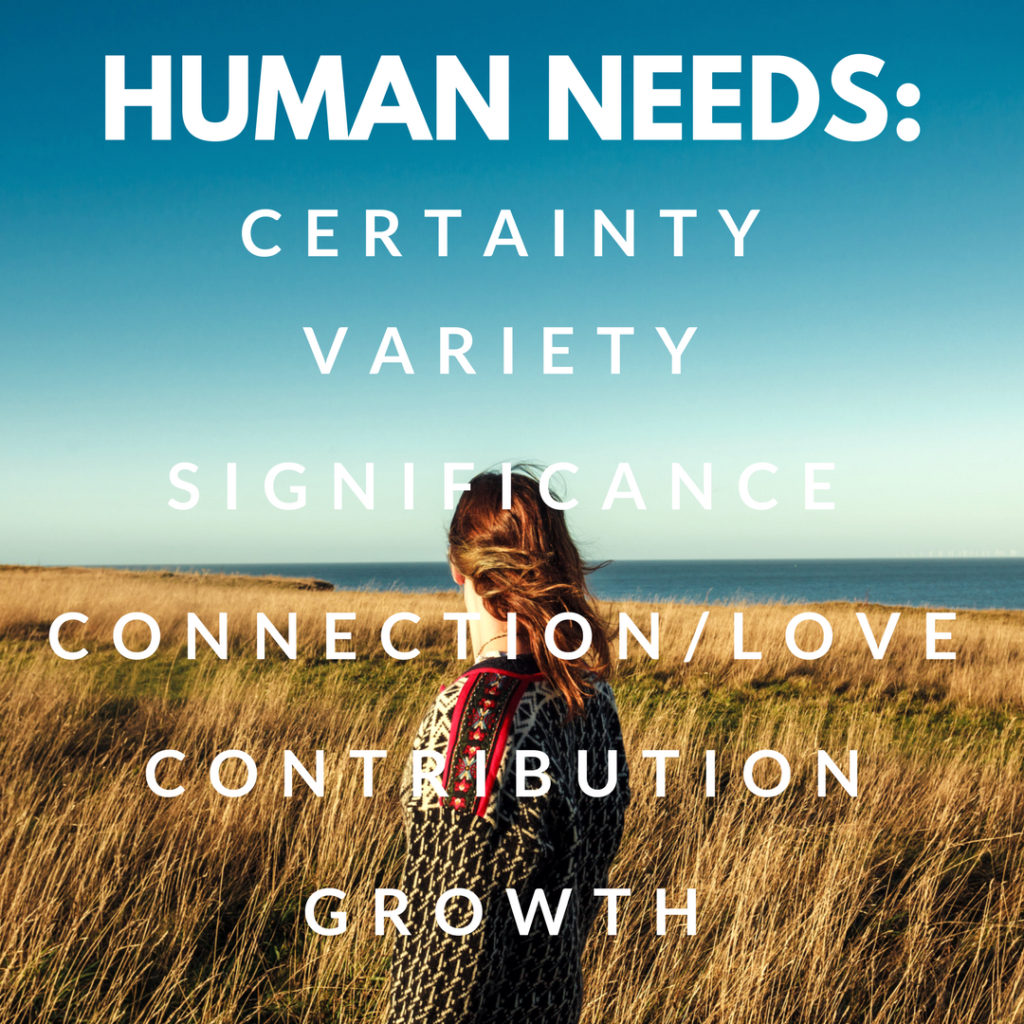
As a parent one of the most impactful things you can do is be present for your child. Not passive, avoidant, accommodating, but present. Whether your 50 years old or 15, we all have the same needs (we just may meet them differently).
A parent’s own fear, insecurity, anger, and even sadness can prevent them from being fully present for their kids when they may need it the most. The symptoms of struggle for a young person may not be blatantly obvious, which makes being present, aware, and appropriately involved that much more important.
In our interview, Emma’s mother (Kate) shares a little bit about her experience during the time that her daughter was trying to “figure it all out”.
YouTime: When did you realize that your child had challenges that affected her everyday life?
Kate: When she was around nine we noticed challenges with school work. When she hit middle school the social challenges began to appear more than ever and the insecurities controlled her.
YouTime: What was the evaluation and assessment process like for you and your child?
Kate: When she was in the third grade her school contacted us regarding her inability to pay attention. She had no idea what that meant and thought nothing of it, she was a typical happy child and as for myself, I instantly went into denial because my daughter was “perfect”, it was the teacher right?! It was NOT my child with the issue. I was very defensive and protective… Eventually, I agreed to have her tested for ADHD and with research and family support I realized that even with ADHD she is still “perfect”. The real challenge began in middle school when the depression and the anxiety took control of her. It was and still is very trying at times and has had a major effect on our family and relationship with parents of her peers.
YouTime: What were some of the biggest frustrations for you as a parent?
Kate: My biggest frustration had to be adjusting in how I helped her with school work or approach personal situations when talking to her. The mom in me wants to yell “just finish the work, sit still, why can’t you do this, who cares what people think….”. But I know I can’t approach her like that if I want her to remain open and talk to me. She shuts down when I appear frustrated and withdraws herself. I have learned to not react before I think and to try to understand that she thinks and how she learns differently than I do.
YouTime: Did you have any strategies for maintaining a balanced mind during this time period?
Kate: Prayer. I do not know another honest way to answer that question. I know there are those who would answer differently but for me that is the only strategy I have had.
YouTime: What do you attribute most for the positivity in your relationship with your daughter now?
Kate: I do not make her feel like she is anything less than perfect to me and that her ADHD, reading disorder, depression and anxiety are all things that make her even more perfect. I have done my best to help her see these traits as gifts in one way or another. I fail daily, I am not a perfect parent but making notes with reminders on them all around the house for her, simply reminding her at lunch with a text telling her to remember certain things and not making her feel like I am annoyed by her inability to stay on task or hold friendships at school.
YouTime Coaching Take Home:
Take this page straight out of Kate’s book, “I fail daily, I am not a perfect parent…”
Parenting an adolescent is quite a challenging task, let alone having to continue managing the things going on in your own life. This is a beautiful example of how appropriate parental support, involvement, and mindfulness can have a major positive impact on a young person’s life.
If you or anyone you know could use some support in being more present for your kids send us over some of your thoughts and questions.

by YouTime Coaching | Apr 26, 2017 | Anxiety, Behavior, Brain, Children, Depression, Distress, emotional problems, high school, Kids, Listening, parenting, Teenagers |
Part I: Emma’s Perspective
Most of us can remember during our teenage years the mundane writing assignments gifted to us by our teachers (not always their fault). They asked you to write essays “discussing the role of family in To Kill a Mockingbird, paying close attention to Aunt Alexandra.” or “from Steinbeck’s, Of Mice and Men, please discuss his descriptions of the natural world. What role does nature play in the novella’s symbolism?”.
Memory refreshed? Okay good, I’ll stop.
In most cases, the teachers will typically receive 3-4 variations of the same essay, coming from very similar perspectives. Reading these staple books, understanding their overarching themes and processing what it means to our current reality is quite useful. Yet still, during such a crucial time of physical and emotional growth for adolescents there is no replacement for a chance to write about something personal, of deep meaning, and most importantly brutal honesty.
So with all of this in consideration, what happens when you ask a teenager a more potentially vulnerable, subjective, and open-ended question to write an essay on? For example…
This leads us to Emma. On paper, Emma may sound like any ordinary high-school student. In reality, she is much more. Her personal journey towards self-acceptance is inspiring and can hopefully resonate with other kids the same age.
Here is Emma’s essay:
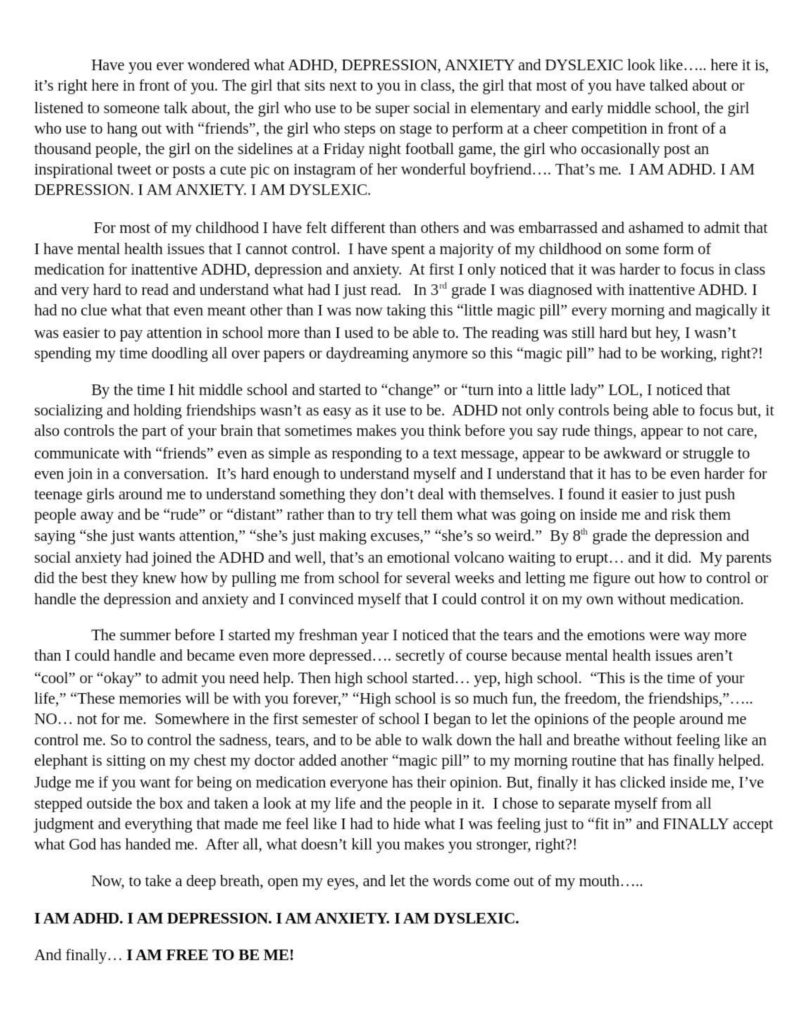 Amazing, huh?
We were able to snag some more of Emma’s time and ask her a few questions.
YouTime Coaching: Do you remember a moment when you realized things were “different” for you?
Emma: In elementary school things were easy and kids didn’t see me any different. Middle school is when I would say I started to realize that I could not complete things as fast or as easily as the other kids around me and I started to notice that I would say things without thinking, I would struggle to fit in with conversations my friends were have or when I would say something they would say “that isn’t even what we were talking about or that is stupid” and they were right, I found myself just saying random things to fit in. Eventually, I stopped talking in fear of sounding stupid or them laughing.
YouTime Coaching: What were some of your biggest frustrations during this process of understanding for you?
Emma: I would say my biggest frustrations are probably feeling so lonely and feeling like I will never find anyone that understands me. I am in high school now and teenagers are cruel, to be honest. Walking into a classroom and fearing the teacher will ask me to read out loud, walking into the lunchroom seeing all my old friends that I am no longer friends with because I did not know how to be a friend so to say… those are some of my biggest frustrations with myself.
YouTime Coaching: Who and what did you find most helpful in making some of the challenges more manageable?
Emma: My parents are so supportive and I know it has been so hard on them. I would say my mom has helped me more than anyone over the years. She has provided me with any ounce of information on ADHD, depression, anxiety, and dyslexia that she can find to help me understand what is going on with me. I would also say having a parent that is so motivated to educate herself in understanding me has been my biggest help.
YouTime Coaching: If you had a couple pieces of advice for another teenager going through something similar, what would the advice be?
Emma: Know that you are enough! Stop trying to “fit in” with kids that do not understand you and that do not care to understand you. TALK to someone, do not hold it in! Find someone that you are comfortable with and tell them how you feel no matter how dumb you may think it sounds. Oh, and fidget cubes… Those are lifesavers in school!!!!
YouTime’s take-home:
It could be a slip in grades, change in friends, hard time expressing emotions, or even controlling them. Teenagers can present their struggles very differently. Reaching the level of self-acceptance that Emma experienced takes a lot of courage, awareness, and support. Hopefully this story can be a testament to the power of parenting, genuine support for your teens, and that self-acceptance is a reality even in the midst of many personal challenges.
by YouTime Coaching | Mar 31, 2014 | Advice, Anxiety, Change, Confidence, Depression, Life Coaching, Outdoors, Teenagers, Therapy, Wilderness, Wilderness Therapy
My career allows me to work with some amazing people that have been through some truly unique experiences. This is just one of the many.
Simon, was struggling with many of the harsh realities life threw directly at him. His journey to understanding himself and developing a spot in the world is a different one then that of a typical teenager. In the wilderness is where he began to heal, rehabilitate and become a truly remarkable person.
I had the chance to ask Simon some candid questions about his experience:
(the name of the client is being protected for confidentiality purposes).
Most people aren’t familiar with “Wilderness Therapy”.
Can you describe what it is in your own words?
There are a wide variety of programs that fall under the category of “Wilderness Therapy”. However, there are a few primary characteristics that you can pretty much find universally throughout the programs. Essentially wilderness therapy is a form of therapeutic intervention, in which the patients live in and hike around the wilderness. The length of the patient’s stay varies greatly (I’ve heard of intensive programs reaching up to six months) but the average tends to be around 6-12 weeks. The aim of these programs is to allow the patient some time for introspection by withdrawing them from whatever unhealthy living situation they were in, and putting them in a therapeutic, isolated environment supposedly conducive to objective perspective. Again, there are many factors specific to each individual program, but these are the basic concepts I associate with “Wilderness Therapy”.
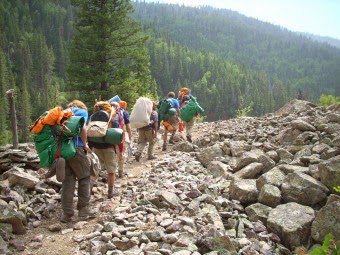
What were some of the hardest and scariest things you experienced during the process?
Along with the differences of programs, the details regarding the patient’s entry into wilderness can also vary greatly. Some parents choose to tell their kids beforehand, or give them an option to choose between different programs-but many of them hire transporters to escort them. Since I was, and a majority of the other kids were “transported”, I can say that this is definitely one of the tougher parts of the process. Being in the heat of an unhealthy lifestyle and being plucked from my bedroom in the middle of the night by two hired men was traumatic to say the least. I think this is one of the times where kids are most likely to make impulsive decisions and, though it may be necessary for some, can start the process of “rehabilitation” on a dangerous note. The next hardest thing afterword is adjusting to the program and looking forward. Many kids (myself included) were under the impression that the process takes only a few weeks, and that their parents would bring them home directly after. The wilderness therapists do very little to clear up those misconceptions and I was lied to several times in an effort to maintain my emotional stability. Though it is up to personal opinion on whether or not that is reasonable, I think this proves to be the overarching difficulty in the wilderness process. The various stages of denial about the length of your wilderness stay and how everyone insists they aren’t going to aftercare can be devastating once those illusions are shattered. Of course, many kids eventually accept that it was perhaps necessary to have this revealed to them gradually, but there are also those who hold strong grudges against their parents and the therapeutic programs for the lies told in the beginning.

What were your initial feelings when you arrived at wilderness?
My initial feelings when I arrived at my wilderness program are hard to categorize into single words. I suppose I could say it was overwhelming disbelief, and confusion, and sometimes regret. But infused in each one of those emotions was always anger, and that wasn’t relieved until far later in the process. Arriving at my base camp was shocking, and I hadn’t known it was an outdoor wilderness therapy until the moment I was dropped off on the mountain. When I met the other kids I felt comforted to see that others had adjusted, but I felt like an outcast, and I felt dreadfully alone. I immediately thought that it was a mistake. My Mom had checked off the wrong program from the list and that if she knew where I was, would not hesitate to withdraw me. This steadfast, impassioned denial is a phenomenon that appeared to occur in almost every kid I met, and can last several weeks into the program before it is accepted. The limited communication allowed between me and my Mom was a major contributor to this false hope, but had I not had that hope to hold on to, it may have been unbearable. The beginning of the process was undeniably tough, and though it was necessary, was a hazy and unstable time for me.
At what point did you realize “I understand now” and felt as though you knew what needed to change?
I can say with confidence that there was no single moment where I felt as though I had “all of a sudden” understood. Throughout the year long process my emotional state changed rapidly and the introspection resembled more closely a series of bargaining than sudden deliberate epiphanies. As the time in my program wore on the pain I was feeling was changing, and it was becoming subtle, but it still hurt just as much. As these changes occurred, I naturally adapted and was thus making unconscious internal changes and broadening my perspective. After I felt that I had matured, I was still only halfway through my aftercare program. I began to feel anxious and antsy and thought I was ready to go home. At this point, it still had not dawned on me that I had to make external changes as well as internal ones.

It was around this time that I began to realize this process wasn’t all about me. Even though I was the one who was in Utah, I understood that it was my fault, that I owed it to my mom. It’s too easy to feel like you’re the only victim out there. Somehow all the pain and injustice I’d caused my mom had, in a sense, slipped my mind. I began to think about the things I had to change for her benefit, even though it meant sacrifice, and that seems to be the most tangible checkpoint of understanding I’d had.
For city folks, like me, what were some of the more unique experiences being in the wilderness?
Looking back, I wish I could have enjoyed the actual “wilderness” part more than I did. Because I was in such an overwhelming mind state, it was often hard to separate myself from inside my head. Something they constantly try to teach out there is how to live in the moment. Of course, I had and still have many excuses for why I couldn’t do that, but the times that I was able to were certainly the most peaceful. Something that was shocking to me was how easily everyone adapted to the actual “wilderness” aspect. Within a week I could identify all fifty of the bags containing strange dried food, I could manage the ten-mile days with the forty-pound pack, and my made up knots were actually holding the shelter up. The lifestyle seemed alien on my first day, and everyday afterword, felt more and more like home.
My program was in Utah, and unlike most other wilderness programs, we traveled all around the state. I saw a very wide range of untouched nature, and the constant immersion in it gave me an appreciation I hadn’t had before. Like most unique experiences, I’ve romanticized my time in the woods, and though in reality I was miserable and counting the days, I’m able now to remember some of the happiness and pure wholesomeness I felt there.
Change is difficult for a lot of people.
If you could offer some advice to help others out, based off of your experience, what would it be?
The best advice I can offer is to broaden your perspective. I think that often one of the reasons kids get sent away is because of severe egocentrism and lack of empathy. I always knew how angry I was feeling, but it wasn’t until I understood the anger I’d caused my mom, that I was really able to change. Though there are other factors, I felt like every kid I met was suffering from relationship issues with their parents. In the heat of this process it’s hard to conceptualize the reality of the situation, but the fact is that your parents sent you away in hopes of you getting better. I think that the details of the situation can often overshadow the basic injustice both parents and kids feel, and that if the issues were stripped down, kids and parents could relate on the injustice and learn to empathize.
Another aspect of change I observed was the widespread misconception that changing meant losing. So many kids are filled with a stubborn sense of pride and are so concerned with “giving in”. I understand that certain situations may require an unmoving and passionate stance, though many times it’s an excuse to avoid feeling weak. Throughout the process I felt that I had two options: succumb to my mothers will or refuse to change. The reality isn’t nearly so black and white. At some point I realized that my mom and I had a similar goal (me achieving happiness) and that there were ways we could reach it together. The sacrifices I eventually resolved to make gained me my mom’s support, and from there we began to make changes together without the dissolution of my pride.
Now that you have been home from your wilderness
program for sometime, what has changed and how do you maintain what you learned out there?
Every kid has the idea built up in his or her mind of what it’s going to be like at home. For me personally, it was all I thought about, a comfort to remind me of the light at the end of the tunnel. The reality of the situation is that coming home is not like the fantasy you’ve it made out to be. I think a majority of kids, myself included, thought that being home would mean an undying, sustaining happiness. Problems and insecurities that may have arose in or before programs will follow you back home and demand to be confronted. That being said, it’s not always easy to figure out how to adjust. One of the most impactful changes I experienced was having a lifestyle and small community of people to relate to, and going home to everyone who knew very little about the past year of my life. The first few months at home felt very isolated for me, and I was having a hard time finding the right place for myself.
Many months down the line, things have changed quite a bit. After some time the pieces began to fall in to place and I melted back in to the natural cycle here. I learned enough about adjusting to new situations, and sacrificing, and started developing a code that would lead me to a healthy life. However, despite my comfort here, my memories of wilderness and after care are still very present in my daily life. I like to think back on them as something to hold on to, a very personal memoir that contributed largely to where I am now. I suppose it is up to everyone’s own interpretation to determine what role those memories might play, but I think its healthy to confront and confide in those past experiences, and to access them when needed.
If you could share 3 values you learned through your wilderness experience, what would they be?
The list of values taught during wilderness would be far too extensive if I were to thoroughly answer this question. Though, there are a few very important ones that came to mind first. Before I state these three, I want to make the distinction that I learned the core parts of these values not from the programs themselves, but from the experience as a whole.
The first value I’d like to point out is perspective. If you take the time to examine the wilderness culture, staff, and other kids, there’s a world of knowledge to be gained. I must say that merely being in the presence of that community exposed me to a variety of different lifestyles and personalities that I had not encountered. Since wilderness, I’ve been able to remember the world through the eyes of the people I met, and it’s always a refreshing outlook.
The second value I learned was adaptability. As I explained in some of the previous questions, the entry in to wilderness is shocking and fast-paced. There are changes you are forced to face immediately, whether or not you have previous outdoors experience. I think that this shift prompted me to try and understand some of the changes I’d face in the future (for instance, the transition back home) and has prepared me to face dramatic change from a more realistic and manageable approach.
The final value I’d like to bring forth is empathy. Perhaps the hardest, and most important lesson I learned was how to differentiate what I was feeling from my mom’s intentions. Unlike perspective, this wasn’t the ability to see from my mom’s point of view, rather, to try and feel what she was feeling and understand that. I think that this value is imperative to success at home, but is often tossed aside by kids’ sense of pride.
by YouTime Coaching | Feb 25, 2014 | Affect, Anxiety, Depression, Emotional Clutter, Emotions, Fear, happiness, Law of Attraction, Memories, Peanuts, Pig-Pen, Sadness, Suppression
Let me introduce you to my old friend “Pig-Pen”.
Pig-Pen is special in many ways but as you notice he carries a cloud of dirt around with him. No matter how hard he tries to clean himself the cloud of dirt almost magically reappears.
It is almost as if this individual is a magnet for dirt.
Individuals, like you and me, have the magnificent ability to attract specific things into our lives. Sometimes we invite genuine new friendships and connections, while other times we attract chaotic relationships and environments to live in.
You can almost say that humans have a magnetic field for these things.
I am going to walk you through a map I came up with. This map will help you see if you and Pig-Pen have a couple things in common.
What drives human behavior?
EMOTIONS!
When your happy, ecstatic, and empowered you can accomplish amazing things at incredible speeds. At the same time, when you are sad, irritated, and aggravated an individual can cause detriment very quickly to themselves and those in their environment. Emotions drive us. It is our fuel, empowering and disempowering.
What happens when you experience many emotions at one time?
Build-up, Suppression, and Inability to Properly Process
You all have most likely had a time in your life when you were experiencing multiple emotions at one time. Maybe at the time one emotion really stood out to you (anger, sadness…etc). Or possibly you felt confused and didn’t know what to feel.
What does this put you at risk for?
“Emotional Clutter”
Emotional Clutter are the thoughts, beliefs, events, memories, experiences, and feedback that we have received or been through in the past that have not passed through us but have simply become stuck in our mind and body.
Who does this affect?
1. You
2. The individuals around you
Is the “cloud” always visible to us?
No, not at all. Ever feel like you have “processed” or “gotten past” something and one day it creeps back into your life? Well, that is simply the “cloud” rearing its invisible ugly head.
What does it affect?
This cloud will filter and affect;
1. Everything we think about (our mental focus).
2. Everyone we meet (and the type of people we meet).
3. What we do (and what we don’t do).
3 Things You Must Know About “Emotional Clutter”
1. Our “cloud” can combine with other people’s clouds (others perceptions, agendas, world views).
2. Our “cloud” attracts more clutter (from friends, family, new connections, environments).
3. Our “cloud” leaves debris for others to pick up
One Opposing Force to “Emotional Clutter”
The Law of Attraction:
“Like attracts Like”
Events are attracted by you and the energy that you send out to the world, the environment you exist in, and the people around you. Individuals receive the positive or negative energy you send out. In order to oppose Pig-Pen’s magnetic attraction for dirt, he must focus and manifest positive energy to getting clean.
In human talk, take some time to really think hard about what you want, your intentions behind it, and ask for it!
2 More Techniques to Release the “Clutter”
1. Find one behavior to release
What is one negative behavior you feel safe and secure releasing? Find one and focus on just that.
2. Focus on the process more then the outcome.
It is simple for most to identify where they would like to be in life. Sometimes requiring a little bit of thought. What many people don’t realize is that the process to get their is just as, if not more important than the outcome.
“Emotional Clutter” is made up of individual strands. Focus on the individual strands to detangle the “clutter”. Maintaining focus on the entire “cloud” will become overwhelming, stress inducing, and harmful to your success.
I think we both can see the smile on Pig-Pen’s cloudless face now.
Resources for your “Emotional Clutter”:
Thanks for reading!
All the Best,
Jonathan