by YouTime Coaching | Jan 18, 2017 | Attitudes, Behavior, Behavioral Change, Beliefs, Change, Commitment, Consistency, determination, Diet, Health, Mindset, Momentum, Preparation, Results, Therapy
Hey ladies and gentlemen, Captain Positive here to give you a dose of reality… the New Year may not be all that you are expecting. Fun fact is that people are absurdly good at reminiscing over all the good and bad things that have already happened in our past, but typically have more of an issue visualizing their future and things like New Year’s Resolutions take a major hit.
Not only do I bring you this wonderful news but I will also share with you, because it is quite important, the 3 things you can do in order to efficiently undermine your New Year’s resolutions.
After reading this blog you will basically be certified in how to teach others to properly screw up their plans for the New Year! (exciting… I know.) With this knowledge comes great power, because in order to be successful with your resolution(s) you must know what works in addition to whats makes you fall miserably on your face (and don’t worry, we all know that feeling). So the power is yours once you are done reading this. Choose how to use this information wisely.
[bctt tweet=”In order to be successful with your resolution(s) you must know what works in addition to whats makes you fall miserably on your face (and don’t worry, we all know that feeling).” username=”youtimecoaching”]
I present to you the “Reverse RPM” theory. As most of you know “RPM” stands for “revolutions per minute” and is a relative calculation of speed, so for this presentation the “Reverse RPM” theory will show you how to completely halt any forward progress, momentum, and speed you are looking to create for attaining your New Year’s goals.
Reverse RPM Theory
(R) Results
Problem:
Many of us have developed a wonderful tendency to be predominantly results and outcome driven. We start a diet and we only look to lose weight (and we better see results fast or on to the next diet found in Self Magazine).
Of the top ten most popular resolutions (Check them out here!) all of them take preparation, planning, and time. We typically undermine our resolutions by looking at them as short-term, outcome-oriented endeavors.
Solution:
A “New Year’s Resolution” is exactly that, a year-long resolution and goal. Do you stop going to the gym or eating healthy once you lose those 30 lbs. on June 21st of the new year? Well, you shouldn’t but lots of people do. Your resolution is a long-term goal that should be process-oriented, not simply outcome.
Sure you have an outcome in mind, but this outcome stays in your peripherals while the next small baby step stays in your direct line of vision. Your journey to get there needs to be clearly planned out, broken down, and assigned start/completion dates (download “My Mini Goals Worksheet” here).
(P) Preparation
Problem:
How many of you bozos knew that the new year started on a Monday? Who wants to get healthy and make changes over the weekend when you can start on Monday?! Are you going to dig yourself into a hole the weekend before or prepare yourself for an easier transition?
Assuming you already created a resolution, we can safely say that you have at least identified that there are behaviors that are problematic and stand in the way of your goals. Don’t we all! The first step after realizing you have “problem behaviors” is to prepare yourself in order to make the change. Unfortunately, our hedonistic (pleasure seeking) culture can sometimes force us into the “action stage” before proper planning. The result, 2 weeks of hard work towards your goal and reverting back to old ways (looks like your cigarettes will have their old best friend back).
Solution:
First, do a little detective work to figure out what your actual behaviors are, when they happen, and what triggers them (download “Track My Triggers and Patterns Worksheet” here). Second, really find out why you are looking to make these changes. First write down what positive benefits the change will bring to you (and others), followed by writing down how maintaining the problem behaviors have hurt you (and others).
Next, you must commit. Scream your goal from the biggest damn mountain top you can find (please don’t do this). Seriously though, tell friends and family what your intentions are with this resolution. People are more likely to feel accountable if others know what they are trying to do.
(M) Momentum
Problem:
Newton’s Law of Intertia (as it applies to New Year’s Resolutions)
An object at rest will remain at rest unless acted on by healthy and mindful decisions. An object in motion continues in motion with the same speed and in the same direction unless acted upon by your problematic behaviors.
Wait, so since I am going to be “all healthy and stuff” starting in January, that means I can shove my face with booze and food throughout the holidays and think of exercise as the walk to the bathroom. Don’t start in a hole.
Maybe I can smoke my face off and start fresh on January 1st. Or, since I will be saving so much money in the new year with my positive changes, I will definitely balance that out by spending tons of money over the holidays. Don’t start in a hole.
Don’t use December as an escape goat for your troublesome behaviors. This only will make things harder with a higher likelihood of failing to progress with your resolution.
Solution:
Start planning after the first week in December. Already into January? No problem! Part of successful goal setting is being flexible and adapting to what’s realistically going on around you. Spend 2 weeks planning out your path of success and seek out those that will support you in this (download the “My Support Team Worksheet” here). Most people try to begin their resolution after one of their most problematic months and that is a recipe for disaster! Set a realistic start date that allows you spend a couple week planning out your moves.
YouTime take home message:
Remember, knowledge is not power, it is only potential power. You have the choice in how to use it. So go on and use that huge brain of yours to properly plan or even screw up the new year and share your resolutions below!
by YouTime Coaching | Dec 7, 2016 | Academics, Attitudes, Behavioral Change, Change, Children, Communication, Direction, Life Coaching, Mental Health, parenting, parents, Problems, Self-Change, Self-Esteem, social problems, Stigma, Teenagers, Therapy, Trust |
Even a healthy and well-adjusted young person will have their fair share mood swings, moments of pushing back, impulsive decisions, and overall lapses in judgement. This is why parenting a young person consistently takes the top spot in The New York Times’ list of “Top 10 Easiest Professions”… yeaaaa right.
Whether the young person is in high-school or college it can sometimes be quite challenging to distinguish between “normal” and “could use some help”. So let’s clear a couple things up first regarding “help”.
Stigma.
Yes, unfortunately “getting help” still carries a substantially heavy stigma with it. For instance, it is very easy to assume that when you seek out professional help that something is broken and needs to be fixed. The young person is not broken, and neither are you. Here are a few other stigmas that may keep you and the young person from benefiting from additional support.
Misconceptions about getting help for a high-school/college age young person:
- If I get help, I am weak.
- This means I am crazy.
- (Typically parents) This is a waste of money.
- All you do is talk about my feelings.
- I will get medicated.
- Other people will think it’s (I’m) weird.
Stigmas have the power to not only prevent a young person from getting more specialized support but in many cases can create pretty harmful negative beliefs about who they are, how they are doing, and what their options are to start feeling better.
From the very beginning of the process, YouTime Coaching implements many strategies to combat some of these misconceptions. Here are a couple:
Trust Trust Trust:
With young people, trust is huge. That is why YouTime Coaching focuses right away on building a safe, secure, and trusting relationship between the young person and their coach. We believe that the young person’s relationship with their coach within the first month will determine much of their success in their work together. The coaches use strategic communication styles, in-between session check-ins, and work hard to create an relaxed judgment free zone.
Breaking the “Parent-Young person” Dynamic:
Sometimes simply being a parent makes it challenging to talk about the “tough things” with your young person. They see you through the “parent filter”, while you see them through the “young person filter”. YouTime’s Coaches are young, genuinely compassionate, and have the natural ability to connect with young people where it may otherwise be challenging for a parent to break through.
Take a look at www.YouTimeCoach.com to learn more about the process of coaching with young person, parents, and families.
When to get specialized help for your young person?
With the exception of when the young person asks for it, knowing when to seek out help can be challenging. Having some insight to what your young person’s baseline behaviors are can be helpful in assessing their/your need for some extra support. Here are a few things to keep on your radar but keep in mind that simply because you may see a change in these areas does not not necessarily mean your young person is struggling. It just means, keep communicating with them and finding ways to meaningfully connect, all while keeping your finger on the pulse to see if more evidence points to a “would it help it get some support?” talk.
- Their social life.
Questions to think about:
Has their friend group noticeably changed?
Are they spending a lot more time on their own?
Are they now jumping pretty hard into the party scene?
Is the young person having noticeable challenges in balancing their social life with other areas?
- Communication.
Questions to think about:
Has the young person’s communication patterns (language used, frequency, depth) drastically changed?
Is the young person “asking for help” but not necessarily coming right out and saying it?
Do you notice a rapid shift in mood when communicating with the young person?
Are you lost on how to communicate with the young person?
Have others communicated their concerns with you? (friends, teachers, bosses, siblings..etc)
- Academics.
Questions to think about:
Is there a noticeable drop in grade?
Are you seeing frequent absences or tardiness at school/work?
Have you received concerned communication from teachers?
Is your young person having trouble concentrating/focusing?
*if any young person you’re with has shown open, serious, and/or committed signs of harming themselves or others, please do not hesitate, call 911 and get professional help right away.
Remember, these questions are good starting points to give you a better understanding of what conversations to have with the young person, a professional, or somebody already in their support circle.
At the end of the day, if you still feel like something may be “off” with your kid and need to further figure out a plan of action, reach out to YouTime Coaching at [email protected].
by YouTime Coaching | Mar 31, 2014 | Advice, Anxiety, Change, Confidence, Depression, Life Coaching, Outdoors, Teenagers, Therapy, Wilderness, Wilderness Therapy
My career allows me to work with some amazing people that have been through some truly unique experiences. This is just one of the many.
Simon, was struggling with many of the harsh realities life threw directly at him. His journey to understanding himself and developing a spot in the world is a different one then that of a typical teenager. In the wilderness is where he began to heal, rehabilitate and become a truly remarkable person.
I had the chance to ask Simon some candid questions about his experience:
(the name of the client is being protected for confidentiality purposes).
Most people aren’t familiar with “Wilderness Therapy”.
Can you describe what it is in your own words?
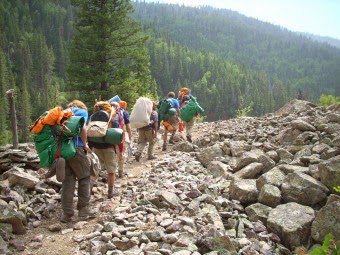
There are a wide variety of programs that fall under the category of “Wilderness Therapy”. However, there are a few primary characteristics that you can pretty much find universally throughout the programs. Essentially wilderness therapy is a form of therapeutic intervention, in which the patients live in and hike around the wilderness. The length of the patient’s stay varies greatly (I’ve heard of intensive programs reaching up to six months) but the average tends to be around 6-12 weeks. The aim of these programs is to allow the patient some time for introspection by withdrawing them from whatever unhealthy living situation they were in, and putting them in a therapeutic, isolated environment supposedly conducive to objective perspective. Again, there are many factors specific to each individual program, but these are the basic concepts I associate with “Wilderness Therapy”.
What were some of the hardest and scariest things you experienced during the process?
Along with the differences of programs, the details regarding the patient’s entry into wilderness can also vary greatly. Some parents choose to tell their kids beforehand, or give them an option to choose between different programs-but many of them hire transporters to escort them. Since I was, and a majority of the other kids were “transported”, I can say that this is definitely one of the tougher parts of the process. Being in the heat of an unhealthy lifestyle and being plucked from my bedroom in the middle of the night by two hired men was traumatic to say the least. I think this is one of the times where kids are most likely to make impulsive decisions and, though it may be necessary for some, can start the process of “rehabilitation” on a dangerous note. The next hardest thing afterword is adjusting to the program and looking forward. Many kids (myself included) were under the impression that the process takes only a few weeks, and that their parents would bring them home directly after. The wilderness therapists do very little to clear up those misconceptions and I was lied to several times in an effort to maintain my emotional stability. Though it is up to personal opinion on whether or not that is reasonable, I think this proves to be the overarching difficulty in the wilderness process. The various stages of denial about the length of your wilderness stay and how everyone insists they aren’t going to aftercare can be devastating once those illusions are shattered. Of course, many kids eventually accept that it was perhaps necessary to have this revealed to them gradually, but there are also those who hold strong grudges against their parents and the therapeutic programs for the lies told in the beginning.
What were your initial feelings when you arrived at wilderness?
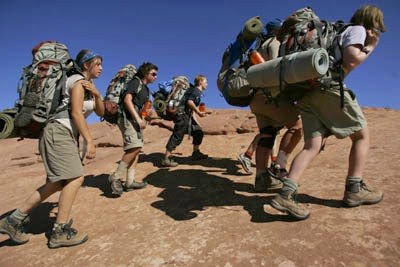
My initial feelings when I arrived at my wilderness program are hard to categorize into single words. I suppose I could say it was overwhelming disbelief, and confusion, and sometimes regret. But infused in each one of those emotions was always anger, and that wasn’t relieved until far later in the process. Arriving at my base camp was shocking, and I hadn’t known it was an outdoor wilderness therapy until the moment I was dropped off on the mountain. When I met the other kids I felt comforted to see that others had adjusted, but I felt like an outcast, and I felt dreadfully alone. I immediately thought that it was a mistake. My Mom had checked off the wrong program from the list and that if she knew where I was, would not hesitate to withdraw me. This steadfast, impassioned denial is a phenomenon that appeared to occur in almost every kid I met, and can last several weeks into the program before it is accepted. The limited communication allowed between me and my Mom was a major contributor to this false hope, but had I not had that hope to hold on to, it may have been unbearable. The beginning of the process was undeniably tough, and though it was necessary, was a hazy and unstable time for me.
At what point did you realize “I understand now” and felt as though you knew what needed to change?
I can say with confidence that there was no single moment where I felt as though I had “all of a sudden” understood. Throughout the year long process my emotional state changed rapidly and the introspection resembled more closely a series of bargaining than sudden deliberate epiphanies. As the time in my program wore on the pain I was feeling was changing, and it was becoming subtle, but it still hurt just as much. As these changes occurred, I naturally adapted and was thus making unconscious internal changes and broadening my perspective. After I felt that I had matured, I was still only halfway through my aftercare program. I began to feel anxious and antsy and thought I was ready to go home. At this point, it still had not dawned on me that I had to make external changes as well as internal ones.

It was around this time that I began to realize this process wasn’t all about me. Even though I was the one who was in Utah, I understood that it was my fault, that I owed it to my mom. It’s too easy to feel like you’re the only victim out there. Somehow all the pain and injustice I’d caused my mom had, in a sense, slipped my mind. I began to think about the things I had to change for her benefit, even though it meant sacrifice, and that seems to be the most tangible checkpoint of understanding I’d had.
For city folks, like me, what were some of the more unique experiences being in the wilderness?
Looking back, I wish I could have enjoyed the actual “wilderness” part more than I did. Because I was in such an overwhelming mind state, it was often hard to separate myself from inside my head. Something they constantly try to teach out there is how to live in the moment. Of course, I had and still have many excuses for why I couldn’t do that, but the times that I was able to were certainly the most peaceful. Something that was shocking to me was how easily everyone adapted to the actual “wilderness” aspect. Within a week I could identify all fifty of the bags containing strange dried food, I could manage the ten-mile days with the forty-pound pack, and my made up knots were actually holding the shelter up. The lifestyle seemed alien on my first day, and everyday afterword, felt more and more like home.
My program was in Utah, and unlike most other wilderness programs, we traveled all around the state. I saw a very wide range of untouched nature, and the constant immersion in it gave me an appreciation I hadn’t had before. Like most unique experiences, I’ve romanticized my time in the woods, and though in reality I was miserable and counting the days, I’m able now to remember some of the happiness and pure wholesomeness I felt there.
Change is difficult for a lot of people.
If you could offer some advice to help others out, based off of your experience, what would it be?
The best advice I can offer is to broaden your perspective. I think that often one of the reasons kids get sent away is because of severe egocentrism and lack of empathy. I always knew how angry I was feeling, but it wasn’t until I understood the anger I’d caused my mom, that I was really able to change. Though there are other factors, I felt like every kid I met was suffering from relationship issues with their parents. In the heat of this process it’s hard to conceptualize the reality of the situation, but the fact is that your parents sent you away in hopes of you getting better. I think that the details of the situation can often overshadow the basic injustice both parents and kids feel, and that if the issues were stripped down, kids and parents could relate on the injustice and learn to empathize.
Another aspect of change I observed was the widespread misconception that changing meant losing. So many kids are filled with a stubborn sense of pride and are so concerned with “giving in”. I understand that certain situations may require an unmoving and passionate stance, though many times it’s an excuse to avoid feeling weak. Throughout the process I felt that I had two options: succumb to my mothers will or refuse to change. The reality isn’t nearly so black and white. At some point I realized that my mom and I had a similar goal (me achieving happiness) and that there were ways we could reach it together. The sacrifices I eventually resolved to make gained me my mom’s support, and from there we began to make changes together without the dissolution of my pride.
Now that you have been home from your wilderness
program for sometime, what has changed and how do you maintain what you learned out there?
Every kid has the idea built up in his or her mind of what it’s going to be like at home. For me personally, it was all I thought about, a comfort to remind me of the light at the end of the tunnel. The reality of the situation is that coming home is not like the fantasy you’ve it made out to be. I think a majority of kids, myself included, thought that being home would mean an undying, sustaining happiness. Problems and insecurities that may have arose in or before programs will follow you back home and demand to be confronted. That being said, it’s not always easy to figure out how to adjust. One of the most impactful changes I experienced was having a lifestyle and small community of people to relate to, and going home to everyone who knew very little about the past year of my life. The first few months at home felt very isolated for me, and I was having a hard time finding the right place for myself.
Many months down the line, things have changed quite a bit. After some time the pieces began to fall in to place and I melted back in to the natural cycle here. I learned enough about adjusting to new situations, and sacrificing, and started developing a code that would lead me to a healthy life. However, despite my comfort here, my memories of wilderness and after care are still very present in my daily life. I like to think back on them as something to hold on to, a very personal memoir that contributed largely to where I am now. I suppose it is up to everyone’s own interpretation to determine what role those memories might play, but I think its healthy to confront and confide in those past experiences, and to access them when needed.
If you could share 3 values you learned through your wilderness experience, what would they be?
The list of values taught during wilderness would be far too extensive if I were to thoroughly answer this question. Though, there are a few very important ones that came to mind first. Before I state these three, I want to make the distinction that I learned the core parts of these values not from the programs themselves, but from the experience as a whole.
The first value I’d like to point out is perspective. If you take the time to examine the wilderness culture, staff, and other kids, there’s a world of knowledge to be gained. I must say that merely being in the presence of that community exposed me to a variety of different lifestyles and personalities that I had not encountered. Since wilderness, I’ve been able to remember the world through the eyes of the people I met, and it’s always a refreshing outlook.
The second value I learned was adaptability. As I explained in some of the previous questions, the entry in to wilderness is shocking and fast-paced. There are changes you are forced to face immediately, whether or not you have previous outdoors experience. I think that this shift prompted me to try and understand some of the changes I’d face in the future (for instance, the transition back home) and has prepared me to face dramatic change from a more realistic and manageable approach.
The final value I’d like to bring forth is empathy. Perhaps the hardest, and most important lesson I learned was how to differentiate what I was feeling from my mom’s intentions. Unlike perspective, this wasn’t the ability to see from my mom’s point of view, rather, to try and feel what she was feeling and understand that. I think that this value is imperative to success at home, but is often tossed aside by kids’ sense of pride.