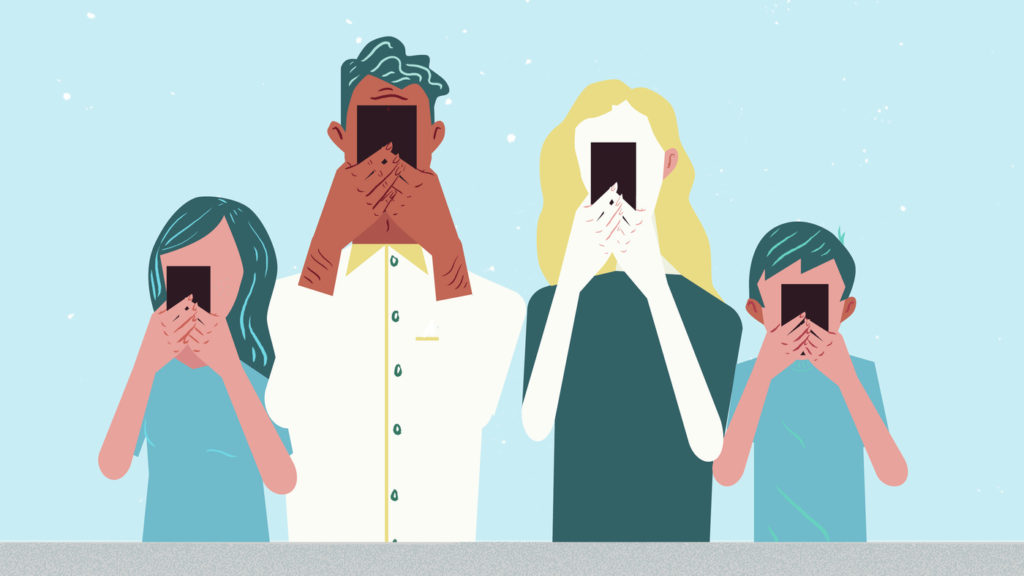
The stress of being a full-time teenager has recently changed.
Parenting and being a teen looks very different today than compared to 6 months ago. Being a teenager stuck at home, with all of these imposed changes and not as many obvious outlets can be a disastrous equation. It is not easy. Between the pressures of everyday life as well as their developmental change, it is normal for teenagers to experience what seems to be crazy levels of stress.
It beats being in school.
I’ve recently heard this statement from clients a number of times. Of course, there is truth to it and you have to acknowledge this point as a parent. There are three specific things to keep in mind when it comes to your teen during what could be an extremely challenging time. (not all may apply to your teen and it varies to what degree they may experience them)
THE FIRST POINT: Teens can struggle to see “the bigger picture”. I refer to this as metacognition. When working with teens, they honestly don’t give a shit about hearing the actual word (metacognition) and in fact, are quite bored by words that are unnecessarily long, hard to spell, and don’t seem personally relevant. So, I spend very little time on the word itself and jump into the concepts of “bigger picture”, “taking a step back”, and objective thinking. The visual of being able to experience your (stress/anxiety/depression) “storm” through looking out of a window inside the house versus being in the middle of the storm itself.
Right now, there are plenty of opportunities to be swept away in the sea of news, social media, fear, uncertainty, and imposed lifestyle changes. When a teen has trouble really seeing the bigger picture, it typically forces them to pursue things that are more based on instant gratification and avoidance. Here enters the wonderful world of technology and my second point.
THE SECOND POINT:Be prepared for a major spike in cell-phone, video game, computer, and tv time. This may be obvious and already underway for many families. Here are the concerns. While you can always throw out the “correlation doesn’t equal causation” defense, there are clear indicators that social media and screen time affects the relationship teens have with anxiety and depression. More specifically, there are plenty of reasons (and data) to support the fact that it is closely tied to increased depression and anxiety in teens (Child Mind Institute Article / Anxiety and Depression Associaton of America Article).
For kids who already have anxiety/depression (who doesn’t?!) and ADHD, this moment in time and the coming weeks could likely be an uphill battle for most parents. Check out our blog, “HelpI’m a Reactive Parent“ to gain some strategies to better handle the more contested topics of conversation.
THE THIRD POINT: If your teen already has trouble with Anxiety/Depression or ADHD, you may startto see how this really affects them over the course of a day (and you may not like what you see).
Most parents have a block of time where their children are off at school, being monitored by other adults, and don’t witness first hand just how your child goes about sustaining themselves over the entire day. Many kids hold their shit together as much as possible while at school, only to “let loose” as soon as they get home. Our current circumstances now have everyone in relatively close quarters, a fraction of the freedom to “get out of the house”, and the bonus… most high-schools (that tried to make the online thing work) aren’t grading assignments, don’t expect them to be turned in, or even for kids to really learn the concepts. This is happening for many reasons, but it leaves us with a fundamental problem.
Kids are at home, can’t leave, and aren’t expected to do school-work. Let’s give a warm welcome the countless hours of video games, social media, youtube videos, and screen time that your teen is going to get. I am on the Advisory Panel for Phase2Parenting, a site that is geared towards providing top-notch advice and resources to parents of teens and tweens. Check out Phase2Parenting’s article, “How Much is Too Much: Technology Addiction and How to Manage It” and get some support while your kids are couped up in the house.
Small amounts of stress are manageable and even beneficial at times, stress can quickly become overwhelming and can result in decreased physical and mental health for your teenager.
Email us at [email protected] if you need to talk, have questions, or would like to know how to make this a little easier.
It’s natural for students to feel nervous as standardized tests approach.
But it’s also very easy for this anxiety to spiral out of control and affect their overall well-being. No test is worth that! (Not to mention that being paralyzed by fear is not the ideal condition for a test-taking brain.) Test anxiety can be rooted in a lack of mastery of the material, uncertainty about test-taking conditions, and/or dread of the long-term consequences of falling short—and often, some combination of the three.
If your student is suffering, take heart: test stress is not inevitable!
Each of these anxieties can be dealt with and you can minimizing test stress. Here are some strategies that can apply to almost any student preparing for almost any test.
Own the fear. Telling a student their fear is “all in their head” is counterproductive. Of course it is—all emotions are in our heads! Instead, help your student determine what they should and should not worry about. If your student lacks mastery in a subject, their test anxiety may be very real. If they worry over material they’ve already mastered, then you’re dealing with a different type of anxiety entirely.
One step at a time. Gradually acclimating your student to test pressures can help normalize the test-taking process for them. Completing practice tests, working under timed conditions, and learning to work in noisy environments can all help your student prepare for their experience in the testing center. A coffee shop or library—where they will have to work through sniffling, conversations, street noise, and other things that fray nerves—is a great place to prepare.
Think outside the test. Sometimes the very format of the standardized test causes panic. In this case, help your student develop skills with something other than the test. Developing reading comprehension questions using a novel or newspaper article, or applying geometry skills by designing a bookcase or coffee table, may help your student master skills in a fun, non-threatening way.
Practice good test hygiene. Habits can make or break a test-taker. Set routines for your student. For example, if the test will happen on a Saturday morning, set aside every Saturday morning for test prep. Work on maintaining good posture and a positive but aggressive attitude toward the test. Finally, consider mindfulness exercises that will help your student quiet their inner critic.
More than anything, emphasize keeping things in perspective. Though the SAT or ACT may seem all-important, remember that most students take the test two or three times, and there’s much more to a college application than just test scores!
This blog was written by Signet Education’s Director of Education, Sheila Akbar. Sheila is also Signet’s resident admissions and test prep expert. She has been preparing students for the SAT, ACT, and GRE for over ten years in both one-on-one and in classroom settings. Sheila holds both a BA and an MA in Near Eastern Languages and Civilizations from Harvard University and holds two PhDs from Indiana University in Comparative Literature and Near Eastern Languages and Cultures.
Signet Education provides individualized tutoring, test prep, admissions consulting, and organizational coaching for students.
Personally, my favorite part of the holidays is the food (diets don’t count in December right?) and re-living the traditions you have built-up over the years with family. For some, the favorite part it is buying gifts, while for others it may be receiving them. We all have our things to look forward to, but parenting your teenager or college aged kid throughout the holidays frequently does not make the list
The holidays are here and we are almost in the thick of it with just a small amount of preparation time left. Since making life a little easier is our job, YouTime Coaching is assigning you (yes you) two pieces of parental homework to help you and your family get through this December and into January feeling good, relaxed, and positive about the holiday dinner with crazy Aunt Sally (sorry if this hits too close to home).
Here we go.
Assignment #1: Keep Calm and Carry On.
Believe it or not, the holidays can be a stressful time for everyone. It is important that you take care of yourself, have strategies to maintain some level of equilibrium/relaxation, and model this positive behavior to your kid.
If you need a quick break from the chaos, try “4-7-8 breathing”. Many people use it to help them fall asleep, but in this case you will reap the benefits without dozing off. Here’s how it works:
Breathe in for 4 seconds
Hold it for 7 seconds
Breathe out for 8 seconds
This entire cycle counts as one breathe. Continue for at least four cycles. If you do an emotional inventory over the past week you will quickly see that parents feel many emotions, some for varying lengths of time. The point is, emotions change and they can rather quickly. What you feel right now, may not be what you feel 5 minutes from now. Taking a step back, giving yourself space, and completing this breathing assignment will help you see a little more clearly.
Share you experience in the comment section.
Assignment #2: Actively Search for the Positive.
Many parents have their morning routines which can involve turning on the tv, looking at news on their phones, or reading the newspaper. Doing this can condition us to have a false reading on the ratio of positive to negative events that happen in life, simply because of what the media puts out there for us to see.
This holiday, keep an eye on your kid and no matter how small it may be, maintain a mental list of the positive behaviors they have displayed. It could range from helping with the dishes, going to pick something up from the store for you, or simply asking “how are you?”. When you see a positive behavior, give some positive feedback (ex. “How are you Mom/Dad?”, “I’m doing well, just a lot of work to do. That was really thoughtful of you to ask.”).
Searching for the positives at home and with your kids will help restore the more realistic ratio of positives to negatives, making life a little easier.
Share your list of positives in the comment section.
There you go!
This holiday season try using the stress of the holidays instead of allowing the holiday stress to use you. HINT: You can start with these two assignments.
Let’s talk happiness for a second. Imagine that the amazing Professor Ben-Shahar or Shawn Achor, both of Harvard University’s Positive Psychology program asked
Tal Ben-Shahar
YOU to give a lecture to a group of students on how to create happiness, make decisions that will increase your happiness levels, and ways to predict how happy you will be in any given circumstance.
Shawn Achor
Maybe right now you have already formulated a speech in your mind that will be flawlessly delivered to the eager crowd of young students. They will hear your words of wisdom and leave the lecture hall feeling confident, optimistic and ridiculously more happy! Or maybe not… Recent major personal life changes, decisions, and transitions have motived me to write this piece on happiness. I will be sure to update everybody on these big life changes in a blog very soon. Answer this quick question: Whatdo you have in your life right now that creates happiness for you? My answer to this question contained items such as:
Good relationships
An amazing fiancé
A great apartment
A wonderful doggie (love you Bipsy!)
A great job
Financial security
A nice car
Health insurance
And a few other things that came quickly to mind.
Research shows that ONLY 10% of your long-term happiness is derived from these external factors.
There secret to 90% of your long-term happiness?
Answer: How your brain reacts to these external factors.
One of the biggest challenges with individuals and happiness today is that they believe they have absolutely no control over it.
When people lack certainty in their life and have an abundance of uncertainty, they are at a high risk of experiencing unhealthy amounts of anxiety.
Unfortunately debilitating levels of anxiety and happiness can not exist at the same time. This is why many therapists have clients create a “positive thought jar”. Individuals can not maintain a negative and positive thought in their minds at the same time. When you experience yourself focusing on a negative thought, go to your positive thought jar, and pull out a positive affirmation to combat the negative thinking.
It is funny and maybe you know this, most individuals feel they have little control over their own happiness yet 90% is derived through a process that happens within you!
Stop predicting and start looking at the hard facts.
Become a detective by taking some of your biggest stressors, successes, decisions, and relationships and begin dissecting what makes them stressful, exciting, negative, successful and/or challenging for you.
This is worth the mental effort!
Take 10 minutes now to play detective and figure out how your brain reacts to the list you created above.
YouTime’s Summary:
It is important understand that happiness does not come from the external factors around you, it is created within you by the way your brain reacts to those external factors.
The amount of expensive, lavish, and desirable possessions you have in your life is meaningless UNTIL your brain creates meaning for these things. The way your brain creates meaning to those possessions and relationships is unique to you. Take the time to understand yourself, your inner drives, and how you choose to react to your environment.
If your child experiences poverty before the age of 5 research shows that there are serious negative outcomes that will most likely be coming their way. These negative affects could results in:
Protracted Stress (long-term)
Behavioral Issues (conduct disorder, anger regulation issues, getting into fights…etc)
Social Problems (social anxiety, body image issues, giving into peer pressure, bullying…etc)
Emotional Problems (depression, anxiety…etc)
Does this mean that American’s are forced to make more money in order to ensure that their child will grow up to be “normal”. The short answer, NOPE. I am afraid to say ladies and gentlemen but,
MONEY IS NOT THE ANSWER
Before getting into this next section I would like to take a second to say that the facts, findings, research, and opinions expressed are not to minimize or criticize any individual’s parenting. The following is used to serve as a platform for discussion and questioning on this very important topic. Parenting is an extremely arduous process and by no means has anybody perfected it. I applaud parents that try their best with what they are given and can ask for help when necessary. I hope these findings allow you to ask the important questions to help your family, friends family, and children.
Recent research is showing significant increases in the social, emotional, and behavioral disturbances of the children that come from affluent families. Kids that come from families that make $150,000+ (over 2x the national average), have parents in high-status careers, attend the most prestigious schools, and have well-educated parents are at risk now too.
Some of the findings of this research shows that kids coming from affluent families are at risk for:
Substance abuse (high alcohol use, binge-drinking, marijuana use, and other hard drugs)
Delinquency from school
Wide-spread cheating
Stealing from parents or peers
Maladjustment in school and social environments
A common misconception amongst affluent parents, and this is reinforced my many sources of media, is that money and education will prevent these events from happening or even solve them.
“If facts alone were enough to change an individual’s behavior long-term, then there would be no overeating, alcohol abuse, cigarette smoking, or drug use. There needs to be more then just the facts.”
YOUR OPINION
WHAT IS CAUSING THIS?
I want your opinion.
Share your thoughts below as to why children coming from affluent families may be experiencing more depression, anxiety, social problems, and substance abuse issues then before.
Some questions to think about:
Why is this happening to kids coming from affluent families?
Why is the magic school year 7th grade for most of these issues to present themselves?
Are you experiencing these issues? If so, how has the experience affected your family and what words can you offer others?
In the next blog, I will share with you the findings of some on-going research that breaks down why this may be happening and how to fix it.
In light of the recent bombings at the Boston Marathon and the massive numbers of individuals returning from war, our culture has become all too familiar with the term “post traumatic stress”. What most people are not as familiar with is the concept of
“Post Traumatic Growth”
Research involving individuals and their relationship to stress, pain, fear, and trauma have been around for thousands of years but the interest in Post Traumatic Growth began to steal some of the limelight in the 1990’s.
Post Traumatic Growth involves an individual’s path in adapting to sets of negative experiences that would normally cause psychological distress or harm. These events could include experiences with death, abuse, serious injury, natural disasters, relationships, accidents, and other potentially traumatic events.
Simply looking at this list you can understand why some individuals experience post traumatic stress.
BUT
What if there were a way to experience growth following traumatic events like those mentioned above?
Post Traumatic Growth Characteristics:
Greater appreciation for life
Shift in sense of priorities
More genuine connections and relationships
Increase sense of personal strength
Recognition of new life paths and possibilities
Are you sold yet?
How can I get some Post Traumatic Growth?
1. First, you must have a belief system that supports growth.
Spirituality is a characteristic that has been closely linked to experiencing post traumatic growth, but the core concept behind this connection are the empowering beliefs a spiritual individual may possess.
Keep these in mind:
BELIEVE that you can grow from this
and
You are capable of this change.
2. You must have support
Support systems have been linked in post traumatic growth on many levels. Therapists, counselors, and life coaches (with proper training) can have great impacts on your ability to experience this growth, post traumatic event.
Surround yourself with genuine, insightful, and caring individuals that you feel comfortable sharing your life with. This could be the difference between growth and stress.
Conclusion:
Be confident and open to being able to grow
Develop a belief system that empowers and supports you in experiencing growth.
Seek out opportunity to develop new genuine relationships and connections.
Sniff out your most precious support systems and use them.
Lastly,
During the Boston Marathon I was watching the race in Kenmore Square (15 minute walk to the finish line), when I had heard what happened followed by a massive number of text messages, phone calls, and emails making sure I was okay. I want to thank those individuals and extend my heart and support to the families that were affected by these horrible events.
There is hope and there is strength within you to grow from this. Never loose sight of that.
All the best,
Jonathan B. Wolf, Ed.M. Vitality, Performance, and Parent Coach YouTime Coaching Boston, MA