
by YouTime Coaching | Jan 25, 2017 | Appreciation, Arguments, Attitudes, Behavior, Behavioral Change, behavioral issues, Brain, Change, Children, Communication, Control, Emotions, Growth, high school, Listening, parenting, parents, Problems, Reaction, Teenagers
Nobody said that raising a teenager would be easy and some parents may even think they should be rewarded a medal once they survive it. Statements that are made about adolescence and teenage years such as, “Surviving it“, “Getting through it”, are the real area of concern.
Although these times can be filled with risk-taking behaviors, a surge of independence, what seams to be minimal communication, and an abundance of “pushing back”, they must remain open to “the work” of the adolescent years.
WHAT’S “THE WORK” OF ADOLESCENCE?
Emerging science is proving at great lengths that some of the ways we used to think about adolescence may be quite off. On a weekly basis YouTime Coaching receives emails and phone calls that very honestly communicate the frustrations of being a parent to an adolescent.
Here’s what the conversation topics look like…
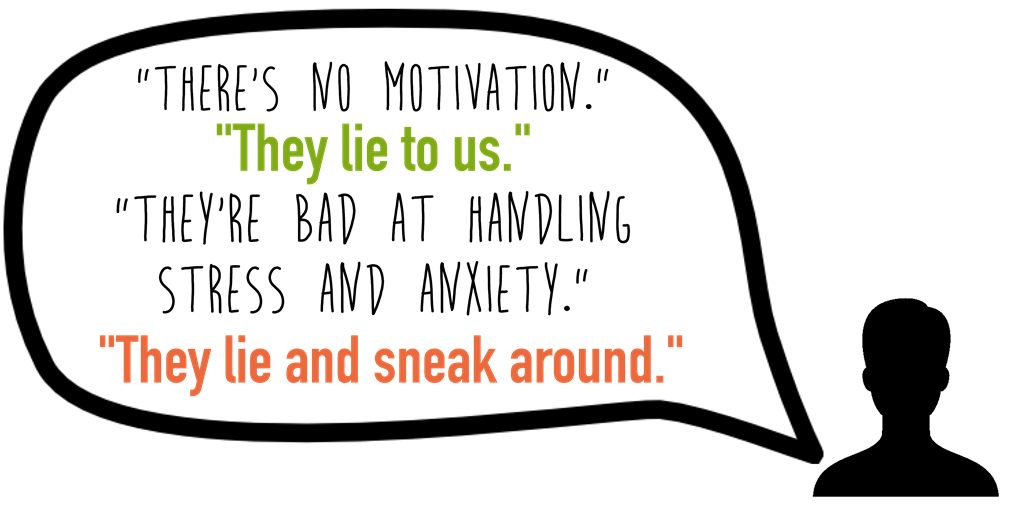
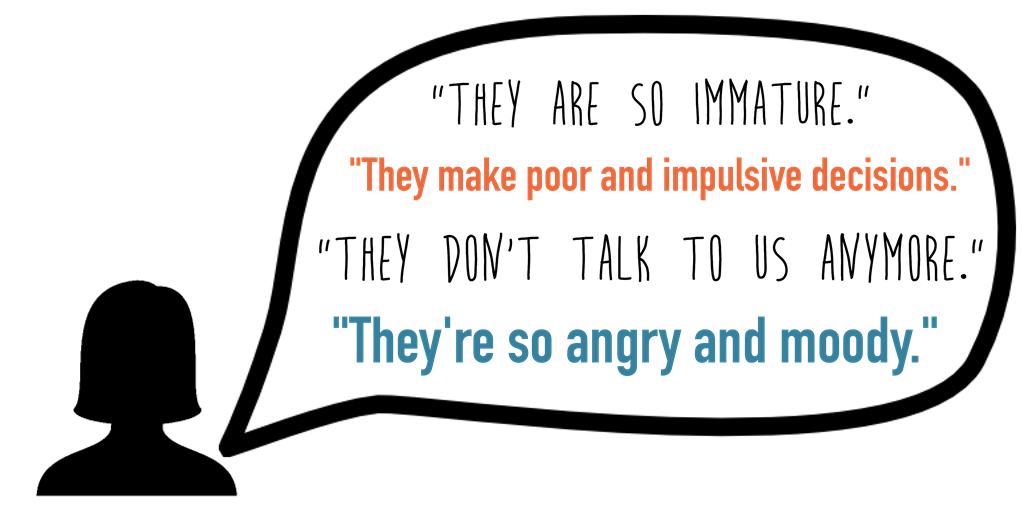
Here are a few things you need to know about the what the science is telling us.
“THEY JUST NEED TO GROW UP” MENTALITY WILL NOT HELP.
This line of thinking has existed for years and rightfully so, adolescence is a time of immaturity. The problem that lies within this way of thinking is that it frames adolescence as a period of time in which you must survive, simply try and get through, endure, and come out with minimal long-term scars.
Here’s a helpful change of perspective… Adolescence is not simply about maturity vs immaturity. During adolescence the brain goes through a rapid growth period and because of these changes new behaviors and abilities present themselves. All of those common “frustrations” (above) that we hear from parents aren’t just things that you need to endure but are newly developed abilities that will end up laying the groundwork for core personality traits your child will develop for use in adulthood.
Pushing boundaries, exploring decision making, getting a taste for independence, and being emotional may drive you crazy and caused tons of stress, but are all integral building blocks that each adolescent must go through. Use this time to cultivate positive experiences and lessons from those frustrations. Most importantly, be an active part of “the work” that goes into these crucial developmental period in your child’s life.
KNOW THE UPSIDES AND DOWNSIDES TO ADOLESCENCE.
Parent’s tend to have a keen eye for a child’s impulsive decision making, risky-behaviors, pushing boundaries with sources of authority, and their kids not wanting to spend time with them. What all of these behaviors have in common… they have an upside and a downside.
Novelty seeking and reward driven behaviors can motivate a child to explore new ways of doing things, allow them to keep an open mind to additional perspectives, and be open to change. The downside could lead to risky behaviors without a major thought or concern for the outcome, which leaves a child vulnerable.
Adolescence spending a lot of time with friend (and therefor little time with their parents) could help them develop strong social connections and support networks which are heavily correlated with happiness and mental wellness. The downside is that not being around adults and only being around peers increases their chances of risky behavior and minimizes the opportunity for guidance and knowledge from an adult figure, in turn increasing risky behaviors.
You see, each new ability and behavior that is formed during adolescence can have a profound impact on their develop towards adulthood. Stay engaged, but be aware of these new found abilities that your child may possess.
The inspiration for this blog came from an article written by Dr. Daniel Siegel. Dr. Siegel is a world renowned scientist and expert in the field of mindfulness. He has a wonderful ability to take complicated scientific findings and communicate them in a way that makes them practical and exciting. Please read his article “The Amazing, Tumultuous, Wild, Wonderful, Teenage Brain.” on mindful.org.
P.S.
If you are a parent or a young person who has had some challenges and would like to share your story, let us know in the comment section below! If you have any questions, and we mean any, you can send them right over to [email protected] or visit our page at www.YouTimeCoach.com.

by YouTime Coaching | Jan 18, 2017 | Attitudes, Behavior, Behavioral Change, Beliefs, Change, Commitment, Consistency, determination, Diet, Health, Mindset, Momentum, Preparation, Results, Therapy
Hey ladies and gentlemen, Captain Positive here to give you a dose of reality… the New Year may not be all that you are expecting. Fun fact is that people are absurdly good at reminiscing over all the good and bad things that have already happened in our past, but typically have more of an issue visualizing their future and things like New Year’s Resolutions take a major hit.
Not only do I bring you this wonderful news but I will also share with you, because it is quite important, the 3 things you can do in order to efficiently undermine your New Year’s resolutions.
After reading this blog you will basically be certified in how to teach others to properly screw up their plans for the New Year! (exciting… I know.) With this knowledge comes great power, because in order to be successful with your resolution(s) you must know what works in addition to whats makes you fall miserably on your face (and don’t worry, we all know that feeling). So the power is yours once you are done reading this. Choose how to use this information wisely.
[bctt tweet=”In order to be successful with your resolution(s) you must know what works in addition to whats makes you fall miserably on your face (and don’t worry, we all know that feeling).” username=”youtimecoaching”]
I present to you the “Reverse RPM” theory. As most of you know “RPM” stands for “revolutions per minute” and is a relative calculation of speed, so for this presentation the “Reverse RPM” theory will show you how to completely halt any forward progress, momentum, and speed you are looking to create for attaining your New Year’s goals.
Reverse RPM Theory
(R) Results
Problem:
Many of us have developed a wonderful tendency to be predominantly results and outcome driven. We start a diet and we only look to lose weight (and we better see results fast or on to the next diet found in Self Magazine).
Of the top ten most popular resolutions (Check them out here!) all of them take preparation, planning, and time. We typically undermine our resolutions by looking at them as short-term, outcome-oriented endeavors.
Solution:
A “New Year’s Resolution” is exactly that, a year-long resolution and goal. Do you stop going to the gym or eating healthy once you lose those 30 lbs. on June 21st of the new year? Well, you shouldn’t but lots of people do. Your resolution is a long-term goal that should be process-oriented, not simply outcome.
Sure you have an outcome in mind, but this outcome stays in your peripherals while the next small baby step stays in your direct line of vision. Your journey to get there needs to be clearly planned out, broken down, and assigned start/completion dates (download “My Mini Goals Worksheet” here).
(P) Preparation
Problem:
How many of you bozos knew that the new year started on a Monday? Who wants to get healthy and make changes over the weekend when you can start on Monday?! Are you going to dig yourself into a hole the weekend before or prepare yourself for an easier transition?
Assuming you already created a resolution, we can safely say that you have at least identified that there are behaviors that are problematic and stand in the way of your goals. Don’t we all! The first step after realizing you have “problem behaviors” is to prepare yourself in order to make the change. Unfortunately, our hedonistic (pleasure seeking) culture can sometimes force us into the “action stage” before proper planning. The result, 2 weeks of hard work towards your goal and reverting back to old ways (looks like your cigarettes will have their old best friend back).
Solution:
First, do a little detective work to figure out what your actual behaviors are, when they happen, and what triggers them (download “Track My Triggers and Patterns Worksheet” here). Second, really find out why you are looking to make these changes. First write down what positive benefits the change will bring to you (and others), followed by writing down how maintaining the problem behaviors have hurt you (and others).
Next, you must commit. Scream your goal from the biggest damn mountain top you can find (please don’t do this). Seriously though, tell friends and family what your intentions are with this resolution. People are more likely to feel accountable if others know what they are trying to do.
(M) Momentum
Problem:
Newton’s Law of Intertia (as it applies to New Year’s Resolutions)
An object at rest will remain at rest unless acted on by healthy and mindful decisions. An object in motion continues in motion with the same speed and in the same direction unless acted upon by your problematic behaviors.
Wait, so since I am going to be “all healthy and stuff” starting in January, that means I can shove my face with booze and food throughout the holidays and think of exercise as the walk to the bathroom. Don’t start in a hole.
Maybe I can smoke my face off and start fresh on January 1st. Or, since I will be saving so much money in the new year with my positive changes, I will definitely balance that out by spending tons of money over the holidays. Don’t start in a hole.
Don’t use December as an escape goat for your troublesome behaviors. This only will make things harder with a higher likelihood of failing to progress with your resolution.
Solution:
Start planning after the first week in December. Already into January? No problem! Part of successful goal setting is being flexible and adapting to what’s realistically going on around you. Spend 2 weeks planning out your path of success and seek out those that will support you in this (download the “My Support Team Worksheet” here). Most people try to begin their resolution after one of their most problematic months and that is a recipe for disaster! Set a realistic start date that allows you spend a couple week planning out your moves.
YouTime take home message:
Remember, knowledge is not power, it is only potential power. You have the choice in how to use it. So go on and use that huge brain of yours to properly plan or even screw up the new year and share your resolutions below!