by YouTime Coaching | Mar 2, 2017 | Academics, Advice, Beliefs, Benefit, college, Decisions, high school, Preparation, steps, Success
A gap year is a year that students take between high school and college, usually doing some sort of structured, non-academic activity.
Sounds nuts. Why would anyone do this?
The reasons are many, but here are a few of the more common ones:
- A student is academically burnt out and needs a break from academics to recharge
- A student doesn’t yet have the maturity to succeed in college (did you know that the male brain and executive functioning capacity doesn’t fully mature until the late 20’s?!)
- A student has a passion that they want to pursue prior to college
- A student’s not that into the idea of college, (or parents aren’t that into the idea of dropping $200K on a “meh, I guess I’ll go” response)
- A student wants to gain more experience to then be able to make the best of college
- A student feels like they need another go at the college admissions process
Thinking the gap year might be right for your student? Here are some pros and cons to consider.
GAP YEAR: Pros
- According to an Australian study published in August in the Journal of Educational Psychology, taking a gap year is linked to higher motivation in college.
- Taking a structured Gap Year invariably serves to develop the individual into a more focused student with a better sense of purpose and engagement in the world.
- According to American Gap Association statistics, taking a gap year helped focus student academic and career paths: 84% say it helped them acquire skills to be successful in future careers, and 73% say the experience increased their college readiness.
GAP YEAR: Cons
- Some students may view the gap year as a vacation. Without a clear plan, the gap year can pass by without doing much positive good for your student. If your student isn’t willing to put in the work to plan a productive gap year, then they shouldn’t take one.
- Financial concerns can impact a student’s gap year. Not every parent can support their children completely during the gap year. Your student may need to work, or they may be able to secure a scholarship or grant from a gap year program or college.
Common Concerns
Even after discussing the pros and cons of a gap year, I typically hear three major concerns from parents:
- “Next year, my student will be ‘too old’ for college.” College isn’t high school: a college classroom often includes both lower- and upperclassmen, sometimes with graduate students or non-traditional students mixed in. Age is rarely an issue, especially a single year.
- “How do I know my student will go back to school?” This is one of my favorite excuses, because the best counter-argument is simply to wait until they work a full-time job. After 40-hour work weeks, most teenagers will beg to go back to school! In fact, according to a study, 90% of students who took a gap year ended up going back to school within a year. If you’re still concerned that your student may “drop out”, it may be wise to gain admission to a college that will allow a deferral enrollment for the following year.
- “Why should my student wait if s/he is ready now?” Adapting to a new set of academic and social responsibilities is not easy for everyone; the first semester of college is often a difficult transition. It can be fun and fulfilling to tackle these responsibilities on your own schedule, without the added burden of a strict class schedule, the stress of dorm living, or tuition. Your student may be ready intellectually now, but a gap year will likely leave them extremely prepared, not just ready.
If your student is considering a gap year, I always stress a well-rounded and structured approach, with an emphasis on personal growth. For example:
Summer: Apply for summer employment and begin planning for your upcoming fall.
September–January: You may want to participate in academic, social, and career enrichment opportunities specifically designed for gap years; some great places to find these opportunities are:
February–June:
- Apply for a job with the skills you learned from the fall, intern at a potential future workplace, or take a course at your local community college.
- You can also travel, especially if you needed the fall to help you save up for your trip.
July–September: Continue any of the opportunities you’ve started over the past year. Don’t forget to take time to relax and connect with friends!
The above plan is designed to help your student begin college after a gap year with a set of advantages: a rested mind, additional education (potentially in both the academic and career arenas), increased confidence from spending time in “the real world,” and an extra year of overall maturity. Too often, we allow personal growth to happen while we’re busy with other things. But especially during key transition times, the self should be the priority. Imagine how much more a student with a clear sense of passion and purpose can get out of the college experience!
Remember: college is ultimately about your student becoming their own person. Deferring enrollment until after a gap year can be a very rewarding stage on this personal journey, but only if it’s the right fit for your student!

Jay Bacrania CEO & Co-Founder of Signet Education
This blog was written by Signet Education’s CEO & Co-Founder, Jay Bacrania with assistance from Signet tutor, Matt Grzecki. Jay has worked extensively with both special needs and high achieving students. He has taken a broad academic path that spans the sciences and humanities. Jay holds an BA in Comparative Study of Religion from Harvard University and attended Berklee College of Music for two years for Jazz Trumpet Performance. Beyond tutoring, Jay is interested in managing and refining Signet Education. You can almost always bet on finding him there at all hours, teaching or finding ways to make Signet even better!
Signet Education provides exceptional individualized tutoring, test prep, admissions consulting, and organizational coaching for students.
by YouTime Coaching | Sep 25, 2014 | Advice, Behavior, Change, Communication, Connections
One of the many things that human’s possess that never shuts off is our ears. Even when we are sleeping, we are listening. In such a noisy world full of distractions, loud noises, and multi-tasking, how are we actually able to listen to anything worthwhile?
Is listening to those around us even possible anymore?
Something is wrong here, right?
Humans use listening to gain meaning through sound, but in a world so noisy this requires more energy then ever.
Take for instance being on a subway and looking around at how many people are wearing headphones, listening to their music. These people may seem like the are attempting to fully devote their ears to their music and are fully focused in on it. What this creates though is a bunch of individuals isolating themselves and not actually listening to those around them. It is sometimes no wonder why people find it hard to communicate, relate, and connect with people. We are frequently in our own worlds!
What needs to happen to regain this integral piece of communication and connection. The piece that helps us understand each other, gain meaning from one another, and exist together.
Well… here are 3 steps to start regaining our ability to listen:
Reboot Our Ears:
Take 3 minutes (only 90 seconds) of silence a day (or quietness). This actually helps your ears recalibrate themselves. Returning them to a place of higher performance.
Relate Sounds:
Some people find particular noises “annoying” or “distracting”, such as an air-conditioner, a truck/train going by, or a baby crying. Try to take some of the sounds you hear on a day to day basis and relate them to something positive. Imagine your world when those sounds don’t piss you off or get you in a negative mood.
Follow the Rules:
So we have lost our ability to fully listen to those around us which has resulted in retaining only 25% of what we listen to! We are better then that, and here is an acronym that will help you retain more information.
R.A.S.A.
- R eceive: Pay attention to the person. (eye contact, look at their lips, stay focused)
- A ppreciate: Use small sounds/word to appreciate what the person is saying (hmm, okay, yes…etc)
- S ummarize: Old trick in the book. If you reflect back some of the information you were just told it will not only help you remember it but will make the other person feel appreciated and respected. (try starting the summary by saying “So”)
- A sk: Use relevant questions as a way of expressing interest, staying engaged, and as another staple to retain more information.
Remember that listening is how we understand each other and the things around us. It is always one of the top issues in relationships and families. It is worth paying close attention to.
*Some of the information provided above was derived from Julian Teasure’s TED Talk “5 Ways to Listen Better”.
by YouTime Coaching | Aug 18, 2014 | Advice, Connections, Dating, Law of Attraction, Lifestyle, Receive, Relationships
“I don’t feel like picking a girl up at a bar.”
“I always seem to meet a guy that is completely wrong for me.”
“It is such an easy hook up.”
“They didn’t look like their profile picture.”
For those familiar with the online dating scene these thoughts may hit all to close to home. When it comes to trying Plenty of Fish or the recently popularized site Tinder, everyone seems to have such high hopes.
Sure they take the “going out to meet someone” concept out of the equation and match individualizes based on personality, interests and relationship goals, but is this potentially causing more harm than good? This is in no way discounting the healthy and long lasting relationships that have bloomed from online dating, because there are many. Nor is this claiming that online dating is bad, in fact it helps many people connect with individuals they wouldn’t have in the first place.
For perspective sake, could pre-matching individuals be handicapping us by minimizing the real life challenges presented while trying to connect with someone in a less constructed social environment?
Sure, that sounds like a hypothesis for a politically correct research paper, but the real question is “Why does this generation need online dating so bad?”
Reasons I have heard so far:
“I don’t have enough time to go meet somebody.” (very popular one)
“I am not good at hitting on women/guys at a bar.”
“It takes all the middle stuff out.”
Online dating has its purposes, but the perspective I would like to provide you with is how to use online dating principles to improve your non-online dating love life.
PRINCIPLE #1
Proximity Principle
Put simply, things that are closer to each other tend to stay together, get grouped together, and form interpersonal relationships. Tinder uses this technique quite wonderfully by searching for potential matches in your area. To steal some of this effect and apply it without an online dating profile, find local hang outs and places of interests. This could be a coffee shop/cafe, restaurant, parks…etc. Whatever it is, if it is closer to where you work, live, or typically hangout the likelihood of seeing the same people more then once will increase.
PRINCIPLE #2
VULNERABILITY
So you don’t want to share your entire life and baggage on the first date or even first encounter but you do want to create a genuine connection. Online dating allows you put some of that information out there for others to judge whether or not it is in sync with their beliefs, values, and priorities. What you need to do is find that middle ground between “What time is it?” or “Great weather today” with “How many ex-girlfriends/boyfriends do you have” or “I would love to have kids”. There is a time and place for this. Offer a little information that creates a small amount of vulnerability and let them know you are human. For example, when I first started dating my wife I told her that I grew up the middle child of two sisters and that is most likely why I am able to handle “chick-flicks”. I could of been judged on this but instead it was a source of humor and connection.
PRINCIPLE #3
LETS BE FRIENDS
Regardless of your dating goals, it is more than okay to establish “non-romantic” relationships. In the Journal of Social and Personal Relationships, researchers found that couples who value their friendship over other aspects of their relationships report greater romance and sexual satisfaction over couples who look to their partners mostly for sexual gratification. Take the time to get to know somebody and establish a foundation to build off of. Sex is one aspect of a relationship and is popular thing for couples to focus on. If you meet somebody out, focus on building a genuine connection and not simply a physical one.
I hope you are able to find these 3 principles useful in your
search for that special somebody.
by YouTime Coaching | Mar 31, 2014 | Advice, Anxiety, Change, Confidence, Depression, Life Coaching, Outdoors, Teenagers, Therapy, Wilderness, Wilderness Therapy
My career allows me to work with some amazing people that have been through some truly unique experiences. This is just one of the many.
Simon, was struggling with many of the harsh realities life threw directly at him. His journey to understanding himself and developing a spot in the world is a different one then that of a typical teenager. In the wilderness is where he began to heal, rehabilitate and become a truly remarkable person.
I had the chance to ask Simon some candid questions about his experience:
(the name of the client is being protected for confidentiality purposes).
Most people aren’t familiar with “Wilderness Therapy”.
Can you describe what it is in your own words?
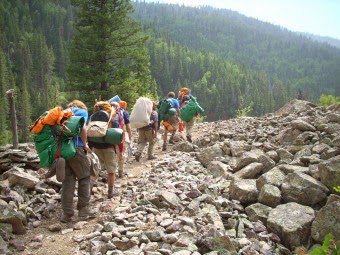
There are a wide variety of programs that fall under the category of “Wilderness Therapy”. However, there are a few primary characteristics that you can pretty much find universally throughout the programs. Essentially wilderness therapy is a form of therapeutic intervention, in which the patients live in and hike around the wilderness. The length of the patient’s stay varies greatly (I’ve heard of intensive programs reaching up to six months) but the average tends to be around 6-12 weeks. The aim of these programs is to allow the patient some time for introspection by withdrawing them from whatever unhealthy living situation they were in, and putting them in a therapeutic, isolated environment supposedly conducive to objective perspective. Again, there are many factors specific to each individual program, but these are the basic concepts I associate with “Wilderness Therapy”.
What were some of the hardest and scariest things you experienced during the process?
Along with the differences of programs, the details regarding the patient’s entry into wilderness can also vary greatly. Some parents choose to tell their kids beforehand, or give them an option to choose between different programs-but many of them hire transporters to escort them. Since I was, and a majority of the other kids were “transported”, I can say that this is definitely one of the tougher parts of the process. Being in the heat of an unhealthy lifestyle and being plucked from my bedroom in the middle of the night by two hired men was traumatic to say the least. I think this is one of the times where kids are most likely to make impulsive decisions and, though it may be necessary for some, can start the process of “rehabilitation” on a dangerous note. The next hardest thing afterword is adjusting to the program and looking forward. Many kids (myself included) were under the impression that the process takes only a few weeks, and that their parents would bring them home directly after. The wilderness therapists do very little to clear up those misconceptions and I was lied to several times in an effort to maintain my emotional stability. Though it is up to personal opinion on whether or not that is reasonable, I think this proves to be the overarching difficulty in the wilderness process. The various stages of denial about the length of your wilderness stay and how everyone insists they aren’t going to aftercare can be devastating once those illusions are shattered. Of course, many kids eventually accept that it was perhaps necessary to have this revealed to them gradually, but there are also those who hold strong grudges against their parents and the therapeutic programs for the lies told in the beginning.
What were your initial feelings when you arrived at wilderness?
My initial feelings when I arrived at my wilderness program are hard to categorize into single words. I suppose I could say it was overwhelming disbelief, and confusion, and sometimes regret. But infused in each one of those emotions was always anger, and that wasn’t relieved until far later in the process. Arriving at my base camp was shocking, and I hadn’t known it was an outdoor wilderness therapy until the moment I was dropped off on the mountain. When I met the other kids I felt comforted to see that others had adjusted, but I felt like an outcast, and I felt dreadfully alone. I immediately thought that it was a mistake. My Mom had checked off the wrong program from the list and that if she knew where I was, would not hesitate to withdraw me. This steadfast, impassioned denial is a phenomenon that appeared to occur in almost every kid I met, and can last several weeks into the program before it is accepted. The limited communication allowed between me and my Mom was a major contributor to this false hope, but had I not had that hope to hold on to, it may have been unbearable. The beginning of the process was undeniably tough, and though it was necessary, was a hazy and unstable time for me.
At what point did you realize “I understand now” and felt as though you knew what needed to change?
I can say with confidence that there was no single moment where I felt as though I had “all of a sudden” understood. Throughout the year long process my emotional state changed rapidly and the introspection resembled more closely a series of bargaining than sudden deliberate epiphanies. As the time in my program wore on the pain I was feeling was changing, and it was becoming subtle, but it still hurt just as much. As these changes occurred, I naturally adapted and was thus making unconscious internal changes and broadening my perspective. After I felt that I had matured, I was still only halfway through my aftercare program. I began to feel anxious and antsy and thought I was ready to go home. At this point, it still had not dawned on me that I had to make external changes as well as internal ones.

It was around this time that I began to realize this process wasn’t all about me. Even though I was the one who was in Utah, I understood that it was my fault, that I owed it to my mom. It’s too easy to feel like you’re the only victim out there. Somehow all the pain and injustice I’d caused my mom had, in a sense, slipped my mind. I began to think about the things I had to change for her benefit, even though it meant sacrifice, and that seems to be the most tangible checkpoint of understanding I’d had.
For city folks, like me, what were some of the more unique experiences being in the wilderness?
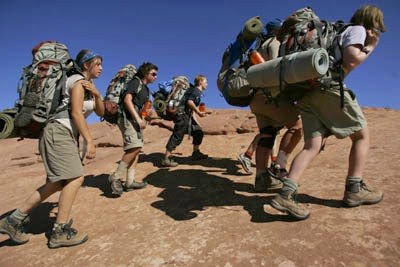
Looking back, I wish I could have enjoyed the actual “wilderness” part more than I did. Because I was in such an overwhelming mind state, it was often hard to separate myself from inside my head. Something they constantly try to teach out there is how to live in the moment. Of course, I had and still have many excuses for why I couldn’t do that, but the times that I was able to were certainly the most peaceful. Something that was shocking to me was how easily everyone adapted to the actual “wilderness” aspect. Within a week I could identify all fifty of the bags containing strange dried food, I could manage the ten-mile days with the forty-pound pack, and my made up knots were actually holding the shelter up. The lifestyle seemed alien on my first day, and everyday afterword, felt more and more like home.
My program was in Utah, and unlike most other wilderness programs, we traveled all around the state. I saw a very wide range of untouched nature, and the constant immersion in it gave me an appreciation I hadn’t had before. Like most unique experiences, I’ve romanticized my time in the woods, and though in reality I was miserable and counting the days, I’m able now to remember some of the happiness and pure wholesomeness I felt there.
Change is difficult for a lot of people.
If you could offer some advice to help others out, based off of your experience, what would it be?
The best advice I can offer is to broaden your perspective. I think that often one of the reasons kids get sent away is because of severe egocentrism and lack of empathy. I always knew how angry I was feeling, but it wasn’t until I understood the anger I’d caused my mom, that I was really able to change. Though there are other factors, I felt like every kid I met was suffering from relationship issues with their parents. In the heat of this process it’s hard to conceptualize the reality of the situation, but the fact is that your parents sent you away in hopes of you getting better. I think that the details of the situation can often overshadow the basic injustice both parents and kids feel, and that if the issues were stripped down, kids and parents could relate on the injustice and learn to empathize.
Another aspect of change I observed was the widespread misconception that changing meant losing. So many kids are filled with a stubborn sense of pride and are so concerned with “giving in”. I understand that certain situations may require an unmoving and passionate stance, though many times it’s an excuse to avoid feeling weak. Throughout the process I felt that I had two options: succumb to my mothers will or refuse to change. The reality isn’t nearly so black and white. At some point I realized that my mom and I had a similar goal (me achieving happiness) and that there were ways we could reach it together. The sacrifices I eventually resolved to make gained me my mom’s support, and from there we began to make changes together without the dissolution of my pride.
Now that you have been home from your wilderness
program for sometime, what has changed and how do you maintain what you learned out there?
Every kid has the idea built up in his or her mind of what it’s going to be like at home. For me personally, it was all I thought about, a comfort to remind me of the light at the end of the tunnel. The reality of the situation is that coming home is not like the fantasy you’ve it made out to be. I think a majority of kids, myself included, thought that being home would mean an undying, sustaining happiness. Problems and insecurities that may have arose in or before programs will follow you back home and demand to be confronted. That being said, it’s not always easy to figure out how to adjust. One of the most impactful changes I experienced was having a lifestyle and small community of people to relate to, and going home to everyone who knew very little about the past year of my life. The first few months at home felt very isolated for me, and I was having a hard time finding the right place for myself.
Many months down the line, things have changed quite a bit. After some time the pieces began to fall in to place and I melted back in to the natural cycle here. I learned enough about adjusting to new situations, and sacrificing, and started developing a code that would lead me to a healthy life. However, despite my comfort here, my memories of wilderness and after care are still very present in my daily life. I like to think back on them as something to hold on to, a very personal memoir that contributed largely to where I am now. I suppose it is up to everyone’s own interpretation to determine what role those memories might play, but I think its healthy to confront and confide in those past experiences, and to access them when needed.
If you could share 3 values you learned through your wilderness experience, what would they be?
The list of values taught during wilderness would be far too extensive if I were to thoroughly answer this question. Though, there are a few very important ones that came to mind first. Before I state these three, I want to make the distinction that I learned the core parts of these values not from the programs themselves, but from the experience as a whole.
The first value I’d like to point out is perspective. If you take the time to examine the wilderness culture, staff, and other kids, there’s a world of knowledge to be gained. I must say that merely being in the presence of that community exposed me to a variety of different lifestyles and personalities that I had not encountered. Since wilderness, I’ve been able to remember the world through the eyes of the people I met, and it’s always a refreshing outlook.
The second value I learned was adaptability. As I explained in some of the previous questions, the entry in to wilderness is shocking and fast-paced. There are changes you are forced to face immediately, whether or not you have previous outdoors experience. I think that this shift prompted me to try and understand some of the changes I’d face in the future (for instance, the transition back home) and has prepared me to face dramatic change from a more realistic and manageable approach.
The final value I’d like to bring forth is empathy. Perhaps the hardest, and most important lesson I learned was how to differentiate what I was feeling from my mom’s intentions. Unlike perspective, this wasn’t the ability to see from my mom’s point of view, rather, to try and feel what she was feeling and understand that. I think that this value is imperative to success at home, but is often tossed aside by kids’ sense of pride.