by YouTime Coaching | May 21, 2014 | Change, happiness, Positive, Self-Change, Stages of Change, Support, Tracking Progress
The “Self-Help” field is a multi-billion dollar a year industry. By the figures alone, most people are consistently trying to improve themselves, experience change, and accomplish goals.
There is potential for significant harm when simply picking up a self-help book in the local bookstore. Here is a great clip of
Dr. John Norcross (one of the leading researchers in personal and professional change), sharing how there are actually only a couple, literally, a couple resources out there proven to work and how others can cause serious harm to you.
If you skipped down to this before watching the clip, don’t try taking a short-cut (that may say something about how you also approach your own personal and professional change). Go back and watch it.
Okay, so you have watched the clip and I want to now provide you with what I believe are 3 of the most important researched and proven to work strategies that will be vital to any self-change.
Strategy 1:
“Nobody wants to achieve the negative”
Imagine setting a goal, such as,
“I want to stop procrastinating”
“I want to not overeat”
“I want to stop being attracted to jerks”
“I don’t want to work a miserable job”
Does this sound all too familiar?
A huge number of individuals fall short in a fundamental piece to goal setting, which is, DO NOT SET NEGATIVE GOALS. Nobody wants to achieve a negative goal or move forward with it.
Almost sounds conflicting…”I am going to achieve and make progress with the negative”
When setting your goal, make sure to set it in a “positive-frame” rather than a “negative frame”. I will list some examples.
“I will stop procrastinating” (negative frame)
“i will be more pro-active and assertive” (positive frame)
“I don’t want to overeat” (negative frame)
“I will be more mindful and conscious regarding my meals” (positive frame)
Moving towards something positive and something “gained” has a far more positive impact then trying to “avoid the negative” or “delete” something out of your life. The “positive frame” will help with your mental and physical endurance while pursuing the goal!
![]()
Strategy 2:
“Nobody wants to be alone”
Sure we all want to think that we can make changes, reach goals, and live amazing lives all by ourselves. As much as this sounds nice and empowering, research shows that it is absolutely necessary to have a support team along the way.
Your social support team will not only help you progress with your goals, but is actually a huge factor in an individuals happiness!
This is what you need to do.
- Make a list of specific ways you need support in achieving your change.
- Number the specific ways so you know exactly how many people you need on your “team”.
- Start fielding a team by contacting people you know and specifically asking for their help in the way that you need it. (remember that some may not be comfortable, knowledgeable, or willing to help out for many reasons. It is important you are clear with them about what you are trying to accomplish and ask them if they can support you in that way)
- Keep your team updated throughout the process and stay connected! (communicate with them if you need check ins, help with accountability…etc)
Things to think about regarding support:
- There are different types of support, so different people should be included as each person offers something new.
- Some people aren’t able to provide the support you need, so be clear with them about your needs and respect if they aren’t able to help out.
- You are not looking for friends and family to coach you. Many people would like to add their “5 cents” to the conversation. This is not the support you are looking for. That support comes from a trained and experienced Life Coach.
Strategy 3:
“If you take steps backwards, you will want to stop walking”
So you establish a specific, attainable, realistic, and timely goal that is in line with your values, now what?
One of the pieces I purposely left out of the above equation is making your goal “measurable”.
You MUST find ways to measure your progress.
Research shows that measuring progress can increase your self-confidence, motivation to continue, and happiness. On a simple level, take a second and think about why anybody would desire to continue pursuing something that you are not showing improvement or making progress on.
Truth is, they don’t want to continue!
In this day and age, technology can be your friend and help you track progress. Here is a link that will provide apps that help you track progress on numerous types of goals.
![]()
YouTime Coaching provides Life Coaching and Therapeutic Mentoring to individuals and families. YouTime Coaching works side by side with individuals to help create direction, passion, and produce lasting personal and professional change. Together we create an environment for clients that truly delivers the necessary “YOU” time needed to regain focus, motivation, and the desire to grow. Together, we will discover what truly motivates and drives your most successful decisions and behaviors.
YouTime Coaching will help define your goals, support systems, purpose and value to change, help find multiple ways of achieving it, and make the necessary shifts in body, language, and focus to get you there. Through working with a diverse population of clients, YouTime Coaching has successfully helped many adolescents, adults, parents, athletes, and those in the performing arts with building resiliency, motivation, confidence, and lasting personal and professional change.
by YouTime Coaching | Apr 15, 2014 | Beliefs, Change, choice, Growth, Life, Plant Based, Reiki, Vegan, Vegetarian
Everybody has been marginalized in their lifetime in some way.
Many involve all encompassing things such as religion, sexual orientation, and race, while others for less overt things like the way you dress, whether you like a particular sports team, what car you drive, or what job you work.
 What about the way you eat? Or even how compassionate you are?
People around the world have been marginalized for years for the very simple reason of not fitting into the mainstream “in-group”.
This blog interview illuminates and explores how an individual’s beliefs can change through their own life experience and how a little resistance from main-stream culture won’t stand in their way.
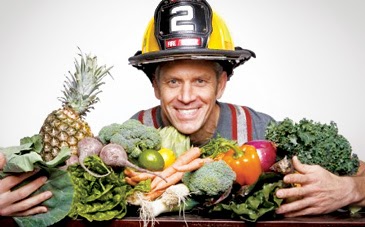
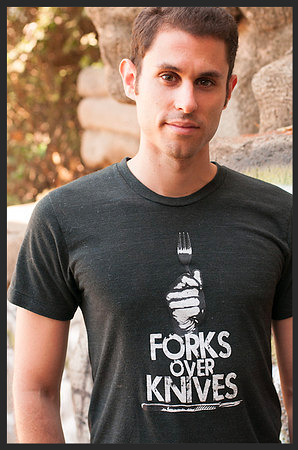
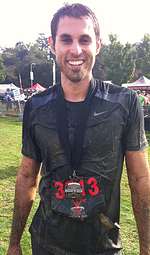 Steven Todd Smith is a Reiki Master Teacher and owner/creator of Reiki For Creative Minds. Also: a Life Nutrition Coach, Arbonne Independent Consultant, and Community Manager for Forks Over Knives.
There are a lot of “standard” questions to ask a vegan, “where do you get your protein?, “do you only eat salad?”, or “how do you not eat bacon?”. What is the oddest question you have been asked?
Because veganism is still not mainstream, even in large cities in 2014, there’s a handful of “interesting” questions that get asked here and there, mainly due to lack of information or misinformation. The oddest question I’ve been asked was “So can you still eat chicken?” A couple others: “Why do you care about animals more than humans?”, “But doesn’t that carrot you’re eating feel pain?”
I know that the number is astronomically growing, but what percentage of people are actually vegan or completely plant based?
Based on a recent Vegetarian Resource Group-commissioned Harris Interactive study, approximately 5% of the US population (≈16 million) is vegetarian and about half of that number is vegan. That ≈7.5-8 million has doubled since 2009. Even cooler is that 33% of Americans identify with eating vegan/vegetarian more often, though they are not vegan or vegetarian, according to the study. That’s 100+ million people eating plant-based on a more regular basis! Just thinking about the sweeping positive benefits in global health plus the number of animals being killed dropping brings me much joy PLUS knowing that, even though we’ve already done a good amount of damage to the planet re: factory farming’s deleterious effect on the environment, the steps we’re making to correct, to heal the planet will kick in sooner than later.
Being such a small group with a majority of people not sharing what you believe in, how do you continuously maintain your beliefs?
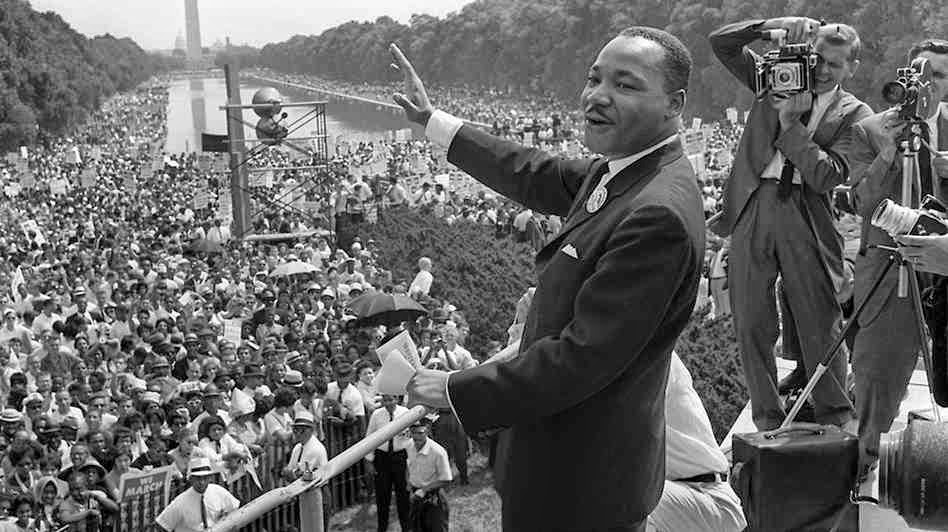
How did/has any minority group continue maintaining their beliefs? Sure, there’s a struggle, a greater wall of opposition to come up against. The Civil Rights movement, Women’s Rights movement, Gay Rights movement all believe(d) in the same thing – equality, compassion, justice, love. Same with veganism. These tenets, these beliefs are larger than life, no matter how small the overall population sharing them is. They guide me forward, giving them the amazing opportunity to share and spread them, to educate and enlighten. Once you connect to unconditional equality, justice, compassion, and love for all beings – human animals and non-human animals (obviously still in the context that non-human animals are not humans, and vice versa) – and truly believe in them, it’s impossible to go against that. And, on the surface level, I get to eat delicious food that cruelty-free and have fun with a community, that may be small overall but is locally very large!, that shares the same ideals.
Do you believe there are broader concepts and
values that could be shared amongst everybody?
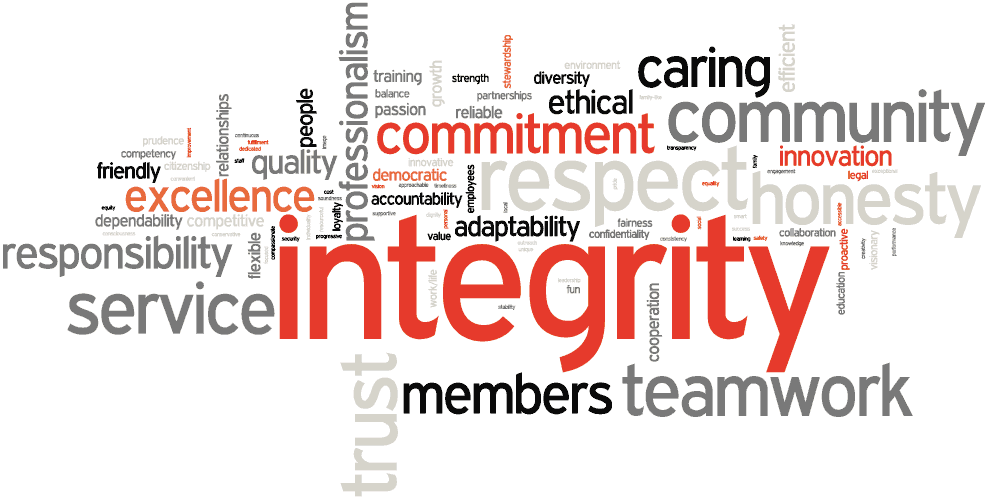 Yes, and it’s definitely worth repeating. Equality, justice, compassion, love. Also, kindness, awareness, sustainability, responsibility, living in alignment. All of these without conditions or bounds. When it comes to religion, faith, spirituality, it all comes back to love, no matter how many different twists and turns each individual one may take. And I’m not necessarily talking what’s stereotyped as “hippy-dippy kind of love,” (although, what’s wrong with that? Nothing.): I’m talking about loving your fellow Earthlings with whom you share this planet. What gives any one of us the right to confine, abuse, torture, or kill another being, whether it’s a dog, a cow, a person, a chicken, an elephant, a bear, a fish? I think love is a much stronger guide and force than hatred, than the need/want for power or greed. There are so many broader concepts and values that are already shared amongst a large majority of people in the world; the important transition/awakening happens when we realize we can extend those concepts and values to ALL living beings. Then, we’ll find ourselves truly living in alignment.
Many people find safety and security in having a firm set of beliefs. Do you find it easier to simply “live life” when you have a set of beliefs that direct your thoughts and behaviors?
I subscribe to a “strong-walled amoeba” approach. Having a set of guides/beliefs lead the way and protect me, something I can strongly and confidently connect to, while maintaining an open flexibility/receptivity to new ideas or beliefs that I may pick up and/or adopt along my life journey. I think living life in a black or white, immobile, immovable, steel box of beliefs will only prevent you from living fully, from connecting with other people and ideas on an understanding level of some sort. So, the openness and understanding from others that comes along with a solid faith allows for conversation and self-guidance. There are many benefits one will receive from living life with firm set of beliefs though, as much strength, character, individuality can be derived from them. Floating around with no foundation can be both scary and demoralizing.
You haven’t been vegan/plant-based your entire life. How hard was it to realize that your previous personal beliefs and values were in a sense “not the right ones” and how do you go about changing your beliefs?
Great question. As I’ve deepened my spiritual connection and practice and studied more what our purpose, as humans, is here on Earth during our lives, I begin to lean more toward the concept that our beliefs – we’ll say specifically of equality, compassion, justice, love – are always there; we just aren’t fully conscious and awakened to them yet. Sure, knowing what I know now, I wish I had been living vegan my whole life. But then my life wouldn’t be mine. The journey is just as important as the outcome, because it lays the foundation for the path you end up taking. The foundation – knowing your “Why?” – needs to be strong, have purpose, or any changed beliefs will easily revert back to old habits, patterns, actions, beliefs.
 While I had initial resistance because the new beliefs challenged my old ones, I entered with just the slightest openness and understanding, as mentioned above. That gave me the space to explore, learn, and experience. I had/sought support, dove into many different resources, and began to realize that veganism provided me with everything I actually was in alignment with in life. It was less of being wrong and then being right; it became my next powerful platform of growth. The difficulty came in the unknown part of the change: what will I eat?, how will I interact with others?, etc. Just like any change though – even from crawling as babies to learning/deciding to walk (not wrong to right, just the next step in personal growth) – the answers, regardless of the stumbles along the way, eventually came.
Steve, for those people out there now that question their own beliefs, what would you share to help them reach the same level of certainty you have that your beliefs are definitely the right ones for you?
It’s as easy as asking yourself: “Is this action I’m taking in
alignment with my greatest/deepest values in life?” For me, I realized contributing to an industry that promotes confinement, abuse, and killing was not in alignment with my values. I do not support confinement, abuse, and killing. Once I learned and realized I could take care of my own health, my own fulfillment, and help other beings on this planet, it became a simple decision. Sure, the journey between the question, the exploration, and the decision may be trickier and take a while (or maybe not…), but the feeling of consciously being in alignment is one of the greatest feelings you’ll experience.
So, truly ask yourself. Explore. Figure out if you’re serving both yourself and others with your beliefs; if not yourself, then it’s time to change. If not others, then it’s time to change. You can achieve both. We all can achieve both. Let go of the past (as the past is already past), tap into your present, your right now, and decide if what you are doing creates a better today AND future all around. You don’t have to know all the specifics; there’s a very good chance if the decision is in favor of equality, compassion, justice, and love, you’re heading in the optimal direction.
__________
 Steven Todd Smith is a Reiki Master Teacher and owner/creator of Reiki For Creative Minds. Also: a Life Nutrition Coach, Arbonne Independent Consultant, and Community Manager for Forks Over Knives. His passion for health, fitness, spirituality, and compassion run deep, as he’s been vegan for four and a half years and maintains an active yoga, gym, meditation, and running practice. A lover of all fun & games, especially board games, poker, and sports of almost any kind, Steven approaches life with a serious level of playfulness, always looking to infuse laughter and smiles into any situation. Has a BFA from NYU’s Tisch School of the Arts in Acting, Plant-Based Nutrition Certification from Cornell, and is a Certified Holistic Health Coach from the Institute for Integrative Nutrition. You can find out more about Reiki and Steve at www.reikiforcreativeminds.com.
by YouTime Coaching | Mar 31, 2014 | Advice, Anxiety, Change, Confidence, Depression, Life Coaching, Outdoors, Teenagers, Therapy, Wilderness, Wilderness Therapy
My career allows me to work with some amazing people that have been through some truly unique experiences. This is just one of the many.
Simon, was struggling with many of the harsh realities life threw directly at him. His journey to understanding himself and developing a spot in the world is a different one then that of a typical teenager. In the wilderness is where he began to heal, rehabilitate and become a truly remarkable person.
I had the chance to ask Simon some candid questions about his experience:
(the name of the client is being protected for confidentiality purposes).
Most people aren’t familiar with “Wilderness Therapy”.
Can you describe what it is in your own words?
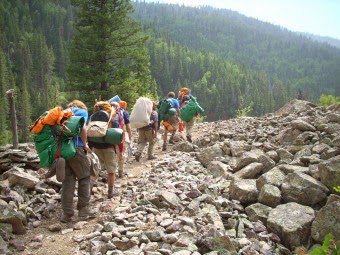
There are a wide variety of programs that fall under the category of “Wilderness Therapy”. However, there are a few primary characteristics that you can pretty much find universally throughout the programs. Essentially wilderness therapy is a form of therapeutic intervention, in which the patients live in and hike around the wilderness. The length of the patient’s stay varies greatly (I’ve heard of intensive programs reaching up to six months) but the average tends to be around 6-12 weeks. The aim of these programs is to allow the patient some time for introspection by withdrawing them from whatever unhealthy living situation they were in, and putting them in a therapeutic, isolated environment supposedly conducive to objective perspective. Again, there are many factors specific to each individual program, but these are the basic concepts I associate with “Wilderness Therapy”.
What were some of the hardest and scariest things you experienced during the process?
Along with the differences of programs, the details regarding the patient’s entry into wilderness can also vary greatly. Some parents choose to tell their kids beforehand, or give them an option to choose between different programs-but many of them hire transporters to escort them. Since I was, and a majority of the other kids were “transported”, I can say that this is definitely one of the tougher parts of the process. Being in the heat of an unhealthy lifestyle and being plucked from my bedroom in the middle of the night by two hired men was traumatic to say the least. I think this is one of the times where kids are most likely to make impulsive decisions and, though it may be necessary for some, can start the process of “rehabilitation” on a dangerous note. The next hardest thing afterword is adjusting to the program and looking forward. Many kids (myself included) were under the impression that the process takes only a few weeks, and that their parents would bring them home directly after. The wilderness therapists do very little to clear up those misconceptions and I was lied to several times in an effort to maintain my emotional stability. Though it is up to personal opinion on whether or not that is reasonable, I think this proves to be the overarching difficulty in the wilderness process. The various stages of denial about the length of your wilderness stay and how everyone insists they aren’t going to aftercare can be devastating once those illusions are shattered. Of course, many kids eventually accept that it was perhaps necessary to have this revealed to them gradually, but there are also those who hold strong grudges against their parents and the therapeutic programs for the lies told in the beginning.
What were your initial feelings when you arrived at wilderness?
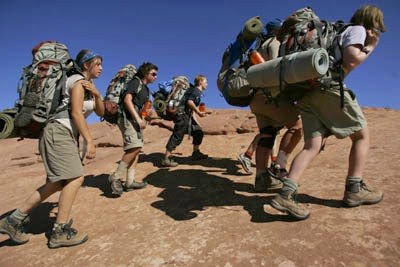
My initial feelings when I arrived at my wilderness program are hard to categorize into single words. I suppose I could say it was overwhelming disbelief, and confusion, and sometimes regret. But infused in each one of those emotions was always anger, and that wasn’t relieved until far later in the process. Arriving at my base camp was shocking, and I hadn’t known it was an outdoor wilderness therapy until the moment I was dropped off on the mountain. When I met the other kids I felt comforted to see that others had adjusted, but I felt like an outcast, and I felt dreadfully alone. I immediately thought that it was a mistake. My Mom had checked off the wrong program from the list and that if she knew where I was, would not hesitate to withdraw me. This steadfast, impassioned denial is a phenomenon that appeared to occur in almost every kid I met, and can last several weeks into the program before it is accepted. The limited communication allowed between me and my Mom was a major contributor to this false hope, but had I not had that hope to hold on to, it may have been unbearable. The beginning of the process was undeniably tough, and though it was necessary, was a hazy and unstable time for me.
At what point did you realize “I understand now” and felt as though you knew what needed to change?
I can say with confidence that there was no single moment where I felt as though I had “all of a sudden” understood. Throughout the year long process my emotional state changed rapidly and the introspection resembled more closely a series of bargaining than sudden deliberate epiphanies. As the time in my program wore on the pain I was feeling was changing, and it was becoming subtle, but it still hurt just as much. As these changes occurred, I naturally adapted and was thus making unconscious internal changes and broadening my perspective. After I felt that I had matured, I was still only halfway through my aftercare program. I began to feel anxious and antsy and thought I was ready to go home. At this point, it still had not dawned on me that I had to make external changes as well as internal ones.

It was around this time that I began to realize this process wasn’t all about me. Even though I was the one who was in Utah, I understood that it was my fault, that I owed it to my mom. It’s too easy to feel like you’re the only victim out there. Somehow all the pain and injustice I’d caused my mom had, in a sense, slipped my mind. I began to think about the things I had to change for her benefit, even though it meant sacrifice, and that seems to be the most tangible checkpoint of understanding I’d had.
For city folks, like me, what were some of the more unique experiences being in the wilderness?
Looking back, I wish I could have enjoyed the actual “wilderness” part more than I did. Because I was in such an overwhelming mind state, it was often hard to separate myself from inside my head. Something they constantly try to teach out there is how to live in the moment. Of course, I had and still have many excuses for why I couldn’t do that, but the times that I was able to were certainly the most peaceful. Something that was shocking to me was how easily everyone adapted to the actual “wilderness” aspect. Within a week I could identify all fifty of the bags containing strange dried food, I could manage the ten-mile days with the forty-pound pack, and my made up knots were actually holding the shelter up. The lifestyle seemed alien on my first day, and everyday afterword, felt more and more like home.
My program was in Utah, and unlike most other wilderness programs, we traveled all around the state. I saw a very wide range of untouched nature, and the constant immersion in it gave me an appreciation I hadn’t had before. Like most unique experiences, I’ve romanticized my time in the woods, and though in reality I was miserable and counting the days, I’m able now to remember some of the happiness and pure wholesomeness I felt there.
Change is difficult for a lot of people.
If you could offer some advice to help others out, based off of your experience, what would it be?
The best advice I can offer is to broaden your perspective. I think that often one of the reasons kids get sent away is because of severe egocentrism and lack of empathy. I always knew how angry I was feeling, but it wasn’t until I understood the anger I’d caused my mom, that I was really able to change. Though there are other factors, I felt like every kid I met was suffering from relationship issues with their parents. In the heat of this process it’s hard to conceptualize the reality of the situation, but the fact is that your parents sent you away in hopes of you getting better. I think that the details of the situation can often overshadow the basic injustice both parents and kids feel, and that if the issues were stripped down, kids and parents could relate on the injustice and learn to empathize.
Another aspect of change I observed was the widespread misconception that changing meant losing. So many kids are filled with a stubborn sense of pride and are so concerned with “giving in”. I understand that certain situations may require an unmoving and passionate stance, though many times it’s an excuse to avoid feeling weak. Throughout the process I felt that I had two options: succumb to my mothers will or refuse to change. The reality isn’t nearly so black and white. At some point I realized that my mom and I had a similar goal (me achieving happiness) and that there were ways we could reach it together. The sacrifices I eventually resolved to make gained me my mom’s support, and from there we began to make changes together without the dissolution of my pride.
Now that you have been home from your wilderness
program for sometime, what has changed and how do you maintain what you learned out there?
Every kid has the idea built up in his or her mind of what it’s going to be like at home. For me personally, it was all I thought about, a comfort to remind me of the light at the end of the tunnel. The reality of the situation is that coming home is not like the fantasy you’ve it made out to be. I think a majority of kids, myself included, thought that being home would mean an undying, sustaining happiness. Problems and insecurities that may have arose in or before programs will follow you back home and demand to be confronted. That being said, it’s not always easy to figure out how to adjust. One of the most impactful changes I experienced was having a lifestyle and small community of people to relate to, and going home to everyone who knew very little about the past year of my life. The first few months at home felt very isolated for me, and I was having a hard time finding the right place for myself.
Many months down the line, things have changed quite a bit. After some time the pieces began to fall in to place and I melted back in to the natural cycle here. I learned enough about adjusting to new situations, and sacrificing, and started developing a code that would lead me to a healthy life. However, despite my comfort here, my memories of wilderness and after care are still very present in my daily life. I like to think back on them as something to hold on to, a very personal memoir that contributed largely to where I am now. I suppose it is up to everyone’s own interpretation to determine what role those memories might play, but I think its healthy to confront and confide in those past experiences, and to access them when needed.
If you could share 3 values you learned through your wilderness experience, what would they be?
The list of values taught during wilderness would be far too extensive if I were to thoroughly answer this question. Though, there are a few very important ones that came to mind first. Before I state these three, I want to make the distinction that I learned the core parts of these values not from the programs themselves, but from the experience as a whole.
The first value I’d like to point out is perspective. If you take the time to examine the wilderness culture, staff, and other kids, there’s a world of knowledge to be gained. I must say that merely being in the presence of that community exposed me to a variety of different lifestyles and personalities that I had not encountered. Since wilderness, I’ve been able to remember the world through the eyes of the people I met, and it’s always a refreshing outlook.
The second value I learned was adaptability. As I explained in some of the previous questions, the entry in to wilderness is shocking and fast-paced. There are changes you are forced to face immediately, whether or not you have previous outdoors experience. I think that this shift prompted me to try and understand some of the changes I’d face in the future (for instance, the transition back home) and has prepared me to face dramatic change from a more realistic and manageable approach.
The final value I’d like to bring forth is empathy. Perhaps the hardest, and most important lesson I learned was how to differentiate what I was feeling from my mom’s intentions. Unlike perspective, this wasn’t the ability to see from my mom’s point of view, rather, to try and feel what she was feeling and understand that. I think that this value is imperative to success at home, but is often tossed aside by kids’ sense of pride.
by YouTime Coaching | Aug 20, 2013 | Behavior, Behavioral Change, Beliefs, Change, Energy, Focus, Outcomes, Stages of Change
Dr. John Norcross is a Professor of Psychology & Psychiatry as well as an expert on changing human behavior. With over 30 years of backed research the “Stages of Change” have been developed and have helped thousands of individual see sustainable personal/professional change.
Stemming from research based out of my undergraduate alma mater, University of Rhode Island, the “Trans-theoretical Model” became the go to formula for successful change.
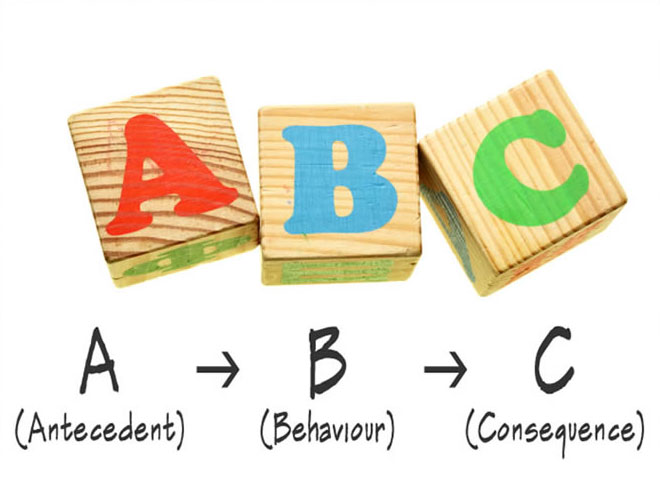
One aspect of change is to conduct a little detective work in identifying what may be wrong and why it is happening in the first place. This is commonly referred to as your “Behavioral Chain”.
A Little Bit About the ABC’s
Antecedents
- Occurs prior to the event and may trigger you to act a particular way.
- Can include your environment, the people around you, the interaction with the individuals with you, and your mood.
- Some detective questioning could include; Who are you with when you experience this behavior? What mood are you in when this behavior presents itself (sad, stressed, happy, bored, anxious…etc)? What time of day does this behavior typically come out (morning, day, night)?
Behavior
- The problem behavior
- Also, the healthy alternatives to the problem behavior.
Consequence
- Occur after the problem and usually rely on what the specific problem is.
- *BEWARE* Short-term consequences can be very rewarding (taste good, relaxing…etc)
- *BEWARE* Long-term consequences can be painful and destructive (heart disease, stroke, cancers, obesity, diabetes…etc)
- We favor instant gratification rather then delayed gratification.
- Recording long-term consequences is just as important as recording the short-term.
A few tips on how to use the ABC’s to change your behavior
- Explore the antecedents to your behavior and find healthy alternative environments and social groups to prevent triggers that promote your problem behavior.
- Create new healthier alternatives and substitutes to meet your need for variety, fun, and freedom. Learn a new relaxation technique or coping skills to get you through triggering antecedents.
- Reverse the consequence to your problem behavior and work backward through the ABC’s to see what new antecedents and behaviors are necessary to end up with this new outcome.
Check out this great worksheet for your
ABC’s and behavioral chain:
*Derived from Changeology By: John Norcross, PhD
by YouTime Coaching | Aug 13, 2013 | Beliefs, Change, Insight, Insight Fallacy, Motivation, Problems, Stages of Change, steps, Understanding
Have you ever explained something to a friend or family member and their response is, “I know, I know, I know”? They seem to fully grasp the idea, concept, or reason for something that is happening around them all too well.
Have you ever seen that same friend or family member that “understood” what and why something was happening, never change anything about it? Well, there’s a name for that.
In the field of Psychology it is referred to as the “Insight Fallacy”.
Insight Fallacy: The belief that understanding a problem will solve the problem.
When gaining insight into a problem it may help us by,
- Providing comfort, security, and safety in understanding what is wrong.
- Assisting in the development of new problem-solving strategies.
- Giving meaningful new understanding which will create harmony between our thoughts, emotions, and actions.
However nice this may sound, insight alone will not change the problem. In order to take effective steps in changing the problem, you must first identify a few things by answering these questions.
- Is there a problem at all? If so, what is it?
- Have a tried changing this problem in the past 6 months?
- Do I plan on doing something about this within the next 30 days?
If you have not identified a problem, you are most likely not going to do anything about it, besides saying “I know, I know, I know”. If you said “YES” to there being a problem, you must start thinking about how you are going to try and change it. Take a look at the “Stages of Change” and get a feel for where you may be.
For each stage there are different tasks to complete, so make sure you are honest in which one you may be in. Being in the wrong stage at the wrong time will lead to frustration, relapse, and a decline in confidence.
Take it one stage at a time, be patient with yourself, and know that there will be bumps in the journey.
You got this.
by YouTime Coaching | Apr 18, 2012 | Action, Attitudes, Beliefs, Change, Failure, Motivation, Potential, Purpose, Results, Self-Esteem, Success
Are you programmed for success or failure?
Lets get started:
Phase 1:
What are beliefs?
How do we create our belief system?
Lets begin with a simple definition of the word belief. For the purpose of how we will use the word, the definition of belief is,
a FEELING of ABSOLUTE CERTAINTY that something is TRUE.
I hope I made it clear enough that there are three major factors in defining a belief.
1. It is a feeling
2. You are absolutely certain of this feeling
3. This feeling is true.
If you were to tell me that you believe you could of run in the Boston Marathon this past Monday, than you are saying, “I AM ABSOLUTELY CERTAIN I COULD RUN IN THE MARATHON”.
I would say, good luck against those Kenyans.
Now, what do beliefs have to do with success or failure?
Phase 2:
Take out a pen, pencil, or marker and draw this diagram.
Case 1: Potential & Results
Lets start in the top right hand corner.
Do human beings have a lot of potential?
YES!! Humans are capable of incredible things.
Do human beings live up to their potential, giving us equally as incredible results?
NO! Don’t get me wrong humans do amazing things, but, as a whole, humans are capable of doing a lot more for themselves, others, and the environment that they live in.
…So based off of the diagram above, what is the culprit for having
HIGH POTENTIAL, but LITTLE RESULTS?
You got it! There is not enough ACTION.
Case 2: Action & Results
So we need some more action to achieve great results, right?
Not necessarily.
Imagine I ask you to go around your neighborhood to 100 homes, knock on their doors, and try to sell them a new diet pill by saying,
“Hey Buddy, buy this pill from me”.
I BELIEVE, a vast majority would decline purchasing.
This proves that HIGH ACTION does not always yield HIGH RESULTS.
Case 3: Belief
Relationship Example:
Your friends tell you that they have someone that would be perfect for you. So you get set up on a date, but with a group of people (feels a little more safe). When you look at the man or woman that you are supposed to be set up with, you realize, holy shit they are gorgeous.
Suddenly…The feeling in the pit of your stomach. It is telling you, “I am not as good looking as them, they probably won’t go for me. A guy/girl like that only go for good-looking people, I’ve got no chance.”
With this BELIEF (revisit the definition up top), are you going to be at a “high potential” to get the guy/girl you are suppose to be set-up with?
No.
With this belief in addition to low potential, do you believe you are going to pursue this as much as possible?
No.
Why would you pursue something you know will not work and is a waste of time.
DEFEATING BELIEF + LITTLE POTENTIAL
+ LITTLE ACTION = ?????????
LITTLE and DISAPPOINTING RESULTS!
Phase 3:
Take the mindset of someone that is rich, poor, happy, or sad and you can easily see why this cycle can serve as being a breading ground for success or failure.
This is why the rich get richer, the poor get poorer, the happy get happier, and the sad get sadder!
It all comes down to our beliefs. What we feel is absolutely true.
Am I confident?
Am I good enough?
Am I smart enough?
Am I good looking enough?
Changing your attitude and belief about these concepts, will drastically change our cycle and results!
Make this your focus.
Revisit your beliefs today and see what you can change.