by YouTime Coaching | Nov 9, 2016 | Arguments, Children, parenting, parents
CONFLICT.
Yeah, it could be a synonym for “parenthood” or the newest board game for parents and their children to practice communication and relationship building (look out for it on the shelves this coming holiday season in your nearest Target). Let’s face it, conflict in and out of the home can feel like an every day occurrence. Regardless of your child’s developmental stage (school-age, adolescence, early adulthood…etc) or challenges with ADHD, executive functioning, or processing speed, parent’s are forced to navigate conflicts with their children, inner-conflicts with themselves, and potentially with any other caregivers in the picture.
While no two conflicts are identical (though the argument could feel redundant… “Why didn’t you start your homework yet?… I didn’t raise you like that!… If you don’t clean your room, you can’t go over your friends house.), you knowing your different “conflict modes” can give you access to a higher understanding of parenting and effective communication with your children during chaotic times.
What is a “conflict mode”?
DOWNLOAD: 10 Parenting Strategies For Raising Children…. That Actually Work!
Short and sweet, your conflict mode is a deeper understanding of how you typically behave during conflict.
First, there are two dimensions.
1. Assertiveness: how much effort (or lack of effort) you put into satisfying your own concerns.
2. Cooperativeness: how much effort (or lack of effort) you put into satisfying the other person’s concerns.
Think of it like this.
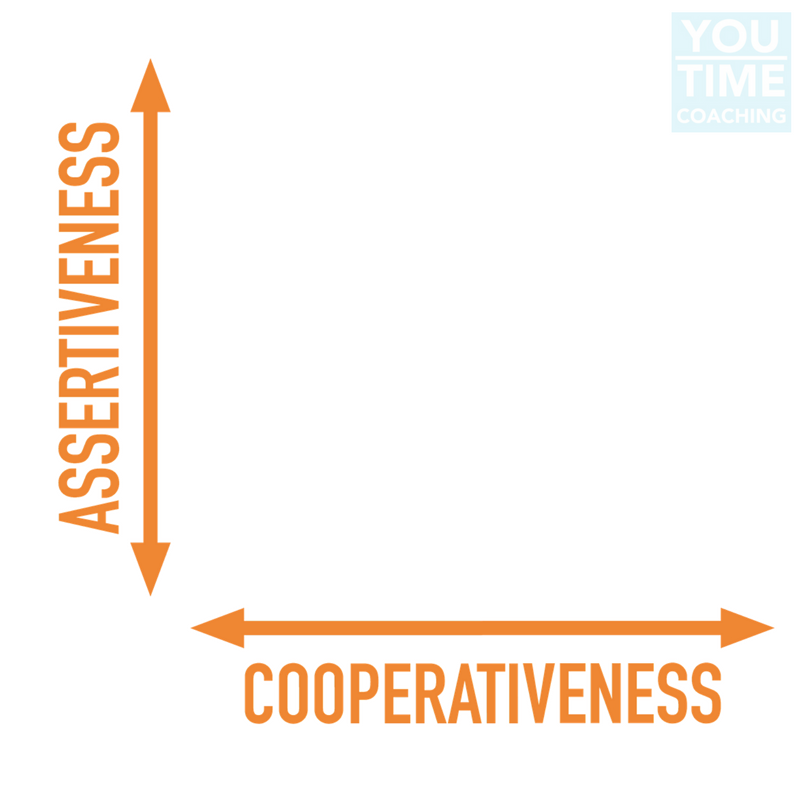
Second, there are 5 “modes” for how we respond to conflict.
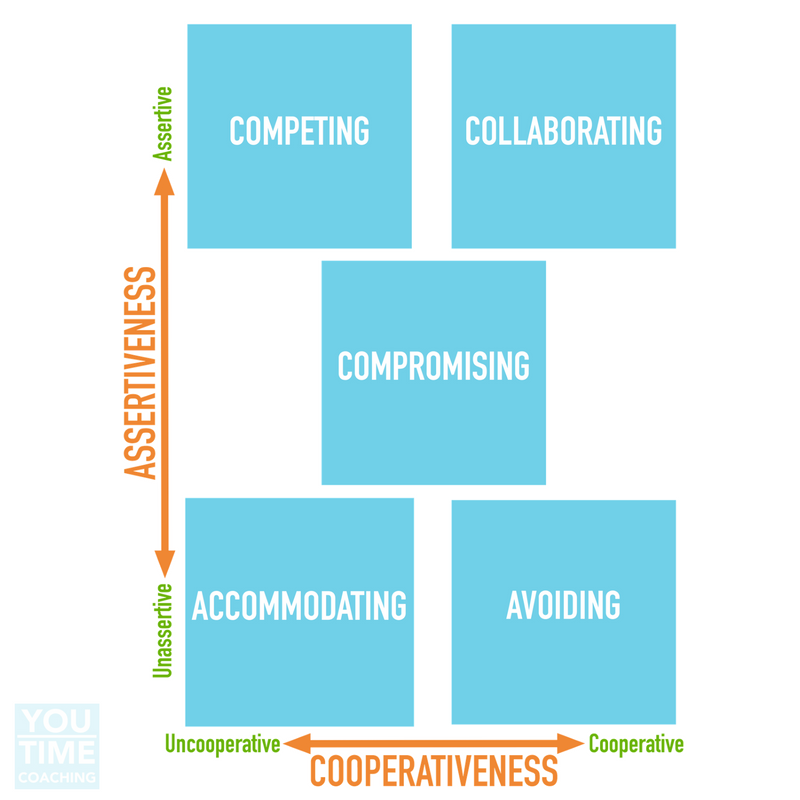
To learn more about each of these “modes” take a look at this: An Overview of Conflict Modes. Taking a quick gander you can probably start to piece together the more obvious “modes” you go into during a conflict with your child. This isn’t a “one way or another” type of situation, because typically parents will exhibit some degree of each of these across the conflicts you face with yourself and others.
There are many specific behaviors that could enact each individual factor but your “conflict mode” is built off of the aim of the behavior rather than the specific behavior itself. Same goes for your child.
For example, your child may not want to talk about the poor grade they received on their English paper and in order to achieve this avoidance they could walk out of the room, shut down and not speak, or even change topics altogether. Three different behaviors, all aimed to avoid.
Let’s put the entire picture together.
Your “conflict mode” is a product of your personal disposition and the requirements of the situation you have found yourself in. Different conflicts with your children, loved ones, your friends, and even yourself can highlight different tendencies you may gravitate to within these modes.
BENEFITS TO UNDERSTANDING YOUR “CONFLICT MODE”:
• Learn how to use your strengths to set boundaries and KEEP THEM!
• Work with your child in creating innovative solutions to common problems.
• Further develop your ability to manage your efforts, while still helping you and your child.
• Reduce your stress load during conflicts.
• Genuinely support your child during conflicts.
Taking a look at the diagram above will give you a self-diagnosed idea of what modes you gravitate towards.

Contact YouTime Coaching now to find out your individualized “conflict mode” and learn more about how to put the newly acquired information into action at home with yourself and your children.

by YouTime Coaching | Aug 26, 2016 | Children, college, Communication, high school, parenting, parents
August. The countdown begins. In a few short weeks or even days you will be able to retire from your position as family event planner. Your child is probably frantically trying to savor every last second of summer vacation (and what better time to binge watch Netflix than 2 am??) and tackle the unaccomplished tasks on their bucket lists. However, this time is critical to help them set themselves up for a successful transition into the new school year. Whether they are starting at a new school or returning to their current one, here are a few tips to help them ease into September.
1. Set a Routine: Your child will need to reintroduce themselves to their alarm clock! This friendship takes a little time to rekindle! One to two weeks before the start of school, begin transitioning back to a more “normal” schedule and routine. Begin encouraging an earlier bedtime. Try backing bedtime up 15-30 minutes each night. This will help your child feel ready to wake at an earlier hour. Encourage some time for activities such as reading. This will help your child settle back into completing assignments and homework. Help your child reestablish these routines before the start of school. The less change they need to adapt to all at once, the smoother the transition will be.

2. Encourage Activity: Summer activities come in a lot of different forms. Some children remain active all summer, while others use the time to relax. If your child’s physical activity level has flatlined a little over the summer, encourage them to become more active. Exercise can help reduce stress levels while also helping children sleep better. This will help tire them out, which in turn should naturally lead to an earlier bedtime.
![Large group of people stretching together. [url=http://www.istockphoto.com/search/lightbox/9786738][img]http://dl.dropbox.com/u/40117171/group.jpg[/img][/url] [url=http://www.istockphoto.com/search/lightbox/9786766][img]http://dl.dropbox.com/u/40117171/sport.jpg[/img][/url]](https://youtimecoach.com/wp-content/uploads/2016/08/friends-exercising.jpg)
3. Model Confidence: Children are masters at reading adults. If you are anxious or stressed about the upcoming school year, this will show. If you feel it would be helpful, have a dialogue with your child about how they’re feeling about this upcoming year. Maybe they feel better about the year than you think. If your child is at the stage where it is “not cool” to do this, let them know that you are there for them if they ever have a problem or need to talk. Also, encourage your child to form a connection with a trusted adult at school. This will help you feel more assured that if a problem does arise, your child is getting the help they need.

Abraham Lincoln said, “Give me six hours to chop down a tree and I will spend the first four sharpening the ax.” By more effectively using the end of the summer days and preparing for the transition ahead, your child will walk through the doors on that first day of school more mentally prepared to take on the school year!

by YouTime Coaching | Aug 15, 2012 | Babies, Children, Diet, Doctors, Health, Inspiration, Kids, Life, Lifestyle, Milk, Nutrition, Vitality
Have you ever guessed a woman’s age?
If not or you would like some redemption from a previous attempt, here is your chance.
So what is your guess?
70…
80…
90…
100?
WRONG!
This young lady is 114 years old
Say hi to Leila Denmark from Athens, Georgia.
Leila was born February 1, 1898.
You heard me, at the end of the 1800’s!
You see Leila was a Doctor and had practiced medicine for more than 70 years. Take a second to realize some of the world changing events she was present for, the entire industrial revolution, new vaccines, epidemics, massive wars, and thousands of deathly maladies. When Leila was 18, she wasn’t allowed to vote, because WOMEN WERE NOT ALLOWED TO VOTE IN 1916! She experience the Women’s Suffrage Movement.
Leila absolutely loved practicing medicine, connecting with others, and contributing to her world. She was so passionate about these concepts that she completely modeled her private practice on it.
Sounds nice, huh?
Somewhat ass backwards from our nation’s current health insurance situation.
Leila Denmark passed away April 1, 2012 in her hometown Athens, Georgia.
Although she is no longer with us, Leila left some powerful information and life lessons gained through her life and never let go of her core belief,
18 Life Lessons from a 114 year old Doctor:
1. Don’t abuse your body with junk food
2. Love what you do
3. Drinking cow’s milk is dangerous
4. Do your best to help others
5. Too much sugar is not a good thing
6. A sense of humor is very important for longevity
7. As a doctor, it’s important to find the root cause of a problem
8. Children are not getting parental guidance and it’s wrecking this nation
9. Kids in daycare are deprived of attention and catch too many illnesses
10. We need to think about everything we eat and drink
11. “Let’s do” is easier than do
12. Anything you have to do is work and anything you love to do is play
13. During the Great Depression, 11,000 of America’s 25,000 banks closed (Save what you can, appreciate what you have.)
14. Never raise your hand or your voice to a child
15. Parenting has gone out of style
16. Children and adults should eat fruit instead of drinking fruit juices
17. Drink only water
18. The greatest change she’s seen in her lifetime has been the neglect of little children