
by YouTime Coaching | Aug 26, 2016 | Children, college, Communication, high school, parenting, parents
August. The countdown begins. In a few short weeks or even days you will be able to retire from your position as family event planner. Your child is probably frantically trying to savor every last second of summer vacation (and what better time to binge watch Netflix than 2 am??) and tackle the unaccomplished tasks on their bucket lists. However, this time is critical to help them set themselves up for a successful transition into the new school year. Whether they are starting at a new school or returning to their current one, here are a few tips to help them ease into September.
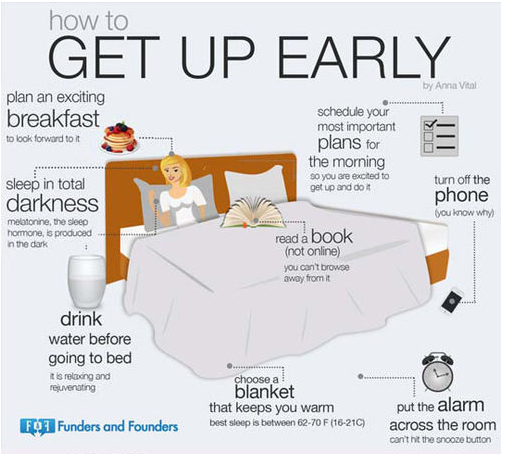
1. Set a Routine: Your child will need to reintroduce themselves to their alarm clock! This friendship takes a little time to rekindle! One to two weeks before the start of school, begin transitioning back to a more “normal” schedule and routine. Begin encouraging an earlier bedtime. Try backing bedtime up 15-30 minutes each night. This will help your child feel ready to wake at an earlier hour. Encourage some time for activities such as reading. This will help your child settle back into completing assignments and homework. Help your child reestablish these routines before the start of school. The less change they need to adapt to all at once, the smoother the transition will be.
2. Encourage Activity: Summer activities come in a lot of different forms. Some children remain active all summer, while others use the time to relax. If your child’s physical activity level has flatlined a little over the summer, encourage them to become more active. Exercise can help reduce stress levels while also helping children sleep better. This will help tire them out, which in turn should naturally lead to an earlier bedtime.
![Large group of people stretching together. [url=http://www.istockphoto.com/search/lightbox/9786738][img]http://dl.dropbox.com/u/40117171/group.jpg[/img][/url] [url=http://www.istockphoto.com/search/lightbox/9786766][img]http://dl.dropbox.com/u/40117171/sport.jpg[/img][/url]](https://youtimecoach.com/wp-content/uploads/2016/08/friends-exercising.jpg)
3. Model Confidence: Children are masters at reading adults. If you are anxious or stressed about the upcoming school year, this will show. If you feel it would be helpful, have a dialogue with your child about how they’re feeling about this upcoming year. Maybe they feel better about the year than you think. If your child is at the stage where it is “not cool” to do this, let them know that you are there for them if they ever have a problem or need to talk. Also, encourage your child to form a connection with a trusted adult at school. This will help you feel more assured that if a problem does arise, your child is getting the help they need.

Abraham Lincoln said, “Give me six hours to chop down a tree and I will spend the first four sharpening the ax.” By more effectively using the end of the summer days and preparing for the transition ahead, your child will walk through the doors on that first day of school more mentally prepared to take on the school year!


by YouTime Coaching | Mar 25, 2015 | boundaries, Communication, limits, parenting, parents, Positive, positive reinforcement, punishments, relaxation, rewards, Teenagers
Parenting a teenager can be a challenge and require a lot of skill and energy. However, there are a few tips that can help make it a lot easier.
Step 1: Be positive about your expectations.
Studies show that people often perform and act according to what is expected of them. If little is expected, little will be achieved. This is known as the Pygmalion effect, and it has been seen with the expectations a parent has of a child.
DOWNLOAD: Parenting Strategies For Raising Teenagers…. That Actually Work!
If you expect that your teenager is going to fail in school, for example, this increases the likelihood that they will fail. However, thinking the opposite can have a positive effect. It’s important not to have expectations that are too overwhelming (become the President) or too specific (my son is going to be a quarterback), because expectations become limiting, but rather to have positive expectations based on the teen’s interests, skills and personality.
Step 2: Use rewards, not punishments.
It has been shown that punishments have a varying effect on discouraging a negative behavior, but rewards are guaranteed to work to encourage positive behavior. Rewards don’t have to be material, as many times sincere praise will work very well to encourage the teen.
Usually, with teenagers, parents tend to focus on the negative behaviors, sometimes taking the good things for granted. This actually serves to perpetuate the negative behaviors more. However, shifting the focus and being generous with praise can help you achieve better results.
Step 3: Adjust limits
![]() Teenagers need different limits than children, and what is more, they need limits that are adjusted as they grow up. However, it often happens that parents don’t revise the limits until a serious fight happens or something else equally out of the ordinary occurs. To prevent this, it’s a good idea to revise limits consistently to maintain a balance between the teen’s freedom and responsibility.
Teenagers need different limits than children, and what is more, they need limits that are adjusted as they grow up. However, it often happens that parents don’t revise the limits until a serious fight happens or something else equally out of the ordinary occurs. To prevent this, it’s a good idea to revise limits consistently to maintain a balance between the teen’s freedom and responsibility. Step 4: Remain calm
![]() Teens are dramatic, as their emotional experiences are often extreme. They say they “hate” their parents, which is something no parent wants to hear. However, in the face of these emotions that the teen yet can’t control, it’s very important to remain calm and be there for them, as these outbursts usually don’t reflect actual hatred, but pain and anger that the teen doesn’t know how to handle yet.
Teens are dramatic, as their emotional experiences are often extreme. They say they “hate” their parents, which is something no parent wants to hear. However, in the face of these emotions that the teen yet can’t control, it’s very important to remain calm and be there for them, as these outbursts usually don’t reflect actual hatred, but pain and anger that the teen doesn’t know how to handle yet.
Step 5: Keep communications channels open
![]() While the teen needs more freedom, they still need guidance and help. It’s very important that they can feel as if they can receive it in their own home with their family. Teenagers need to be able to come to their parents with different problems and situations, so they shouldn’t feel like they would receive only blame or anger. Rather, they need to feel that they will be supported. For this, it’s important to reinforce these ideas through words and actions.
While the teen needs more freedom, they still need guidance and help. It’s very important that they can feel as if they can receive it in their own home with their family. Teenagers need to be able to come to their parents with different problems and situations, so they shouldn’t feel like they would receive only blame or anger. Rather, they need to feel that they will be supported. For this, it’s important to reinforce these ideas through words and actions.
Need help parenting your teenager?
Learn more about Parent Coaching through YouTime Coaching by clicking HERE.
Sources:
by YouTime Coaching | Sep 25, 2014 | Advice, Behavior, Change, Communication, Connections
One of the many things that human’s possess that never shuts off is our ears. Even when we are sleeping, we are listening. In such a noisy world full of distractions, loud noises, and multi-tasking, how are we actually able to listen to anything worthwhile?
Is listening to those around us even possible anymore?
Something is wrong here, right?
Humans use listening to gain meaning through sound, but in a world so noisy this requires more energy then ever.
Take for instance being on a subway and looking around at how many people are wearing headphones, listening to their music. These people may seem like the are attempting to fully devote their ears to their music and are fully focused in on it. What this creates though is a bunch of individuals isolating themselves and not actually listening to those around them. It is sometimes no wonder why people find it hard to communicate, relate, and connect with people. We are frequently in our own worlds!
What needs to happen to regain this integral piece of communication and connection. The piece that helps us understand each other, gain meaning from one another, and exist together.
Well… here are 3 steps to start regaining our ability to listen:
Reboot Our Ears:
Take 3 minutes (only 90 seconds) of silence a day (or quietness). This actually helps your ears recalibrate themselves. Returning them to a place of higher performance.
Relate Sounds:
Some people find particular noises “annoying” or “distracting”, such as an air-conditioner, a truck/train going by, or a baby crying. Try to take some of the sounds you hear on a day to day basis and relate them to something positive. Imagine your world when those sounds don’t piss you off or get you in a negative mood.
Follow the Rules:
So we have lost our ability to fully listen to those around us which has resulted in retaining only 25% of what we listen to! We are better then that, and here is an acronym that will help you retain more information.
R.A.S.A.
- R eceive: Pay attention to the person. (eye contact, look at their lips, stay focused)
- A ppreciate: Use small sounds/word to appreciate what the person is saying (hmm, okay, yes…etc)
- S ummarize: Old trick in the book. If you reflect back some of the information you were just told it will not only help you remember it but will make the other person feel appreciated and respected. (try starting the summary by saying “So”)
- A sk: Use relevant questions as a way of expressing interest, staying engaged, and as another staple to retain more information.
Remember that listening is how we understand each other and the things around us. It is always one of the top issues in relationships and families. It is worth paying close attention to.
*Some of the information provided above was derived from Julian Teasure’s TED Talk “5 Ways to Listen Better”.
by YouTime Coaching | Apr 22, 2014 | Communication, Compromise, Emotional Intelligence, Emotions, Get, Give, Listening, Receive, Relationships, Science
Sure he looks calm, cool, and collective, because he has to be! Former FBI negotiator Gary Noesner explains to us how to get anybody on your side.
There are 6 keys steps that Gary shares with us. It is important to hit all of them as best as you can. If you feel like you can’t manage that (not a big deal and not a simple task at the beginning) than simply tackle a couple that you are confident you can handle.

Step 1:
Don’t Try to Win
In a hostage situation, we never go in saying “We’re gonna wink and this person’s gonna lose.” Its not about getting you to comply with what I want or accept my point of view. It’s about us working together to reach the best agreement we can. A win is a mutual thing.
*YouTime Practical Applications*
Your relationship with your spouse, boss, or any other meaningful relationship.
 Step 2:
Keep Your Emotions In Check
Self-control is essential when trying to influence someone’s decision-making process. If you get angry or display frustration, if your body language says you’re pissed off, you’ve lost already. But if you behave in positive ways, it has a tendency to be mimicked. It’s hard to have a two-way argument when only one person is arguing.
*YouTime Practice Applications*
Once again any meaningful relationships, when you are having a “bad day”, when you need something from somebody.
Interested in the science of mimicking?
Check out this interesting article on mirror neurons.
The Mind’s Mirror – American Psychological Association
Step 3:
Keep Their Emotions In Check
 When people are argumentative and raising their voices, what they are really saying is, “I want you to hear me, I’m angry.” So acknowledge that. “You sound like you are really upset.” Slow down and wait to articulate your point of view. Imagine a child’s teeter-totter at an angle: When emotions are high rationality is low. Before you can gain cooperation, you have to lower emotions.
*YouTime Practical Applications*
At the beginning of arguments to establish acceptance, to normalize somebody’s feelings, when you absolutely need people to hear your valid points, and definitely use this you are considered “a bad listener”.
 Step 4:
Be a Good Listener
Take the time to understand the other person’s point of view and you’re much more likely to be successful in getting what you want. Be open physically too: Face the person, make good eye contact, be attentive and smile – it’s one of the most powerful influencing tools we know.
*YouTime Practical Applications*
Use when speaking with a female (the love listeners) and effective during communicating sensitive topics.
Step 5:
Start Small
If you treat an argument like a zero-sum game, it prevents you from taking a more appropriate intermediate step, which is, let’s find some common areas. Tackle the issue that has the best chance for compromise. Lock that one down, then move on to the more difficult ones, knowing they may not be solvable.
*YouTime Practical Application*
When arguing with “bigger concept” type people, when compromise is what you are looking for, and when the issue you are dealing with is a longer term “process” problem.
Step 6:
Give to Receive
 If you demonstrate a willingness to be open and flexible – that you’re willing to meet halfway, that there are aspects of your position you might modify – it puts a burden on them. It’s like saying, “It’s your turn to show that you, too, can be sensible.” Most reasonable, intelligent people will say, “OK, this person has stepped to on the a limb, they’re are willing to work with me. Now I have to show something.”
*YouTime Practical Application*
Use when dealing with reasonable people, somebody that is rigid may not take well to this method. Use if you are communicating to somebody that believes you are a rigid person. Always give to receive, the law of reciprocity is on your side.
*This article was adapted and sourced from Men’s Journal, April 2014. The article was written by Maria Fontoura.