by YouTime Coaching | Apr 15, 2014 | Beliefs, Change, choice, Growth, Life, Plant Based, Reiki, Vegan, Vegetarian
Everybody has been marginalized in their lifetime in some way.
Many involve all encompassing things such as religion, sexual orientation, and race, while others for less overt things like the way you dress, whether you like a particular sports team, what car you drive, or what job you work.
 What about the way you eat? Or even how compassionate you are?
People around the world have been marginalized for years for the very simple reason of not fitting into the mainstream “in-group”.
This blog interview illuminates and explores how an individual’s beliefs can change through their own life experience and how a little resistance from main-stream culture won’t stand in their way.
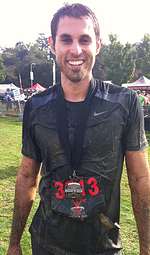 Steven Todd Smith is a Reiki Master Teacher and owner/creator of Reiki For Creative Minds. Also: a Life Nutrition Coach, Arbonne Independent Consultant, and Community Manager for Forks Over Knives.
There are a lot of “standard” questions to ask a vegan, “where do you get your protein?, “do you only eat salad?”, or “how do you not eat bacon?”. What is the oddest question you have been asked?
Because veganism is still not mainstream, even in large cities in 2014, there’s a handful of “interesting” questions that get asked here and there, mainly due to lack of information or misinformation. The oddest question I’ve been asked was “So can you still eat chicken?” A couple others: “Why do you care about animals more than humans?”, “But doesn’t that carrot you’re eating feel pain?”
I know that the number is astronomically growing, but what percentage of people are actually vegan or completely plant based?
Based on a recent Vegetarian Resource Group-commissioned Harris Interactive study, approximately 5% of the US population (≈16 million) is vegetarian and about half of that number is vegan. That ≈7.5-8 million has doubled since 2009. Even cooler is that 33% of Americans identify with eating vegan/vegetarian more often, though they are not vegan or vegetarian, according to the study. That’s 100+ million people eating plant-based on a more regular basis! Just thinking about the sweeping positive benefits in global health plus the number of animals being killed dropping brings me much joy PLUS knowing that, even though we’ve already done a good amount of damage to the planet re: factory farming’s deleterious effect on the environment, the steps we’re making to correct, to heal the planet will kick in sooner than later.
Being such a small group with a majority of people not sharing what you believe in, how do you continuously maintain your beliefs?
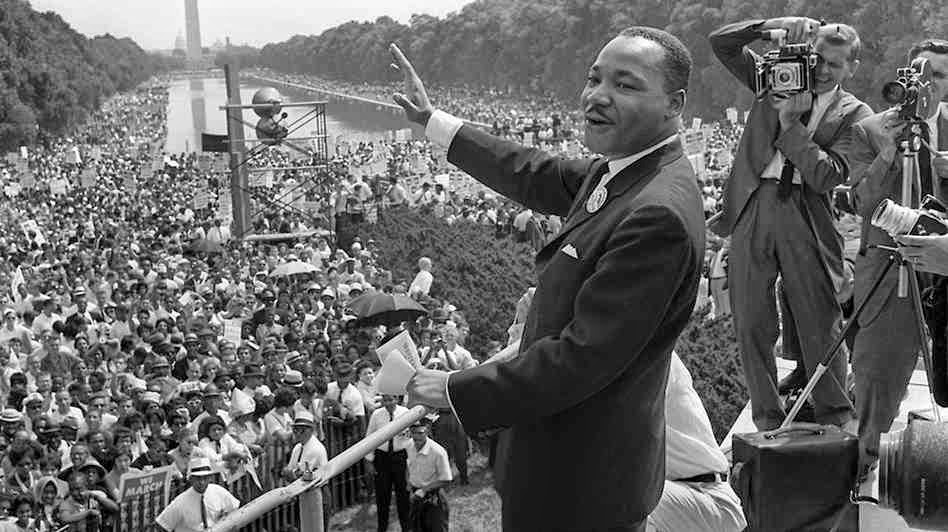
How did/has any minority group continue maintaining their beliefs? Sure, there’s a struggle, a greater wall of opposition to come up against. The Civil Rights movement, Women’s Rights movement, Gay Rights movement all believe(d) in the same thing – equality, compassion, justice, love. Same with veganism. These tenets, these beliefs are larger than life, no matter how small the overall population sharing them is. They guide me forward, giving them the amazing opportunity to share and spread them, to educate and enlighten. Once you connect to unconditional equality, justice, compassion, and love for all beings – human animals and non-human animals (obviously still in the context that non-human animals are not humans, and vice versa) – and truly believe in them, it’s impossible to go against that. And, on the surface level, I get to eat delicious food that cruelty-free and have fun with a community, that may be small overall but is locally very large!, that shares the same ideals.
Do you believe there are broader concepts and
values that could be shared amongst everybody?
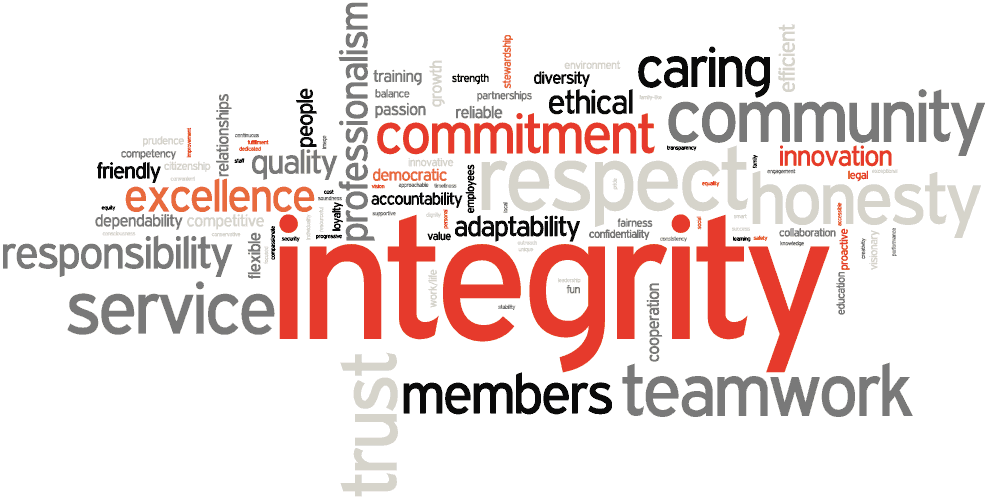 Yes, and it’s definitely worth repeating. Equality, justice, compassion, love. Also, kindness, awareness, sustainability, responsibility, living in alignment. All of these without conditions or bounds. When it comes to religion, faith, spirituality, it all comes back to love, no matter how many different twists and turns each individual one may take. And I’m not necessarily talking what’s stereotyped as “hippy-dippy kind of love,” (although, what’s wrong with that? Nothing.): I’m talking about loving your fellow Earthlings with whom you share this planet. What gives any one of us the right to confine, abuse, torture, or kill another being, whether it’s a dog, a cow, a person, a chicken, an elephant, a bear, a fish? I think love is a much stronger guide and force than hatred, than the need/want for power or greed. There are so many broader concepts and values that are already shared amongst a large majority of people in the world; the important transition/awakening happens when we realize we can extend those concepts and values to ALL living beings. Then, we’ll find ourselves truly living in alignment.
Many people find safety and security in having a firm set of beliefs. Do you find it easier to simply “live life” when you have a set of beliefs that direct your thoughts and behaviors?
I subscribe to a “strong-walled amoeba” approach. Having a set of guides/beliefs lead the way and protect me, something I can strongly and confidently connect to, while maintaining an open flexibility/receptivity to new ideas or beliefs that I may pick up and/or adopt along my life journey. I think living life in a black or white, immobile, immovable, steel box of beliefs will only prevent you from living fully, from connecting with other people and ideas on an understanding level of some sort. So, the openness and understanding from others that comes along with a solid faith allows for conversation and self-guidance. There are many benefits one will receive from living life with firm set of beliefs though, as much strength, character, individuality can be derived from them. Floating around with no foundation can be both scary and demoralizing.
You haven’t been vegan/plant-based your entire life. How hard was it to realize that your previous personal beliefs and values were in a sense “not the right ones” and how do you go about changing your beliefs?
Great question. As I’ve deepened my spiritual connection and practice and studied more what our purpose, as humans, is here on Earth during our lives, I begin to lean more toward the concept that our beliefs – we’ll say specifically of equality, compassion, justice, love – are always there; we just aren’t fully conscious and awakened to them yet. Sure, knowing what I know now, I wish I had been living vegan my whole life. But then my life wouldn’t be mine. The journey is just as important as the outcome, because it lays the foundation for the path you end up taking. The foundation – knowing your “Why?” – needs to be strong, have purpose, or any changed beliefs will easily revert back to old habits, patterns, actions, beliefs.
 While I had initial resistance because the new beliefs challenged my old ones, I entered with just the slightest openness and understanding, as mentioned above. That gave me the space to explore, learn, and experience. I had/sought support, dove into many different resources, and began to realize that veganism provided me with everything I actually was in alignment with in life. It was less of being wrong and then being right; it became my next powerful platform of growth. The difficulty came in the unknown part of the change: what will I eat?, how will I interact with others?, etc. Just like any change though – even from crawling as babies to learning/deciding to walk (not wrong to right, just the next step in personal growth) – the answers, regardless of the stumbles along the way, eventually came.
Steve, for those people out there now that question their own beliefs, what would you share to help them reach the same level of certainty you have that your beliefs are definitely the right ones for you?
It’s as easy as asking yourself: “Is this action I’m taking in
alignment with my greatest/deepest values in life?” For me, I realized contributing to an industry that promotes confinement, abuse, and killing was not in alignment with my values. I do not support confinement, abuse, and killing. Once I learned and realized I could take care of my own health, my own fulfillment, and help other beings on this planet, it became a simple decision. Sure, the journey between the question, the exploration, and the decision may be trickier and take a while (or maybe not…), but the feeling of consciously being in alignment is one of the greatest feelings you’ll experience.
So, truly ask yourself. Explore. Figure out if you’re serving both yourself and others with your beliefs; if not yourself, then it’s time to change. If not others, then it’s time to change. You can achieve both. We all can achieve both. Let go of the past (as the past is already past), tap into your present, your right now, and decide if what you are doing creates a better today AND future all around. You don’t have to know all the specifics; there’s a very good chance if the decision is in favor of equality, compassion, justice, and love, you’re heading in the optimal direction.
__________
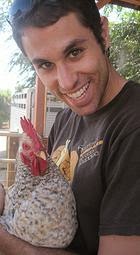 Steven Todd Smith is a Reiki Master Teacher and owner/creator of Reiki For Creative Minds. Also: a Life Nutrition Coach, Arbonne Independent Consultant, and Community Manager for Forks Over Knives. His passion for health, fitness, spirituality, and compassion run deep, as he’s been vegan for four and a half years and maintains an active yoga, gym, meditation, and running practice. A lover of all fun & games, especially board games, poker, and sports of almost any kind, Steven approaches life with a serious level of playfulness, always looking to infuse laughter and smiles into any situation. Has a BFA from NYU’s Tisch School of the Arts in Acting, Plant-Based Nutrition Certification from Cornell, and is a Certified Holistic Health Coach from the Institute for Integrative Nutrition. You can find out more about Reiki and Steve at www.reikiforcreativeminds.com.
by YouTime Coaching | May 9, 2013 | Beliefs, Boston Marathon, Boston Strong, Confidence, Connections, Distress, Fear, Growth, Post Traumatic Growth, Post Traumatic Stress, Stress, Success, Support, The One Fund
In light of the recent bombings at the Boston Marathon and the massive numbers of individuals returning from war, our culture has become all too familiar with the term “post traumatic stress”. What most people are not as familiar with is the concept of
“Post Traumatic Growth”
Research involving individuals and their relationship to stress, pain, fear, and trauma have been around for thousands of years but the interest in Post Traumatic Growth began to steal some of the limelight in the 1990’s.
Post Traumatic Growth involves an individual’s path in adapting to sets of negative experiences that would normally cause psychological distress or harm. These events could include experiences with death, abuse, serious injury, natural disasters, relationships, accidents, and other potentially traumatic events.
Simply looking at this list you can understand why some individuals experience post traumatic stress.
BUT
What if there were a way to experience growth following traumatic events like those mentioned above?
Post Traumatic Growth Characteristics:
- Greater appreciation for life
- Shift in sense of priorities
- More genuine connections and relationships
- Increase sense of personal strength
- Recognition of new life paths and possibilities
Are you sold yet?
How can I get some Post Traumatic Growth?
1. First, you must have a belief system that supports growth.
Spirituality is a characteristic that has been closely linked to experiencing post traumatic growth, but the core concept behind this connection are the empowering beliefs a spiritual individual may possess.
Keep these in mind:
BELIEVE that you can grow from this
and
You are capable of this change.
2. You must have support
Support systems have been linked in post traumatic growth on many levels. Therapists, counselors, and life coaches (with proper training) can have great impacts on your ability to experience this growth, post traumatic event.
Surround yourself with genuine, insightful, and caring individuals that you feel comfortable sharing your life with. This could be the difference between growth and stress.
Conclusion:
- Be confident and open to being able to grow
- Develop a belief system that empowers and supports you in experiencing growth.
- Seek out opportunity to develop new genuine relationships and connections.
- Sniff out your most precious support systems and use them.
Lastly,
During the Boston Marathon I was watching the race in Kenmore Square (15 minute walk to the finish line), when I had heard what happened followed by a massive number of text messages, phone calls, and emails making sure I was okay. I want to thank those individuals and extend my heart and support to the families that were affected by these horrible events.
There is hope and there is strength within you to grow from this. Never loose sight of that.
All the best,
Jonathan B. Wolf, Ed.M.
Vitality, Performance, and Parent Coach
YouTime Coaching
Boston, MA
Contact:
[email protected]
(856)905-5410
If you would like to donate to The One Fund click the ribbon above:
 What about the way you eat? Or even how compassionate you are?
  Steven Todd Smith is a Reiki Master Teacher and owner/creator of Reiki For Creative Minds. Also: a Life Nutrition Coach, Arbonne Independent Consultant, and Community Manager for Forks Over Knives.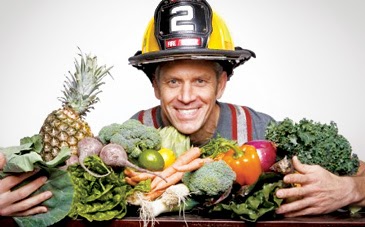
 Yes, and it’s definitely worth repeating. Equality, justice, compassion, love. Also, kindness, awareness, sustainability, responsibility, living in alignment. All of these without conditions or bounds. When it comes to religion, faith, spirituality, it all comes back to love, no matter how many different twists and turns each individual one may take. And I’m not necessarily talking what’s stereotyped as “hippy-dippy kind of love,” (although, what’s wrong with that? Nothing.): I’m talking about loving your fellow Earthlings with whom you share this planet. What gives any one of us the right to confine, abuse, torture, or kill another being, whether it’s a dog, a cow, a person, a chicken, an elephant, a bear, a fish? I think love is a much stronger guide and force than hatred, than the need/want for power or greed. There are so many broader concepts and values that are already shared amongst a large majority of people in the world; the important transition/awakening happens when we realize we can extend those concepts and values to ALL living beings. Then, we’ll find ourselves truly living in alignment.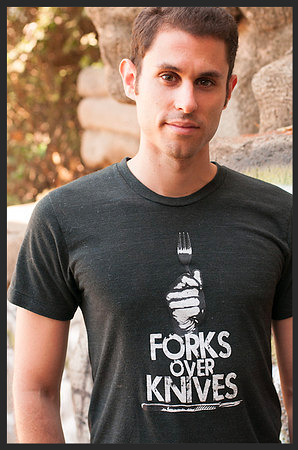
 While I had initial resistance because the new beliefs challenged my old ones, I entered with just the slightest openness and understanding, as mentioned above. That gave me the space to explore, learn, and experience. I had/sought support, dove into many different resources, and began to realize that veganism provided me with everything I actually was in alignment with in life. It was less of being wrong and then being right; it became my next powerful platform of growth. The difficulty came in the unknown part of the change: what will I eat?, how will I interact with others?, etc. Just like any change though – even from crawling as babies to learning/deciding to walk (not wrong to right, just the next step in personal growth) – the answers, regardless of the stumbles along the way, eventually came.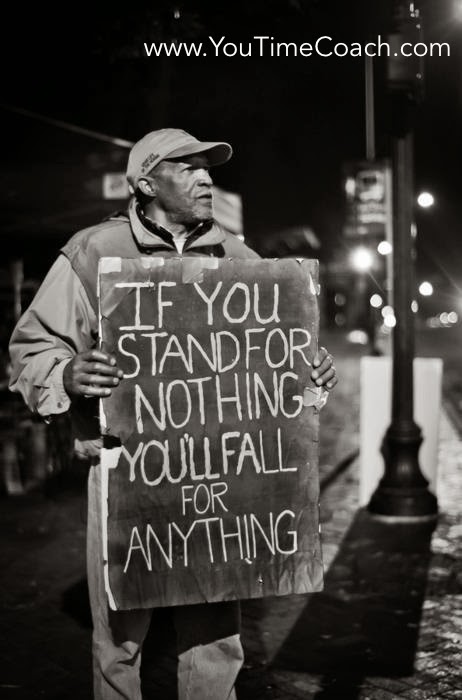
 Steven Todd Smith is a Reiki Master Teacher and owner/creator of Reiki For Creative Minds. Also: a Life Nutrition Coach, Arbonne Independent Consultant, and Community Manager for Forks Over Knives. His passion for health, fitness, spirituality, and compassion run deep, as he’s been vegan for four and a half years and maintains an active yoga, gym, meditation, and running practice. A lover of all fun & games, especially board games, poker, and sports of almost any kind, Steven approaches life with a serious level of playfulness, always looking to infuse laughter and smiles into any situation. Has a BFA from NYU’s Tisch School of the Arts in Acting, Plant-Based Nutrition Certification from Cornell, and is a Certified Holistic Health Coach from the Institute for Integrative Nutrition. You can find out more about Reiki and Steve at www.reikiforcreativeminds.com.