
by YouTime Coaching | Feb 8, 2017 | Academics, Anxiety, Change, Confidence, Fear, Focus, Life Coaching, Mental Health, Outcomes, Positive Psychology, Results, Stress
It’s natural for students to feel nervous as standardized tests approach.
But it’s also very easy for this anxiety to spiral out of control and affect their overall well-being. No test is worth that! (Not to mention that being paralyzed by fear is not the ideal condition for a test-taking brain.) Test anxiety can be rooted in a lack of mastery of the material, uncertainty about test-taking conditions, and/or dread of the long-term consequences of falling short—and often, some combination of the three.
If your student is suffering, take heart: test stress is not inevitable!
Each of these anxieties can be dealt with and you can minimizing test stress. Here are some strategies that can apply to almost any student preparing for almost any test.
- Own the fear. Telling a student their fear is “all in their head” is counterproductive. Of course it is—all emotions are in our heads! Instead, help your student determine what they should and should not worry about. If your student lacks mastery in a subject, their test anxiety may be very real. If they worry over material they’ve already mastered, then you’re dealing with a different type of anxiety entirely.
- One step at a time. Gradually acclimating your student to test pressures can help normalize the test-taking process for them. Completing practice tests, working under timed conditions, and learning to work in noisy environments can all help your student prepare for their experience in the testing center. A coffee shop or library—where they will have to work through sniffling, conversations, street noise, and other things that fray nerves—is a great place to prepare.
- Think outside the test. Sometimes the very format of the standardized test causes panic. In this case, help your student develop skills with something other than the test. Developing reading comprehension questions using a novel or newspaper article, or applying geometry skills by designing a bookcase or coffee table, may help your student master skills in a fun, non-threatening way.
- Practice good test hygiene. Habits can make or break a test-taker. Set routines for your student. For example, if the test will happen on a Saturday morning, set aside every Saturday morning for test prep. Work on maintaining good posture and a positive but aggressive attitude toward the test. Finally, consider mindfulness exercises that will help your student quiet their inner critic.
More than anything, emphasize keeping things in perspective. Though the SAT or ACT may seem all-important, remember that most students take the test two or three times, and there’s much more to a college application than just test scores!

This blog was written by Signet Education’s Director of Education, Sheila Akbar. Sheila is also Signet’s resident admissions and test prep expert. She has been preparing students for the SAT, ACT, and GRE for over ten years in both one-on-one and in classroom settings. Sheila holds both a BA and an MA in Near Eastern Languages and Civilizations from Harvard University and holds two PhDs from Indiana University in Comparative Literature and Near Eastern Languages and Cultures.

Signet Education provides individualized tutoring, test prep, admissions consulting, and organizational coaching for students.

by YouTime Coaching | Jan 25, 2017 | Appreciation, Arguments, Attitudes, Behavior, Behavioral Change, behavioral issues, Brain, Change, Children, Communication, Control, Emotions, Growth, high school, Listening, parenting, parents, Problems, Reaction, Teenagers
Nobody said that raising a teenager would be easy and some parents may even think they should be rewarded a medal once they survive it. Statements that are made about adolescence and teenage years such as, “Surviving it“, “Getting through it”, are the real area of concern.
Although these times can be filled with risk-taking behaviors, a surge of independence, what seams to be minimal communication, and an abundance of “pushing back”, they must remain open to “the work” of the adolescent years.
WHAT’S “THE WORK” OF ADOLESCENCE?
Emerging science is proving at great lengths that some of the ways we used to think about adolescence may be quite off. On a weekly basis YouTime Coaching receives emails and phone calls that very honestly communicate the frustrations of being a parent to an adolescent.
Here’s what the conversation topics look like…

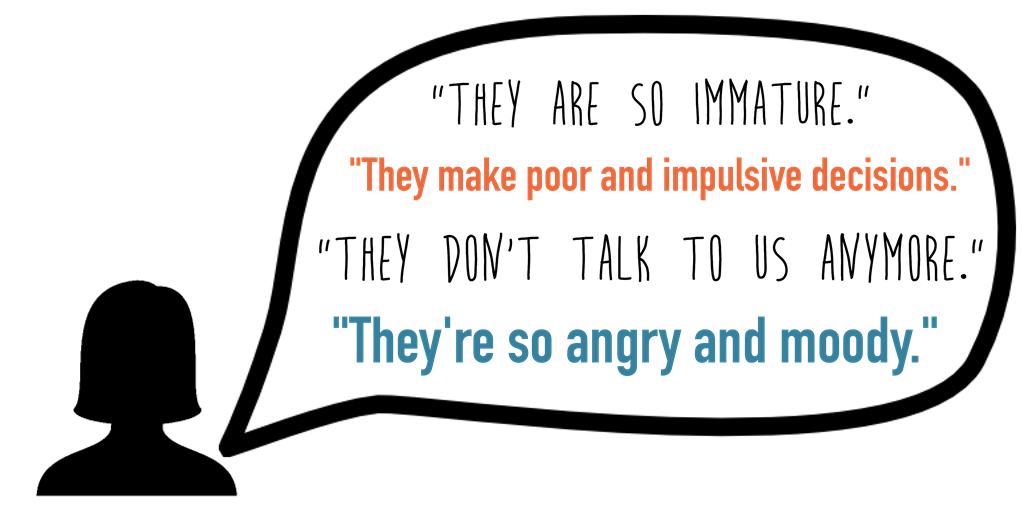
Here are a few things you need to know about the what the science is telling us.
“THEY JUST NEED TO GROW UP” MENTALITY WILL NOT HELP.
This line of thinking has existed for years and rightfully so, adolescence is a time of immaturity. The problem that lies within this way of thinking is that it frames adolescence as a period of time in which you must survive, simply try and get through, endure, and come out with minimal long-term scars.
Here’s a helpful change of perspective… Adolescence is not simply about maturity vs immaturity. During adolescence the brain goes through a rapid growth period and because of these changes new behaviors and abilities present themselves. All of those common “frustrations” (above) that we hear from parents aren’t just things that you need to endure but are newly developed abilities that will end up laying the groundwork for core personality traits your child will develop for use in adulthood.
Pushing boundaries, exploring decision making, getting a taste for independence, and being emotional may drive you crazy and caused tons of stress, but are all integral building blocks that each adolescent must go through. Use this time to cultivate positive experiences and lessons from those frustrations. Most importantly, be an active part of “the work” that goes into these crucial developmental period in your child’s life.
KNOW THE UPSIDES AND DOWNSIDES TO ADOLESCENCE.
Parent’s tend to have a keen eye for a child’s impulsive decision making, risky-behaviors, pushing boundaries with sources of authority, and their kids not wanting to spend time with them. What all of these behaviors have in common… they have an upside and a downside.
Novelty seeking and reward driven behaviors can motivate a child to explore new ways of doing things, allow them to keep an open mind to additional perspectives, and be open to change. The downside could lead to risky behaviors without a major thought or concern for the outcome, which leaves a child vulnerable.
Adolescence spending a lot of time with friend (and therefor little time with their parents) could help them develop strong social connections and support networks which are heavily correlated with happiness and mental wellness. The downside is that not being around adults and only being around peers increases their chances of risky behavior and minimizes the opportunity for guidance and knowledge from an adult figure, in turn increasing risky behaviors.
You see, each new ability and behavior that is formed during adolescence can have a profound impact on their develop towards adulthood. Stay engaged, but be aware of these new found abilities that your child may possess.
The inspiration for this blog came from an article written by Dr. Daniel Siegel. Dr. Siegel is a world renowned scientist and expert in the field of mindfulness. He has a wonderful ability to take complicated scientific findings and communicate them in a way that makes them practical and exciting. Please read his article “The Amazing, Tumultuous, Wild, Wonderful, Teenage Brain.” on mindful.org.
P.S.
If you are a parent or a young person who has had some challenges and would like to share your story, let us know in the comment section below! If you have any questions, and we mean any, you can send them right over to [email protected] or visit our page at www.YouTimeCoach.com.

by YouTime Coaching | Jan 18, 2017 | Attitudes, Behavior, Behavioral Change, Beliefs, Change, Commitment, Consistency, determination, Diet, Health, Mindset, Momentum, Preparation, Results, Therapy
Hey ladies and gentlemen, Captain Positive here to give you a dose of reality… the New Year may not be all that you are expecting. Fun fact is that people are absurdly good at reminiscing over all the good and bad things that have already happened in our past, but typically have more of an issue visualizing their future and things like New Year’s Resolutions take a major hit.
Not only do I bring you this wonderful news but I will also share with you, because it is quite important, the 3 things you can do in order to efficiently undermine your New Year’s resolutions.
After reading this blog you will basically be certified in how to teach others to properly screw up their plans for the New Year! (exciting… I know.) With this knowledge comes great power, because in order to be successful with your resolution(s) you must know what works in addition to whats makes you fall miserably on your face (and don’t worry, we all know that feeling). So the power is yours once you are done reading this. Choose how to use this information wisely.
[bctt tweet=”In order to be successful with your resolution(s) you must know what works in addition to whats makes you fall miserably on your face (and don’t worry, we all know that feeling).” username=”youtimecoaching”]
I present to you the “Reverse RPM” theory. As most of you know “RPM” stands for “revolutions per minute” and is a relative calculation of speed, so for this presentation the “Reverse RPM” theory will show you how to completely halt any forward progress, momentum, and speed you are looking to create for attaining your New Year’s goals.
Reverse RPM Theory
(R) Results
Problem:
Many of us have developed a wonderful tendency to be predominantly results and outcome driven. We start a diet and we only look to lose weight (and we better see results fast or on to the next diet found in Self Magazine).
Of the top ten most popular resolutions (Check them out here!) all of them take preparation, planning, and time. We typically undermine our resolutions by looking at them as short-term, outcome-oriented endeavors.
Solution:
A “New Year’s Resolution” is exactly that, a year-long resolution and goal. Do you stop going to the gym or eating healthy once you lose those 30 lbs. on June 21st of the new year? Well, you shouldn’t but lots of people do. Your resolution is a long-term goal that should be process-oriented, not simply outcome.
Sure you have an outcome in mind, but this outcome stays in your peripherals while the next small baby step stays in your direct line of vision. Your journey to get there needs to be clearly planned out, broken down, and assigned start/completion dates (download “My Mini Goals Worksheet” here).
(P) Preparation
Problem:
How many of you bozos knew that the new year started on a Monday? Who wants to get healthy and make changes over the weekend when you can start on Monday?! Are you going to dig yourself into a hole the weekend before or prepare yourself for an easier transition?
Assuming you already created a resolution, we can safely say that you have at least identified that there are behaviors that are problematic and stand in the way of your goals. Don’t we all! The first step after realizing you have “problem behaviors” is to prepare yourself in order to make the change. Unfortunately, our hedonistic (pleasure seeking) culture can sometimes force us into the “action stage” before proper planning. The result, 2 weeks of hard work towards your goal and reverting back to old ways (looks like your cigarettes will have their old best friend back).
Solution:
First, do a little detective work to figure out what your actual behaviors are, when they happen, and what triggers them (download “Track My Triggers and Patterns Worksheet” here). Second, really find out why you are looking to make these changes. First write down what positive benefits the change will bring to you (and others), followed by writing down how maintaining the problem behaviors have hurt you (and others).
Next, you must commit. Scream your goal from the biggest damn mountain top you can find (please don’t do this). Seriously though, tell friends and family what your intentions are with this resolution. People are more likely to feel accountable if others know what they are trying to do.
(M) Momentum
Problem:
Newton’s Law of Intertia (as it applies to New Year’s Resolutions)
An object at rest will remain at rest unless acted on by healthy and mindful decisions. An object in motion continues in motion with the same speed and in the same direction unless acted upon by your problematic behaviors.
Wait, so since I am going to be “all healthy and stuff” starting in January, that means I can shove my face with booze and food throughout the holidays and think of exercise as the walk to the bathroom. Don’t start in a hole.
Maybe I can smoke my face off and start fresh on January 1st. Or, since I will be saving so much money in the new year with my positive changes, I will definitely balance that out by spending tons of money over the holidays. Don’t start in a hole.
Don’t use December as an escape goat for your troublesome behaviors. This only will make things harder with a higher likelihood of failing to progress with your resolution.
Solution:
Start planning after the first week in December. Already into January? No problem! Part of successful goal setting is being flexible and adapting to what’s realistically going on around you. Spend 2 weeks planning out your path of success and seek out those that will support you in this (download the “My Support Team Worksheet” here). Most people try to begin their resolution after one of their most problematic months and that is a recipe for disaster! Set a realistic start date that allows you spend a couple week planning out your moves.
YouTime take home message:
Remember, knowledge is not power, it is only potential power. You have the choice in how to use it. So go on and use that huge brain of yours to properly plan or even screw up the new year and share your resolutions below!

by YouTime Coaching | Dec 21, 2016 | Anxiety, Behavior, Children, Communication, Confidence, Control, Growth, Kids, parenting, parents, Stress
Personally, my favorite part of the holidays is the food (diets don’t count in December right?) and re-living the traditions you have built-up over the years with family. For some, the favorite part it is buying gifts, while for others it may be receiving them. We all have our things to look forward to, but parenting your teenager or college aged kid throughout the holidays frequently does not make the list
The holidays are here and we are almost in the thick of it with just a small amount of preparation time left. Since making life a little easier is our job, YouTime Coaching is assigning you (yes you) two pieces of parental homework to help you and your family get through this December and into January feeling good, relaxed, and positive about the holiday dinner with crazy Aunt Sally (sorry if this hits too close to home).
Here we go.
Assignment #1: Keep Calm and Carry On.
Believe it or not, the holidays can be a stressful time for everyone. It is important that you take care of yourself, have strategies to maintain some level of equilibrium/relaxation, and model this positive behavior to your kid.
If you need a quick break from the chaos, try “4-7-8 breathing”. Many people use it to help them fall asleep, but in this case you will reap the benefits without dozing off. Here’s how it works:
- Breathe in for 4 seconds
- Hold it for 7 seconds
- Breathe out for 8 seconds
This entire cycle counts as one breathe. Continue for at least four cycles. If you do an emotional inventory over the past week you will quickly see that parents feel many emotions, some for varying lengths of time. The point is, emotions change and they can rather quickly. What you feel right now, may not be what you feel 5 minutes from now. Taking a step back, giving yourself space, and completing this breathing assignment will help you see a little more clearly.
Share you experience in the comment section.
Assignment #2: Actively Search for the Positive.
Many parents have their morning routines which can involve turning on the tv, looking at news on their phones, or reading the newspaper. Doing this can condition us to have a false reading on the ratio of positive to negative events that happen in life, simply because of what the media puts out there for us to see.
This holiday, keep an eye on your kid and no matter how small it may be, maintain a mental list of the positive behaviors they have displayed. It could range from helping with the dishes, going to pick something up from the store for you, or simply asking “how are you?”. When you see a positive behavior, give some positive feedback (ex. “How are you Mom/Dad?”, “I’m doing well, just a lot of work to do. That was really thoughtful of you to ask.”).
Searching for the positives at home and with your kids will help restore the more realistic ratio of positives to negatives, making life a little easier.
Share your list of positives in the comment section.
There you go!
This holiday season try using the stress of the holidays instead of allowing the holiday stress to use you. HINT: You can start with these two assignments.
Happy holidays from YouTime Coaching!

by YouTime Coaching | Dec 14, 2016 | Children, choice, Kids, Life Coaching, parenting, parents
Finding a Life Coach or Mentor for your kid can be like just going into the grocery store or TJ Maxx/Marshalls, you walk in to buy one thing and walk out with $100 worth of items that were never on the original list.
(entering scene) SHINY THINGS and CHOICES.
We want to make your search for a quality Life Coach simple and most importantly transparent for you and your family. To help you in this next step, take a gander below at, “2 Crazy Important Factors When Looking for a Life Coach” and “2 Mandatory Reminders for Parents When Looking for a Life Coach”.
There are plenty of reasons why families look for additional support with their teens/young adult children. It is a move that can greatly impact not only the younger person, but the family as a whole. Follow these 6 very important gold nuggets of information during your search, and if you have any more questions without wanting to feel pressured into purchasing a “I don’t know what I’m getting myself into” Life Coaching package, please email us at [email protected].
2 Crazy Important Factors When Looking for a Life Coach:
#1 Their coaching is proven to work.
Life Coaches and Mentors should not guarantee results, BUT what they should do is provide transparency about what they base their coaching methods off of. For instance, YouTime Coaching uses multiple personal/professional change and motivation based theories and methods when working with younger people. YouTime makes it a priority to engrain the “Stages of Change” model into our work with young people, which has been backed by, oh, just a mere 35 years of scientific research.
You should ask your potential Life Coach and/or Mentor how they use this within their work with your kid and family. Many Life Coaches have programs that sound very appealing with no research backing their methods, leaving an uncertain risk of backfiring and unknown results.
#2 Your coach and young person should be like peas and carrots, peanut butter and jelly, mashed potatoes and… you get it.
The goal is not a perfect fit, but a healthy one. Any therapeutic relationship (especially when it is goal-oriented) will heavily rely on a trusting, safe, and secure relationship. Keep in mind, a healthy relationship still takes time to develop but after the first 4-weeks or so you and your young person should have a pretty good understanding of the relationship with their coach.
For example, YouTime Coaching sets up a phone call with the parents (to get to know them and learn more about what is going on with their young person), followed by a “meet-up” with the young person (to get to know/introduce ourself, and start establishing a non-judgmental rapport), wrapping up with a last call to the parents (to get/give perspective on the meeting and determine next steps).
Make sure your coach is putting in the time to get to know your young person and not simply trying to “solve their problems”, which may seems alluring but can be counter-intuitive in the long run. You can find more transparency by communicating with your kid during the process, asking questions, and seeing if “parent check-ins” are appropriate with your Life Coach.
2 Mandatory Reminders for Parents When Looking for a Life Coach
#1 Your insider trading information for the day… your neighbor’s kids work with a Life Coach.
The Smith’s… they work with one. The Johnson’s son… he definitely works with one. The family that just moved around the corner… yeah, their daughter works with one. Maybe they aren’t your neighbors but it’s more common than you think. Being a pro-active parent instead of reactive in getting your kid the support they need is something that should be made priority. We can not tell you the number of times we’ve heard, “I wish there were more companies like you out there.” Not to toot our own horn, but factually there are not enough quality Life Coaches that specialize in working with young people, let alone integrating in the parents to the process.
Start your research now, even if they are not open to it, because some day (sooner than you probably expected), they will need the support.
#2 Waiting a long-time to contact a Life Coach for your kid may say more about your parenting style.
Life Coaches are not in the business of labeling “bad parents” and “bad children”, so no one is pointing fingers. Based on what we have seen with all of the families we’ve worked with, sometimes it is hard to pull the trigger. YouTime has worked with kids returning from Wilderness Therapy Programs, kids with ADHD, executive functioning/process speed deficits, anxiety, depression, low self-esteem, motivational challenges, and much more. Throughout working with these kids, we have learned a lot about parents.
As a parent, the initial call to a Life Coach specializing in working with young people and families should be filled with questions and a curious mind to what the process may entail. Do not minimize the importance of this initial step. Sometimes your kid may know you are doing this, and other times may not. Regardless, be well informed and equipped for when your kid or you may actually need some real specialized support.
There you go! Take this information, do your research, email us if you need help, and know that working with a Life Coach is a decision you and your kid make, not the coach.
Parenting Quote of the Day: