
by Jonathan Wolf | Jan 8, 2019 | Anxiety, Children, Communication, parenting, parents, Teenagers
It’s been on Dr. Phil.
Traditional therapy in an office setting can work for many, but for some, it’s tough to get off the ground. Don’t give up, because, for those that have tried or are adverse to traditional therapy, there are many options. One great option is Animal-Assisted Therapy (AAT). It’s possible you have heard about this type of therapy on Dr. Phil, The Doctors, or Dr. Oz, but it’s your lucky day. Read on as Charlsey Gentile, Owner of Life Is Golden Coaching and practitioner of Animal Assisted Therapy explains a bit more about AAT.
Imagine this — you are taking an enjoyable walk on a cool autumn afternoon where the leaves are changing and the sun is shining. While on your walk you see someone sitting on a bench. What do you do:
- Walk by?
- Say Hello?
- Smile?
- Pay no attention at all?
- Approach the person and engage in conversation?
In Comes Animal Assisted Therapy (AAT):
New scenario — it starts the same way, yet the only difference is that the person sitting on the bench is with their dog. Do you react differently in this situation than in the one above? Research shows that people are more inclined to approach an/or engage with others if they have a dog with them (UCLA’s Findings on Animal Assisted Therapy).
Now imagine you or maybe your child, are about to embark upon a first counseling session. This can often make one feel vulnerable. As humans, we tend to be judgemental of ourselves and feel that others may also be judging us. Now imagine that a dog is at the counseling session. Did you smile or maybe feel less nervous about the situation? Does this sound like a welcomed addition to counseling? If so, you are in luck! This practice actually exists and it is called Animal-Assisted Therapy (AAT).
AAT is when a professional in a specific field pair with a trained and certified animal to help enhance his or her practice. For counseling, dogs can function as a distraction, a point of common interest to start the conversation, help in developing the counseling relationship, and be a non-judgemental (albeit passive) participant in the sessions.
Benefits of AAT:
To top it all off, the presence of an animal and/or the act of petting an animal can do the following:
- Release feel-good hormones
- Help reduce anxiety
- Provide comfort
- Be an icebreaker
- Lower blood pressure
- Slow down breathing and heart rate
- Create a more enjoyable counseling environment.
For those who love (or even like dogs) or have children who do this can be a wonderful option when looking for support in your own journey.
[email protected]
https://sites.google.com/view/lifeisgolden/
by Jonathan Wolf | Oct 13, 2018 | Anxiety, Communication, parenting, Teenagers, Uncategorized
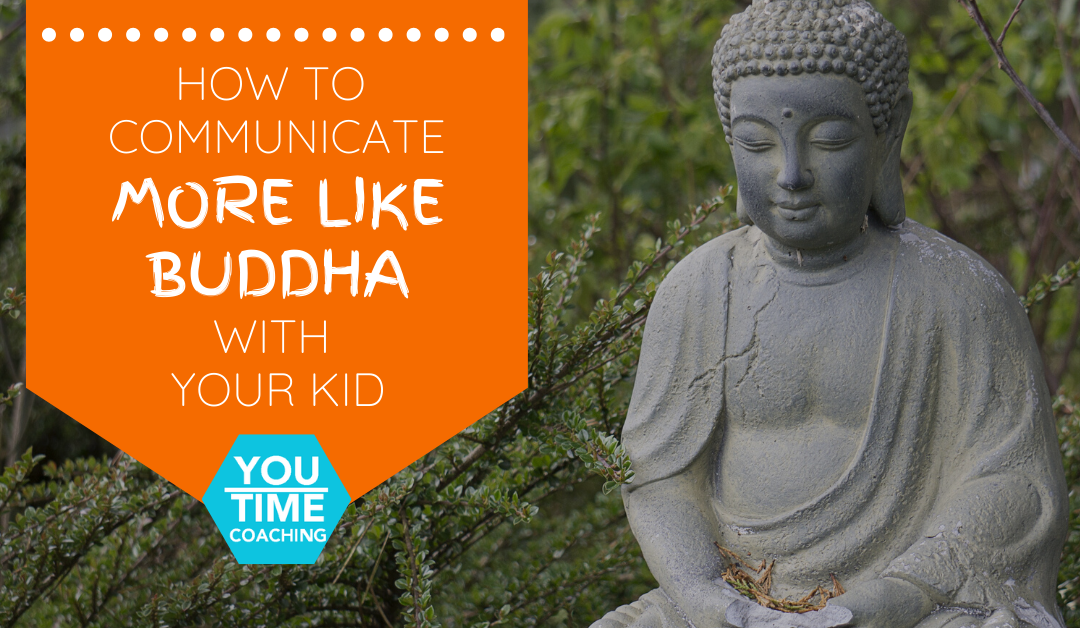
Working with teenagers is great. One day, we are discussing their struggles in class or playing time on their sports team. Other days it’s how their parents are mad at them for smoking weed, vaping, playing too much Fortnite, or not putting enough energy into school work. As parents, I’m sure being a little more like Buddha in how we communicate with our kids could have great payoffs.
The way we communicate with a 5-year-old is much different than that of a 12-year-old. While this may not be up for debate, many parents get the urge to “amp up” the pressure once high-school starts. In sessions, kids tell me their parents are constantly telling them, “this is when it really starts to count”, “you need to really buckle down on studying and apply yourself”, “colleges will see this”, and “you really need to set yourself apart from others”.
To simplify things, there are two types of pressure when it comes to kids. “Actual pressure” is expressed through more overt actions like telling your child that they need to get particular grades in school or telling them they need to participate in a certain activity even if they don’t enjoy it. “Perceived pressure” is when a kid sees their successful parent and feels the need follow in their footsteps, regardless of what you may be telling them.
Inherently, the pressure is neither good or bad, but how we communicate our messages can be the defining factors. There is a teaching in Buddhism known as, “The Four Elements of Right Speech”. Using them as a guideline to communicate with your teen or young adult can help you shift from a place of defensiveness and anger to a place of patience and understanding.
The Four Elements of Right Speech:
1. Tell the truth. Don’t lie or turn the truth upside down.
I’ve found in my practice that parents tend to either lean towards being the, “I’m going to lay it all out there and tell it straight up” type of truth-telling parent or the, “I don’t want to hurt them so I’ll either minimize it or not mention anything at all” type of parent.
Communicating the truth to your kid can frequently be seen as conflict and that will immediately make a person go into “conflict mode”
(have your own conflict mode assessment done by YouTime Coaching here). Telling the truth is crucial but doing so in a skillful and compassionate way is paramount. Check yourself before communicating the truth to your kid and make sure you are doing so in a way that doesn’t make your kid feel threatened, so they can have the ability to listen.
2. Don’t exaggerate.
Kids always seem to be slipping up and making mistakes. Sometimes (yes, even you!), the mistake is made into some much more worse than it actually may be. When parents do this they are typically trying to justify their own anger.
Exaggerating mistakes paints a very specific image for your kid to see themselves through. In many cases, it can affect their self-image. Like with many aspects of parenting, the impact may be unintentional but it can quickly affect trust within the relationship (on both sides). Again, check yourself and your own emotions before communicating with your kid.
3. Be consistent.
“You did it when you were my age!”
Parents LOVE telling their teenagers what they can’t do. “You are not allowed to drink, smoke weed, and you need to do well in school”. Those same parents typically can turn around and reminisce with their significant other about the times they went to parties in high-school or got in trouble for staying out too late. The things you did at their age are not an open invitation for them to participate but it is a point of reference you need to consider in order to handle the situation.
“You let (insert brother or sister’s name) do it!”
Teenagers and young adults love making comparisons and while treating each child the same is literally impossible keeping some consistency between siblings is important. Sometimes this may come down to communication and explaining why certain siblings get different treatment. Just keep in mind that having a base of “this goes for everyone”, is very important for parents.
For teens, the inconsistencies are typically seen as a conflict. It creates a division between parents and kids. Be consistent in how you communicate your concerns and praises.
4. Use “smart” language.
Take two seconds and think about how your parents spoke to you when you were a teenager. What ways made you angry, sad, or happy? It is pretty crazy how quickly we forget this when communicating to your own child. “Smart” language functions through choosing the words and a tone that will help your kid stay open to discussion rather than being argumentative and going into shut down mode. “Smart” language means not using insulting, cruel, abusive, or condemning words when speaking with your kid.
Again, remind yourself that most (not all) of the issues you are dealing with as parents are situations that need to be managed and not problems that can be just solved. Choose your actual words wisely.
Remember:
Teens are typically self-critical with rampant negative self-talk. The communicate tips above will help prevent you, as a parent, from layering on more criticism and judgment which usually puts your kid in a state that is not efficient for any type of productivity. Keep in mind that you still model to your child how to handle emotions. Remember that the first to yell loses the fight and that these strategies are used to support your child in their own self-improvement.
by Jonathan Wolf | Aug 28, 2018 | Academics, Communication, Growth, parenting, Time Management
Some families believe that as you naturally mature, executive functioning skills such as time management, organization, and planning will naturally improve as well. Unfortunately, this is only true to a degree and in reality, most kids struggle with specific areas of their executive functioning. These same kids need more than some time to “grow out of it” and real improvement is created through parents that remain hands-on and engaged during the process. Getting older, experiencing new things, and maturing can do wonders for a growing adolescent, while that natural process can also be a pitfall for parents.
YouTime Coaching recently contributed to Phase2Parenting’s article on helping your teen with time management without having to completely manage them… READ ON HERE.


by YouTime Coaching | Oct 24, 2017 | Academics, Anxiety, Change, college, Communication, Confidence, Control, Focus, Growth, parenting, Uncategorized
We hear it all the time… helicopter parenting and that the millennial generation is being raised too protected from struggle, diversity, and overcoming “normal” life-stage challenges. Wherever you stand on this doesn’t necessarily matter because both sides need to learn from how they are experiencing struggle both directly and indirectly. Your college freshman will undoubtedly be faced with challenges, but it will not be everything your anxiety is telling you it will be.
There are some important takeaways and a crucial reminder.
JUST BECAUSE STRUGGLE AND YOUR CHILD’S NAME ARE IN THE SAME SENTENCE DOESN’T MEAN IT IS A CUE TO STEP IN. Understand that taking a supportive backseat versus getting into the driver seat can be quite valuable. Not only does it give your child a chance to build confidence in their abilities to navigate tough situations or seek out help but it allows parents invaluable time to build trust in their kid’s ability to handle struggle.

For parents that just sent their kids away for their first year of college here are some things you should know about what may be going on and the struggles that freshman most commonly face.
Read more of Youtime Coaching’s published article, “Know Your Kid’s Freshman College Struggles” in the Grafton News by clicking HERE.

by YouTime Coaching | Sep 26, 2017 | Advice, Anxiety, Attitudes, boundaries, Children, Communication, Compromise, Consistency, Decisions, Emotions, Expectations, Failure, Fear, Fighting, Focus, Life Coaching, Listening, parenting, parents, positive reinforcement, Trust
As a parent, ever wonder what is going on inside your kid’s mind?
Through the positive work we have completed with adolescence, young adults, and families we’ve heard and seen almost everything. Kids want their freedom (sometimes without responsibility) and respect, while parents struggle with communication, setting boundaries, and timing.
Here are ten real thoughts direct from clients about their parents.
#1 I can’t talk to them because they will just get angry at me.
#2 All they care about are grades.
#3 They tell me to stop doing things that they do all the time and it’s bullshit.
#4 They won’t understand if I told them or will make me feel like it isn’t important.
#5 They choose when it’s convenient to say no and get upset.
#6 I don’t want to be like them.
#7 I tell them what they want to hear.
#8 When I actually try to talk to them about something that happened, I just get in trouble.
#9 When you start lecturing, I stop listening.
#10 When you trash my friends, I start disliking you, not them.
Remember, parenting is an imperfect process and so is being a kid. We are not sharing this list so you can take on all of the items one by one, instead, use it as a guide to see where more attention could be placed. When it comes to your kid’s motivation things can drastically change as they get older but if you’re able to adapt with the times, stay hip, and simultaneously hold true to healthy principles then this process could be easier on you.
Here’s just one easier way to think about motivation. Remember, in parenting, effort counts.
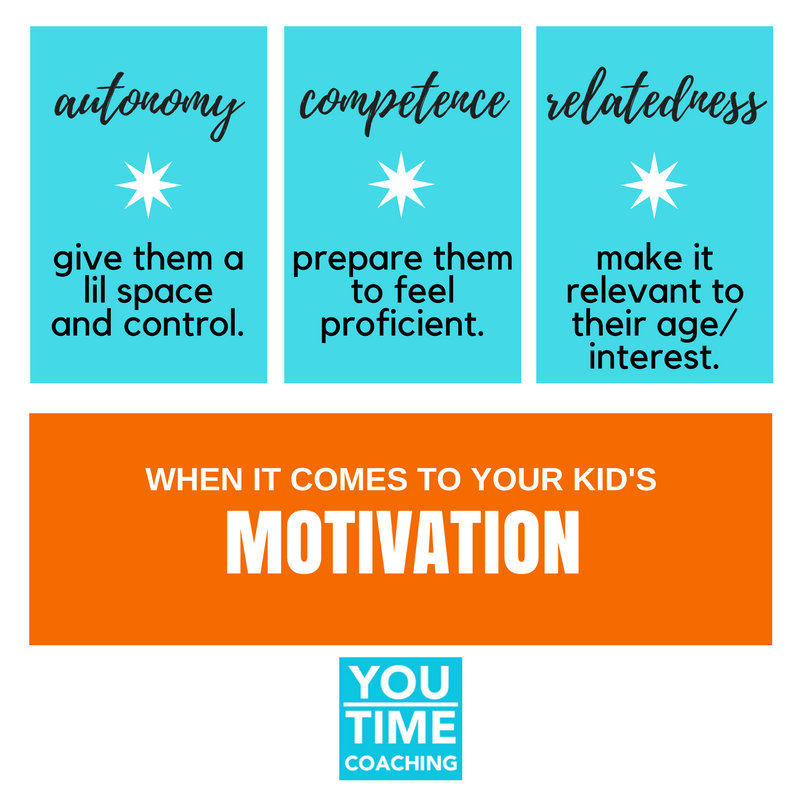
What goes into your kid’s motivation?
Just like when a kid doesn’t get their way, the thoughts kids have about their parents are changing by the minute. The importance behind these thoughts is where the focus should lay. Communication is typically always an underlying relationship issue between parents and kids. Check out these other blogs for helpful tips on communication with your teens, How to Love Your Kids When They Are Tough to Love and Do NOT Try to be Your Child’s Best Friend.
Feel free to leave comments below or on any of our social media pages to get a conversation going!

by YouTime Coaching | Jun 28, 2017 | parenting, Uncategorized
Recently I was talking to a friend of mine who had a couple job interviews for really great opportunities. In their second interview they had an opportunity to speak with an employee that had only been there for a few months. They had a very meaningful and deep message to communicate.
Following the newer employee expressing his positive regard for the workplace culture they said, “If you are a yes person this may not be a great place for you.” Immediately after hearing this my friend’s inner dialogue said, “Shit, I am a yes person.”
Let us clarify something for you. A “yes person”, is more than somebody who has trouble saying no, but also has the tendency to operate from a place of fear (what will happen if I say no?), takes on more responsibility and added stress because they sometimes have trouble advocating for themselves, and those that can easily struggle with validation from the environment around us. Nobody wants to admit that they are a “yes person”, especially if that means identifying with anything potentially negative. When push comes to shove many of us have that inner “yes person” as a built-in mindset.
The “yes person” mindset can affect employees, friends, parents, teachers, kids, and pretty much anyone else that may have responsibilities that are more than self-serving.
Still in denial about having the “yes person” mindset? I am sure you can think of at least one time where it was nearly impossible to say no.
YouTime Coaching frequently works with parents that are “yes people”. This is not a designation of fault, but there is most definitely a need to talk about it and look deeper. Whether you heavily identify with this mindset or not, below we provide you two risks “yes people” face and two rewards for being more aware and mindful of everyone’s needs when making decisions (even on the fly).
THE RISKS OF BEING A “YES PERSON”:
1. System overload.
Here is your logic for the day…
Focusing on one task at a time = each task receives a lot of focus/attention
Focusing on multiple tasks at once = less focus/attention on each task
While it may not always be this simple, the logic is there. Saying yes means inheriting more responsibility and with more responsibility comes the potential for more stress, distractions, frustrations, and the list goes on. The items end up getting less of your undivided attention and more of your stress. No matter what your coffee or Adderall tells you, we are not built for multi-tasking.
An employee may keep taking on new projects, picking up the slack for somebody else, accepting unrealistic deadlines, or agreeing to undesirable employment terms to remain in good standing with her/his boss and/or prove them self. Let’s face it, this just leads to job resentment.
A parent (especially single parents and divorced families) is already juggling responsibilities, so having a faulty shut off valve is simple going to cause more stress. Quality over quantity is a good rule of thumb, because kids have an uncanny ability to find ways to “fly under then radar” when Mom and Dad are busy with other things.
2. The ball is in their court.
This isn’t about control, but it is about people taking advantage. Some individuals are unbelievably obvious in their actions towards other, and more importantly, well aware of what they are doing. For others, including family and close friends, they may not be as aware. Kids grow and learn which parents are more reliable for certain needs. If Mom will let them borrow twenty bucks and Dad is more of a “get a job” type of person, they grow to rely on her being the go-to. While your kids may not be consciously taking advantage of your “yes person” mentality, they do grow to learn to rely on it. This goes for other people as well.
Reliability is a great trait, but you must start taking inventory of what people rely on you for and if this helps or potentially hurts them.
3. You have no choice.
Call it whatever you would like, when you have the “yes person” mentality you frequently find yourself with very little or absolutely no choice in situations where pleasing other people are at stake. Many of the parents that we work with see these moments as actually fulfilling. They said things such as, “when I can help out, it actually gives me a really good feeling’, and “seeing them happy actually makes me happy”.
This is not about your kids happiness, this is about your issue with discomfort. No parent feels fully comfortable when their kid is struggling in any context and to any degree, but as a parent you must be able to create some mental and emotional space between the initial discomfort and your reaction to it. Be strategic and mindful when it comes to making these decisions. Remember, they are called decisions because you have a choice. Lastly, remember this thought… If you are saying yes to somebody else, what are you saying no to yourself on?
BENEFITS TO BEING A MINDFUL “YES PERSON”:
1. You use your emotions, your emotions don’t use you.
The problem doesn’t lie within a person saying “yes”, the problem lies in the disconnect between what emotions are driving that decision. Mindfulness allows a parent to take a few steps back from the situation, observe what emotions are at play, and proceed in a more skillful way. When we talk about reactions, we are really talk about emotions. Try practicing the S.T.O.P. Technique when it comes to making important decisions.
S = STOP. When you notice an imbalance, take a pause.
T = TAKE A BREATHE. During this pause simply focus on the sensation of your inhale and exhale. Bring your awareness to the sensation of breathing, filling your stomach with air, and softening with each exhale. If your mind gets distracted, just bring it back to the breathe. This will help settle your mind.
O = OBSERVE. Take a quick note of how the breathing feels. Ask yourself, “In this moment, what is really happening?”
P = PROCEED. This small shift will help you respond skillfully rather than react emotionally. Take an action that seems appropriate for you and the situation.
2. You are making a meaningful contribution.
At various stages in a kid’s life they go through a process called individuation. During this time, they start learning more about what makes them a unique individual, separate from other people. Try shifting your perspective from, “I am saying NO to them”, to “I am giving them the opportunity to figure this out and will support them in other ways”. This means you are actively contributing to their ability to be independent.
Try saying to them, “I am open to support you, but want to in other ways this time.” They may get frustrated, but this is something new for you both to work with and allow them to experience the frustration or what emotion that comes up.
3. You will be good enough.
Many fears can come into play when dealing with a “yes person” mentality. The fear of not being a good enough parent, of being the cause of your kids discomfort, of creating more problems for them, or even the fear of what will happen (uncertainty) if you don’t say yes. Know this, you will be enough. Perfect parents are like unicorns, so embrace being enough for your kids. Failing and struggling in front of a child gives them a much more accurate depiction of what life is like. Navigating away from a “yes person” mindset will help you see that the relationship can grow in new ways than previously thought.
THIS DOESN’T HAPPEN OVERNIGHT. BE PATIENT AND KIND TO YOURSELF THROUGHOUT THE PROCESS.
NEED A LITTLE HELP?
Download your free parenting skills eBook here: Parenting Skills eBook
AND use the RISE Parenting Method here: RISE Method for Parenting