
by YouTime Coaching | Dec 14, 2016 | Children, choice, Kids, Life Coaching, parenting, parents
Finding a Life Coach or Mentor for your kid can be like just going into the grocery store or TJ Maxx/Marshalls, you walk in to buy one thing and walk out with $100 worth of items that were never on the original list.
(entering scene) SHINY THINGS and CHOICES.
We want to make your search for a quality Life Coach simple and most importantly transparent for you and your family. To help you in this next step, take a gander below at, “2 Crazy Important Factors When Looking for a Life Coach” and “2 Mandatory Reminders for Parents When Looking for a Life Coach”.
There are plenty of reasons why families look for additional support with their teens/young adult children. It is a move that can greatly impact not only the younger person, but the family as a whole. Follow these 6 very important gold nuggets of information during your search, and if you have any more questions without wanting to feel pressured into purchasing a “I don’t know what I’m getting myself into” Life Coaching package, please email us at [email protected].
2 Crazy Important Factors When Looking for a Life Coach:
#1 Their coaching is proven to work.
Life Coaches and Mentors should not guarantee results, BUT what they should do is provide transparency about what they base their coaching methods off of. For instance, YouTime Coaching uses multiple personal/professional change and motivation based theories and methods when working with younger people. YouTime makes it a priority to engrain the “Stages of Change” model into our work with young people, which has been backed by, oh, just a mere 35 years of scientific research.
You should ask your potential Life Coach and/or Mentor how they use this within their work with your kid and family. Many Life Coaches have programs that sound very appealing with no research backing their methods, leaving an uncertain risk of backfiring and unknown results.
#2 Your coach and young person should be like peas and carrots, peanut butter and jelly, mashed potatoes and… you get it.
The goal is not a perfect fit, but a healthy one. Any therapeutic relationship (especially when it is goal-oriented) will heavily rely on a trusting, safe, and secure relationship. Keep in mind, a healthy relationship still takes time to develop but after the first 4-weeks or so you and your young person should have a pretty good understanding of the relationship with their coach.
For example, YouTime Coaching sets up a phone call with the parents (to get to know them and learn more about what is going on with their young person), followed by a “meet-up” with the young person (to get to know/introduce ourself, and start establishing a non-judgmental rapport), wrapping up with a last call to the parents (to get/give perspective on the meeting and determine next steps).
Make sure your coach is putting in the time to get to know your young person and not simply trying to “solve their problems”, which may seems alluring but can be counter-intuitive in the long run. You can find more transparency by communicating with your kid during the process, asking questions, and seeing if “parent check-ins” are appropriate with your Life Coach.
2 Mandatory Reminders for Parents When Looking for a Life Coach
#1 Your insider trading information for the day… your neighbor’s kids work with a Life Coach.
The Smith’s… they work with one. The Johnson’s son… he definitely works with one. The family that just moved around the corner… yeah, their daughter works with one. Maybe they aren’t your neighbors but it’s more common than you think. Being a pro-active parent instead of reactive in getting your kid the support they need is something that should be made priority. We can not tell you the number of times we’ve heard, “I wish there were more companies like you out there.” Not to toot our own horn, but factually there are not enough quality Life Coaches that specialize in working with young people, let alone integrating in the parents to the process.
Start your research now, even if they are not open to it, because some day (sooner than you probably expected), they will need the support.
#2 Waiting a long-time to contact a Life Coach for your kid may say more about your parenting style.
Life Coaches are not in the business of labeling “bad parents” and “bad children”, so no one is pointing fingers. Based on what we have seen with all of the families we’ve worked with, sometimes it is hard to pull the trigger. YouTime has worked with kids returning from Wilderness Therapy Programs, kids with ADHD, executive functioning/process speed deficits, anxiety, depression, low self-esteem, motivational challenges, and much more. Throughout working with these kids, we have learned a lot about parents.
As a parent, the initial call to a Life Coach specializing in working with young people and families should be filled with questions and a curious mind to what the process may entail. Do not minimize the importance of this initial step. Sometimes your kid may know you are doing this, and other times may not. Regardless, be well informed and equipped for when your kid or you may actually need some real specialized support.
There you go! Take this information, do your research, email us if you need help, and know that working with a Life Coach is a decision you and your kid make, not the coach.
Parenting Quote of the Day:

by YouTime Coaching | Dec 7, 2016 | Academics, Attitudes, Behavioral Change, Change, Children, Communication, Direction, Life Coaching, Mental Health, parenting, parents, Problems, Self-Change, Self-Esteem, social problems, Stigma, Teenagers, Therapy, Trust |
Even a healthy and well-adjusted young person will have their fair share mood swings, moments of pushing back, impulsive decisions, and overall lapses in judgement. This is why parenting a young person consistently takes the top spot in The New York Times’ list of “Top 10 Easiest Professions”… yeaaaa right.
Whether the young person is in high-school or college it can sometimes be quite challenging to distinguish between “normal” and “could use some help”. So let’s clear a couple things up first regarding “help”.
Stigma.
Yes, unfortunately “getting help” still carries a substantially heavy stigma with it. For instance, it is very easy to assume that when you seek out professional help that something is broken and needs to be fixed. The young person is not broken, and neither are you. Here are a few other stigmas that may keep you and the young person from benefiting from additional support.
Misconceptions about getting help for a high-school/college age young person:
- If I get help, I am weak.
- This means I am crazy.
- (Typically parents) This is a waste of money.
- All you do is talk about my feelings.
- I will get medicated.
- Other people will think it’s (I’m) weird.
Stigmas have the power to not only prevent a young person from getting more specialized support but in many cases can create pretty harmful negative beliefs about who they are, how they are doing, and what their options are to start feeling better.
From the very beginning of the process, YouTime Coaching implements many strategies to combat some of these misconceptions. Here are a couple:
Trust Trust Trust:
With young people, trust is huge. That is why YouTime Coaching focuses right away on building a safe, secure, and trusting relationship between the young person and their coach. We believe that the young person’s relationship with their coach within the first month will determine much of their success in their work together. The coaches use strategic communication styles, in-between session check-ins, and work hard to create an relaxed judgment free zone.
Breaking the “Parent-Young person” Dynamic:
Sometimes simply being a parent makes it challenging to talk about the “tough things” with your young person. They see you through the “parent filter”, while you see them through the “young person filter”. YouTime’s Coaches are young, genuinely compassionate, and have the natural ability to connect with young people where it may otherwise be challenging for a parent to break through.
Take a look at www.YouTimeCoach.com to learn more about the process of coaching with young person, parents, and families.
When to get specialized help for your young person?
With the exception of when the young person asks for it, knowing when to seek out help can be challenging. Having some insight to what your young person’s baseline behaviors are can be helpful in assessing their/your need for some extra support. Here are a few things to keep on your radar but keep in mind that simply because you may see a change in these areas does not not necessarily mean your young person is struggling. It just means, keep communicating with them and finding ways to meaningfully connect, all while keeping your finger on the pulse to see if more evidence points to a “would it help it get some support?” talk.
- Their social life.
Questions to think about:
Has their friend group noticeably changed?
Are they spending a lot more time on their own?
Are they now jumping pretty hard into the party scene?
Is the young person having noticeable challenges in balancing their social life with other areas?
- Communication.
Questions to think about:
Has the young person’s communication patterns (language used, frequency, depth) drastically changed?
Is the young person “asking for help” but not necessarily coming right out and saying it?
Do you notice a rapid shift in mood when communicating with the young person?
Are you lost on how to communicate with the young person?
Have others communicated their concerns with you? (friends, teachers, bosses, siblings..etc)
- Academics.
Questions to think about:
Is there a noticeable drop in grade?
Are you seeing frequent absences or tardiness at school/work?
Have you received concerned communication from teachers?
Is your young person having trouble concentrating/focusing?
*if any young person you’re with has shown open, serious, and/or committed signs of harming themselves or others, please do not hesitate, call 911 and get professional help right away.
Remember, these questions are good starting points to give you a better understanding of what conversations to have with the young person, a professional, or somebody already in their support circle.
At the end of the day, if you still feel like something may be “off” with your kid and need to further figure out a plan of action, reach out to YouTime Coaching at [email protected].

by YouTime Coaching | Nov 30, 2016 | parenting
It was just another Friday in September 2004 when my Dad and sisters jumped in the rental SUV to drop me off at college for my freshman year. My high-school girlfriend and I had just broke up a day or so prior so I was not in the mood to talk and therefor slept most of the way to the University of Rhode Island. I don’t truly know what my Dad or Mom were feeling that day but I had done a satisfactory job of distracting myself from what this transition would look like.
We pulled up and unloaded the hundreds of dollars worth of Target product, obviously including an egg-crate mattress pad and a mini-fridge. Once my family pulled away, I was off, just like your kids right now. While your kids and myself may not of had the same experience, I am sure we share at least one similarity. Going “off” to college means a lot of things for a family, both parent and teenager.
“Off” to college for me meant, freedom to:
- Choose when to talk to my parents.
- Choose when to tell my parents about grades (or just the bad ones).
- Not tell me parents where I am at or where I am going.
- Make whatever decisions I wanted to (remember an 18 year old mind).
For some parents, dropping your child off at college is a time to go home, pop a bottle of bubbly, turn on some of Queen’s “We Are the Champions”, and give yourself a firm pat on the back for a job well done. For many other parents this time is a tough transition. Happy for the their children’s achievements and understanding that this is the “next big step”, but a little anxious about how they are going to make it social, emotionally, and academically.
The first semester at school was tough, not necessarily academically but balancing freedoms. My phone calls home to my parents dwindled to maybe 2-3 per month, grades we happily mediocre, I struggled making it consistently to morning classes, healthy eating no longer existed, anxiety was through the roof, and I hadn’t felt like a made any meaningful connections quite yet.
This doesn’t take into account any of the thoughts or feelings my parents were having during the same time period. Bottom-line, it is a challenging time of new freedom, personal change, uncertainty, and expectations. How a parent or child handles this is determined by many things, which makes the search for understanding and meaning a tough one.
If you are nervous about your kid’s transition into the college life, you may have good reason to be. Everything you have done as a parent to help your child develop skills such as decision making, self-control/regulation, and confidence is now on display and put to the test. An 18 year old’s brain hasn’t fully developed the area where decision making and impulse control exists, so in many cases this can lead to a parent’s wandering mind and a teenager’s search for instant gratification.

by YouTime Coaching | Nov 26, 2016 | parenting, Physical Health, Sports Therapy, Teenagers
“Tough it out and get back in there!”
Black and blue ankle sprains, torn knee ligaments, and concussions have found a way to be commonplace during a child’s high-school and college athletic career. In a world where concussions in young people are making headlines every other day, many coaches, parents, and other support systems have their radar on high… but why?
You see, injuries ranging from severe concussions to sprains have multiple dimensions to a young person. The injury sustained itself has physical impairment in which a Doctor can diagnose and create a treatment plan for, but the thoughts and beliefs about the injury create a real mental dimension.
“I can’t believe my season is over.”
“I didn’t really want to play anyway.”
“I am going to lose my scholarship”
“The break isn’t that bad, coach said I’ll be back in a couple days…”
The “invisible wounds” (anxiety, depression, anger, denial, frustration, changes in motivation) of an athletic injury can have substantial impacts on your kids academics, social life, emotional well-being, and ability to recover.
PLEASE read on as one of our coaches, Ido Heller, walks you through what an injury really could mean to your kid, and what you can do as a support to ease the road ahead.
A CRUCIAL FACTOR IN YOUR YOUTH’S SPORTS INJURY:
Experiencing a permanent injury may lead to feelings of vulnerability and despair. Although the injury itself is the primary stressor, the perception of the injury is a crucial factor toward rehabilitation. The cognitive appraisal perspective suggests that the same injury may elicit different levels of stress in different people. For example, knee injuries that include severe pain, grinding, limited movement and visible deformity, are likely to have a more significant impact on (for example) a breaststroke swimmer, who heavily relies on legs and knees’ performance to generate propulsion, than a freestyle swimmer and non-athletes. Given that athletes’ identity and financial status (income or scholarship) is based on their ability to perform physically, such a severe injury makes them prone to depression.
[bctt tweet=”Experiencing a permanent injury may lead to feelings of vulnerability and despair. So how can you best help your child?” username=”youtimecoaching”]
The way athletes interpret their injury determines their emotional response (frustration, sorrow, relief), and ultimately their behavioral response (loneliness, sluggishness, devotion). Though scholars (e.g., Livneh, 1986; Livneh and Antonak,1991) suggest a general reaction pattern of individuals who experience a chronic injury disability (shock, realization, mourning, acknowledgments, and coping/reformulation), my personal experience in working with swimmers is more consistent with other researchers such as Brewer (1994) who assert that athletes’ physical, emotional and psychological foundation may affect this response pattern.
The fact that injury has occurred is less important than its meaningfulness; there is an opportunity for caregivers such as parents to assist their loved ones’ athletes who are suffering from chronic injury by discussing the meaning of the injury and resulting changes in lifestyle.
POTENTIAL CHALLENGES AND OPPORTUNITIES:
Shock, confusion, and feelings of being overwhelmed are usually observed in the immediate aftermath of an injury; athletes may reject any type of assistance because they view such help as unnecessary. Therefore, in the first phase, caregivers should provide only a empathetic and compassionate support.
When the individual begins to realize the weight of their injury, it is important to identify various traits that represent psychological resilience (positive emotionality, hardiness, ego resilience, hope) and leverage these to assist athletes in overcoming the mental and physical hardships of rehabilitation. For example, characteristics successfully used during the swimming season, such as toughness, determination, and accuracy can be pointed out by you (the parent, the friend, the coach) and generalized by the swimmer in overcoming challenges of the rehabilitation process.
Making a positive attribution to past success (optimism) is the foundation of individuals’ ability to take on and put in the necessary effort to succeed at challenging tasks now and in the future. As noted in innovative work of Livneh (1986) and phases of recovery, following injuries athletes may experience a lack of hope, distress, reactive depression, and internalized anger. Because it is a relatively extended period, some people such as coaches and peers may make statements such as “Tough it out!” and “Stop feeling sorry for yourself!” which are counterproductive. Instead, you, the caregiver, should encourage and nurture an environment that is responsive to the athlete’s needs.
[bctt tweet=”Setting goals are also an essential part of rehabilitation because it stimulates the athlete to think about alternative ways of improving performance and wellness.” username=”youtimecoaching”]
Setting goals are also an essential part of rehabilitation because it stimulates the athlete to think about alternative ways of improving performance and wellness. The athlete (or specifically, the breaststroke swimmer in our example above) must be assured that even though physical participation in sports as once experienced is no longer possible, there is still the challenge to channel many of her abilities and skills toward successful rehabilitation; then, meaningful life.
ADHD, ATHLETE & INJURY:
Athletes with ADD/ADHD are more prone to be injured than their counterparts without ADD/ADHD in open activities, training, and competitions. The underlying circumstances of injury risk in athletes with ADD/ADHD are that they anticipate fewer negative consequences, expect less critical injury, and report a higher likelihood of engaging in precarious behavior though they identify hazards at similar levels, compared with athletes with no ADD/ADHD. Following injuries, overcompensation attitude (i.e., the desire to work too hard in the rehabilitation process) is also more likely to occur among the former group. Hence, you the caregiver must nurture a stress-free positive environment, reinforce productive mindful behavior before and following an injury, and last but not least, present the various symptoms of the injury as well as what symptoms could be aligned with ADD/ADHD. This will allow your child to start compartmentalizing what is going on, help reduce stress, and will provide at minimum a chance to communicate about the mental challenges of their injury.
References:
Brewer, B. (1994). Review and critique of models of psychological adjustment models to athletic
injury. Journal of Applied Sport Psychology, 6, 87-100.
Gunther, M. (1971). Psychiatric consultation in a rehabilitation hospital: A regression
hypothesis. Comprehensive Psychiatry, 12, 572-585.
Livneh, H. (1986). A unified approach to existing models of adaptation to disability: I. A model
adaptation. Journal of Applied Rehabilitation Counseling, 17, 5-16.
Livneh, H., & Antonak, R. F. (1990). Reactions to disability: An empirical investigation of their
nature and structure. Journal of Applied Rehabilitation Counseling, 21(4), 13–21.
by YouTime Coaching | Nov 9, 2016 | Arguments, Children, parenting, parents
CONFLICT.
Yeah, it could be a synonym for “parenthood” or the newest board game for parents and their children to practice communication and relationship building (look out for it on the shelves this coming holiday season in your nearest Target). Let’s face it, conflict in and out of the home can feel like an every day occurrence. Regardless of your child’s developmental stage (school-age, adolescence, early adulthood…etc) or challenges with ADHD, executive functioning, or processing speed, parent’s are forced to navigate conflicts with their children, inner-conflicts with themselves, and potentially with any other caregivers in the picture.
While no two conflicts are identical (though the argument could feel redundant… “Why didn’t you start your homework yet?… I didn’t raise you like that!… If you don’t clean your room, you can’t go over your friends house.), you knowing your different “conflict modes” can give you access to a higher understanding of parenting and effective communication with your children during chaotic times.
What is a “conflict mode”?
DOWNLOAD: 10 Parenting Strategies For Raising Children…. That Actually Work!
Short and sweet, your conflict mode is a deeper understanding of how you typically behave during conflict.
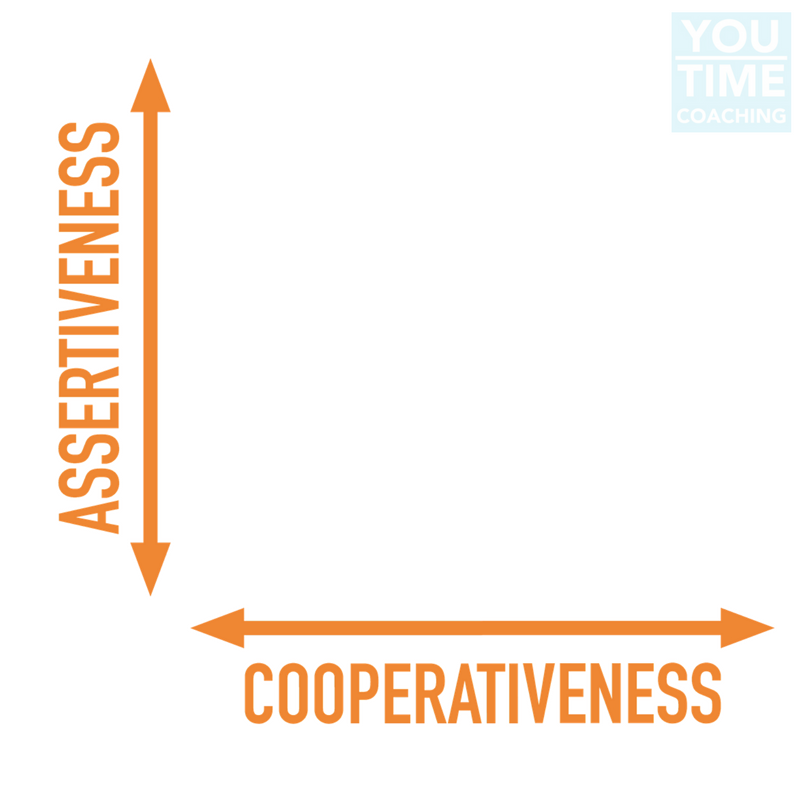
First, there are two dimensions.
1. Assertiveness: how much effort (or lack of effort) you put into satisfying your own concerns.
2. Cooperativeness: how much effort (or lack of effort) you put into satisfying the other person’s concerns.
Think of it like this.
Second, there are 5 “modes” for how we respond to conflict.
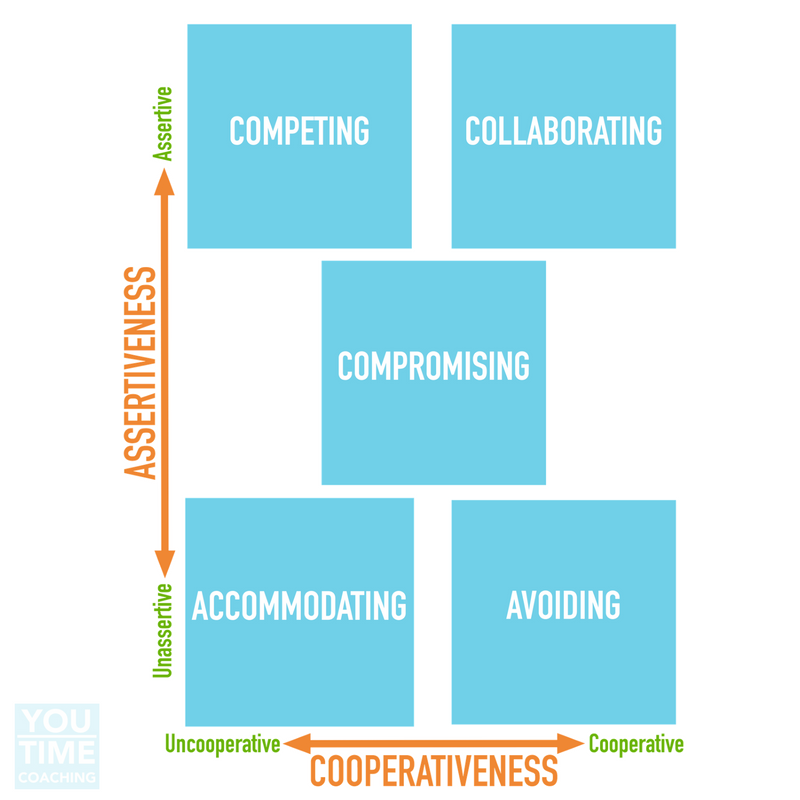
To learn more about each of these “modes” take a look at this: An Overview of Conflict Modes. Taking a quick gander you can probably start to piece together the more obvious “modes” you go into during a conflict with your child. This isn’t a “one way or another” type of situation, because typically parents will exhibit some degree of each of these across the conflicts you face with yourself and others.
There are many specific behaviors that could enact each individual factor but your “conflict mode” is built off of the aim of the behavior rather than the specific behavior itself. Same goes for your child.
For example, your child may not want to talk about the poor grade they received on their English paper and in order to achieve this avoidance they could walk out of the room, shut down and not speak, or even change topics altogether. Three different behaviors, all aimed to avoid.
Let’s put the entire picture together.
Your “conflict mode” is a product of your personal disposition and the requirements of the situation you have found yourself in. Different conflicts with your children, loved ones, your friends, and even yourself can highlight different tendencies you may gravitate to within these modes.
BENEFITS TO UNDERSTANDING YOUR “CONFLICT MODE”:
• Learn how to use your strengths to set boundaries and KEEP THEM!
• Work with your child in creating innovative solutions to common problems.
• Further develop your ability to manage your efforts, while still helping you and your child.
• Reduce your stress load during conflicts.
• Genuinely support your child during conflicts.
Taking a look at the diagram above will give you a self-diagnosed idea of what modes you gravitate towards.

Contact YouTime Coaching now to find out your individualized “conflict mode” and learn more about how to put the newly acquired information into action at home with yourself and your children.

by YouTime Coaching | Aug 26, 2016 | Children, college, Communication, high school, parenting, parents
August. The countdown begins. In a few short weeks or even days you will be able to retire from your position as family event planner. Your child is probably frantically trying to savor every last second of summer vacation (and what better time to binge watch Netflix than 2 am??) and tackle the unaccomplished tasks on their bucket lists. However, this time is critical to help them set themselves up for a successful transition into the new school year. Whether they are starting at a new school or returning to their current one, here are a few tips to help them ease into September.
1. Set a Routine: Your child will need to reintroduce themselves to their alarm clock! This friendship takes a little time to rekindle! One to two weeks before the start of school, begin transitioning back to a more “normal” schedule and routine. Begin encouraging an earlier bedtime. Try backing bedtime up 15-30 minutes each night. This will help your child feel ready to wake at an earlier hour. Encourage some time for activities such as reading. This will help your child settle back into completing assignments and homework. Help your child reestablish these routines before the start of school. The less change they need to adapt to all at once, the smoother the transition will be.
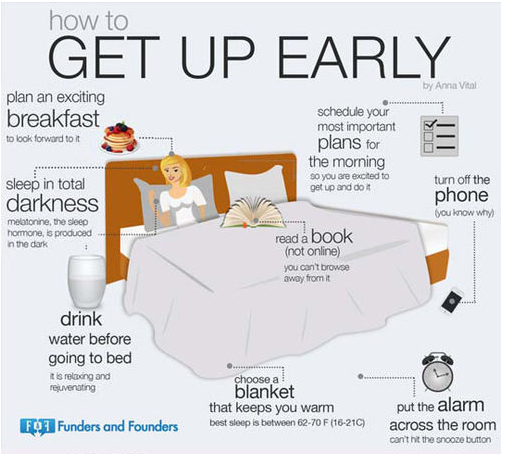
2. Encourage Activity: Summer activities come in a lot of different forms. Some children remain active all summer, while others use the time to relax. If your child’s physical activity level has flatlined a little over the summer, encourage them to become more active. Exercise can help reduce stress levels while also helping children sleep better. This will help tire them out, which in turn should naturally lead to an earlier bedtime.
![Large group of people stretching together. [url=http://www.istockphoto.com/search/lightbox/9786738][img]http://dl.dropbox.com/u/40117171/group.jpg[/img][/url] [url=http://www.istockphoto.com/search/lightbox/9786766][img]http://dl.dropbox.com/u/40117171/sport.jpg[/img][/url]](https://youtimecoach.com/wp-content/uploads/2016/08/friends-exercising.jpg)
3. Model Confidence: Children are masters at reading adults. If you are anxious or stressed about the upcoming school year, this will show. If you feel it would be helpful, have a dialogue with your child about how they’re feeling about this upcoming year. Maybe they feel better about the year than you think. If your child is at the stage where it is “not cool” to do this, let them know that you are there for them if they ever have a problem or need to talk. Also, encourage your child to form a connection with a trusted adult at school. This will help you feel more assured that if a problem does arise, your child is getting the help they need.

Abraham Lincoln said, “Give me six hours to chop down a tree and I will spend the first four sharpening the ax.” By more effectively using the end of the summer days and preparing for the transition ahead, your child will walk through the doors on that first day of school more mentally prepared to take on the school year!