by YouTime Coaching | Mar 15, 2013 | Uncategorized |
If you were to be walking along the sidewalk and saw a penny, would you pick it up?
Is the value of the penny enough for you to stop in your tracks, reach down, and grab it?
What if it was a heads-up?
Maybe it would be worth it then.
A single penny is virtually worthless and cost more to manufacture then it’s face value.
So what is this copper and zinc alloy truly worth?
I will share with you a truly remarkable story to help answer this question.
The Tall Tale of Bipsy the Dog
Bipsy was brought into this world December 1st, 2012 by an abandoned and neglected pregnant mother roaming the streets of Louisiana. She is one of five puppies brought up to New England by the Great Dog Rescue.
On January 25, 2013 Bipsy became part of Kate’s and my life. A cute, cuddly, mix breed that we couldn‘t quite figure out. We started house breaking, food schedules, buying pee pads, walks, and all the other fun activities associated with raising a puppy (more like a human baby). What most people know is that puppies, like babies, become extremely curious.
Bipsy was finishing up a weekend adventure at Kate’s parents house, where she was able to run around and enjoy the outdoors (not that easy in Boston).
When Kate went to pick up Bipsy her parent’s said,
“Bipsy may or may not of swallowed a penny,
just keep an eye out”.
When Bipsy returned back to the North End in Boston, she resumed her normal routines of acting hyper, sleeping, going to the bathroom, sleeping, acting hyper, and more sleeping. Only this time she added in an additional piece, massive amounts scratching. This caught my eye and I decided the next day to bring her to the Vet.
When we went in to see the Veterinarian, she wasn’t too worried about the itching and prescribe some Benadryl. I wasn’t going to mention the penny, but I did.
“Oh by the way, she may have swallowed a penny.”
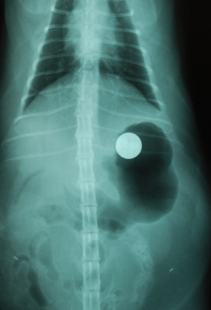
The Vet responded with, “Now that worries me, the thing about pennies are that they contain zinc and zinc is toxic. We need to do an xray.”
As I return back to the Dr.’s office, the vet confirms that Bipsy indeed swallowed a penny.
The Vet lays out the next set of steps.
1. Induced Vomiting to get the penny out
If that doesn’t work,
2. Endoscopy
If that doesn’t work,
3. Stomach Surgery
They induced vomiting…
No penny.
$37 for vomiting? Where do they come up with these prices?
They completed the Endoscopy…
No penny.
They completed surgery,
THEY GOT THE PENNY!
The aftermath…
Being a Life Coach, it was absolutely necessary for me to find the meaning and take home message from this. During a long drive to see a client, I tried to wrap my mind around the concepts of
value, silver linings, luck, and beliefs.
I realized the major lesson in this is,
(besides having puppy insurance)
Many individual’s undervalue their abilities, skills, and strengths. You tend to designate these qualities as “useless” and never utilize some of the most powerful tools you have to offer.
I challenge you to complete a skills and strengths inventory on yourself. Take the information you now have and explore what other settings or environments those skills would be most valuable in.
Explore your value, discover your value, maximize your value.
 |
| Bipsy the Wonderdog |
by YouTime Coaching | Mar 5, 2013 | Uncategorized
The Resolution and Aftermath of a Fight
Since conflict is a normal occurrence within a relationship, you will definitely be faced the challenge of how to handle it. Some people choose to avoid, yell, abuse, instigate, or regulate. While each of these serve their purpose, they will not help in strengthening your relationships with those around you.
Don’t forget that we are all human and each have needs.
Remember this handy diagram?
Simple Breakdown:
Your job in a relationship is to meet the needs of your partner, while your partner’s job is to likewise meet yours. When somebody perceives this not to be happening, there is conflict.
Simple answer,
1. Figure out what needs aren’t being met
2. Acknowledge and affirm that your partner feels this way
3. Communicate openly about how to meet the needs in the future
With this, conflict is most likely resolved.
Keys to a Successful Resolution and Aftermath:
The resolution and aftermath are contingent on a few ingredients. During “The Fight” try the following to help ensure a clean end to the conflict.
1. Timeouts: It is fair game to take a timeout and remove yourself
from the conflict, BUT, you must explain why you
need a timeout AND communicate that this is an
important conversation that you wish to be
continued and simply need a couple mins to level out.
2. Focus: Are you focusing on yourself? If so, remember your role
in a relationship, to meet the needs of your PARTNER. Take
a moment to focus on them and do your job to meet their
needs, while the “Law of Reciprocity” works for you.
3. Gain: When conflict arises individuals typically jump into fight
or flight mode and try to save themselves. Take a step back
and ask yourself, “What am I gaining from this” and “How
will this make my relationship stronger?” After answering
both these questions you will have a better gauge
as to whether you should be arguing in the first place!
Enjoy using the principles from Part I, II, and III of
“The Science of an Argument“
HAPPY ARGUING!
by YouTime Coaching | Jan 9, 2013 | Uncategorized
Close your eyes.
No seriously, close them.
Now, draw up a picture or create a movie of the most intense, emotional, and devastating argument you have ever been in. Really re-create those emotions that were present at the time of the fight.
Write down which of these occurred in that fight:
1. Crying
2. Yelling/Shouting/Screaming
3. Cursing
4. Damage to property
5. Physical Harm
6. Somebody leaving before the fight was over
7. Throwing of objects
8. Threats made towards the other person
9. Fun and Laughter
10. Increased heart rate and blood pressure
11. Involvement of unnecessary people
Wait…what? Can we go back to number 9 please?
I hope this caught your eye because if you are like most arguments had by individuals, fun and (happy) laughter is rarely present.
If you did not write down any of the above events, we can cuff, print, and book you for officially being a bold face liar. Let’s be honest for a second, do you really know “what went wrong” in your argument? Do you even know HOW to argue?
Yes, I said it. DO YOU KNOW HOW TO ARGUE?
I can say with great confidence that most people in this world do not know how to argue. Most individuals feel as though arguing ruins relationships, causes too much stress, only turns out hurting somebody, or is never a good thing.

This logic is flawed. Arguing only has the POTENTIAL to cause those events. Just like Napoleon Hill, best selling author of “Think and Grow Rich” claimed,
“Knowledge is not power. Knowledge is simply potential power.”
If you understand the science and anatomy of an argument in relationship to your personal tendencies, your eyes will open to how much of an argument you are actually in control of.
An argument is composed of 4 chapters:
1. The Approach
2. The Fight
3. The Resolution
4. The Aftermath
Just by a simple glance at this list I am sure you can start to visualize how these chapters unfold within your own arguments. Some people tend to favor putting all of their physical and mental energy into the actual fight, while others love to put their hard work to the test with the clean-up.
Before jumping into the first chapter,
I challenge you to prioritize the 4 chapters of a fight based off your personal experience and how much mental/physical energy you feel is devoted to each of these.
My list looks like this:
1. The Fight
2. The Approach
3. The Resolution
4. The Aftermath
This is hands down the most under-utilized nugget of gold an individual can overlook in an argument.
The Approach will directly impact the outcome of the argument
The Approach to an argument involves the mental and physiological state an individual is in prior to commencing in a fight. This state will ultimately determine the direction, intensity, and outcome of the argument.
Challenge: A) Choose 1 person you tend to argue with frequently.
B) Think back to the most recent argument you had with them and picture yourself just moments before the fight.
C) Where are you? What are you wearing? Are you alone? Are you coming from anywhere? Is this your first fight of the day? Are you stressed, happy, frustrated, excited, anxious?
How is your physical and mental state at this point?
What was the outcome of the argument?
Start to recognize patterns between your “state” prior to the argument and the outcome of the fight.
 If you would like to direct the argument to the outcome you want, first define what outcome you truly desire and form a strong belief that this IS the outcome. When defining it is very important you identify what success is in each of the 3 other chapters (The Fight, The Resolution, The Aftermath).
Belief: (noun) A feeling of absolute certainty that something is true.
Some individuals see success in The Fight chapter as “no yelling”, while others may identify it as “They will hear my point without interruption.”
Take a look at the Success Cycle to see how your belief can transform the outcome.
A strong belief in your desired outcome will place you at the highest potential and in a peak state to perform at your best. Having strong beliefs and being at maximum potential will produce a great performance (Action), leading to successful results and in turn confirming your initial belief.
Challenge:
If you feel as though you are heading into an argument with a physical and mental state that will undermine the results you desire, you are in need of a “jarring”.
Jarring: an emotional/physical shock to disrupt your current state.
Jarring Techniques:
Opponent Appreciation: Before an argument begins think about the individual and appreciate at least 3 things about them. This will jar your current emotional state and put you in a more resourceful state.
Movie Theatre Effect: Visualize yourself in a movie all by yourself. Up on the big screen is a picture of the individual you are about to get into an argument with. Create this image so it is drawing up those negative emotions regarding the fight. Once you have the picture, create a second image that is of the same individual but in a very pleasant state that you enjoy. This is a picture of the individual brings you happiness and laughter. Close your eyes, put picture one up on the screen, count down from 3, and replace picture one with picture two. Do this 7-8 times until it is almost impossible to see picture one without seeing picture two.
If you read this blog, fully participated in all of the challenges and exercise you are one your way to being a master at arguments.
Stayed tuned for next week’s Chapter 2: The Fight
Summary of Chapter 1 “The Approach”:
1. Arguing only has the POTENTIAL to cause negative outcomes
2. The Approach is the most important aspect of the argument.
3. The Approach directly influences the outcome of the argument.
4. The mental and physiological state you are in prior to the argument will direct the fight.
5. If you are in a state that will undermine your desired outcome of the argument you need a “jarring”.
6. Try the “Opponent Appreciation” and “Movie Theatre Effect” techniques to create a more resourceful state and get the result you desire.
Stay tuned and Stay Positive,
TheYouTimeCoach,
Jonathan B. Wolf, Ed.M.
by YouTime Coaching | Dec 7, 2012 | Uncategorized
We now live in a country where adolescents are more depressed, anxious, and weigh more than ever.
 Following the recent 2012 presidential election, most people are better able to understand why insurance costs and health care is a growing problem.
 If politicians, parents, and working professionals are worried about the rising health care costs, where do the adolescents fit into this?
Children typically do not pay for their own insurance, health care related costs or even have a faint clue as to what this means, but what is their involvement in the rising health care concern?
For instance, 25% percent of adolescents develop anxiety disorders (Merikangas, 2010), obesity prevalence rates have almost tripled since 1980 (Ogden, Carroll, Kit & Flagel, 2012), approximately 1/3 of adolescents are overweight or obese (Ogden, Carroll, Kit & Flagel, 2012) and almost 1 out of 10 children are diagnosed with depression (Luby, 2009).
I believe the REAL question to ask here is…
Do children in this country even stand a chance to develop into confident, motivated, and happy adults?
WE NEED A SHIFT IN MINDSET
Without a major shift of focus on adolescent preventative health care in response to the rising rates of children diagnosed with anxiety/depression disorders and obesity, we have a very costly problem when treating these adolescents in adulthood with fully developed chronic lifestyle diseases and disorders.
In order to minimize the number of adolescents that develop more severe disorders into adulthood and those that cultivate lifestyle diseases (Type II diabetes, heart disease, hypertension, and hyper-lipidemia), the mental and physical health of adolescents NEEDS to become our health care focus and predominant priority.
Childhood and adolescence are vulnerable phases in life that places the demographic at substantial risk for developing the signs and symptoms of anxiety disorders (Beesdo, Knappe, & Pine, 2009).
Many people are willing to acknowledge that children’s and adolescent’s minds are very impressionable and capable of retaining vast amounts of information, including events and interactions that could lead to anxiety. Although Doctors claim there is no one factor that leads to an adolescent developing an anxiety disorder, they do predict that environmental factors play a large role (Beesdo, Knappe, & Pine, 2009).
Children spend much of their time in school (with teachers, at home (with parents), and with friends. This may give light to how those environments contribute to the rising prevalence of childhood anxiety and depression.
 Children are born with the ability to sense fear, but what causes the development of a pathological problem? With 25% of adolescents developing anxiety disorders in the United States and a prevalence rate of 18% of adults with anxiety disorders, there are a massive number of individuals trying to treat this growing problem (Kessler, Berglund, Demler, Jim, & Walters, 2005).
While the numbers of anxiety disorders are increasing, so do the prescriptions for SSRI’s and the utilization of the health care system. This all comes at a huge cost. From 1991-2005 we witnessed an increase in anti-depressant prescriptions from 6.82 million to 32.72 million (Chen et al., 2008). With this wave of newly diagnosed individuals, came along an increased expenditure on the anti-depressant medications from $159 million in 1991 to $2.26 billion in 2004 (Chen et al. 2008).
Imagine a world where we treat children for their underlying problem rather than simply and solely placing them on medication. Proven to have significant benefits, cognitive behavioral therapy is the treatment of choice for anxiety and depression in adolescents (Compton et al., 2004). An increased adherence to psychotherapy for adolescence could have a drastic impact on the outcome and future development of the individual’s anxiety disorder into adulthood.
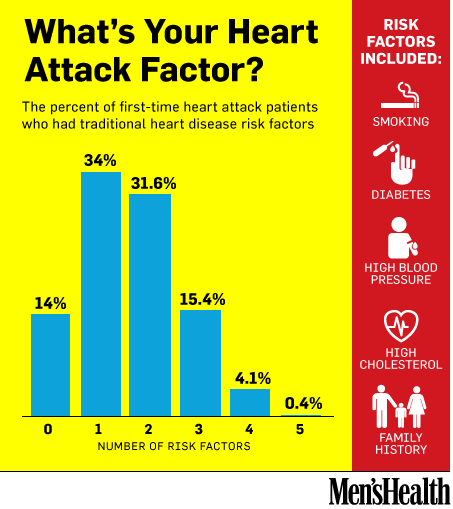
The leading cause of death in America is heart disease. According to the Center for Disease Control (2011), an estimated cost of treating heart disease is a staggering $444 billion and is responsible for $1 of every $6 spent in the health care system.
“The Last Heart Attack” with CNN’s Dr. Sanjay Gupta
A major risk factor for developing heart disease is obesity, which is tightly correlated to an individual’s diet and physical activity level (diet and physical activity just so happen to be risk factors as well). Obesity rates in adolescents have tripled since 1980, mainly due to poor diet and lack of physical activity (Ogden et al. 2012).
If we are exposing adolescents to multiple risk factors for heart disease, why are we surprised to see them develop the illness in adulthood?
Our children are the next generation of heart attacks,
unless parenting, school systems, and the media change their messages to youth. The priority for future health care needs to have a focus on adolescent mental health and physical well-being.
If some of the chronic illness’ that cost our country billions of dollars are treated before they occur and in some cases prevented, the bill for treating heart disease and anti-depression medication prescriptions will be drastically reduced.
Our shift in mindset must begin with creating prevention plans rather than treating symptoms while fully supporting adolescents with the counseling, mentoring, and positive modeling necessary to develop a strong self-image, motivation, and coping skills to reduce the symptoms of anxiety and depression disorders.
*Reference list supplied upon request
by YouTime Coaching | Oct 26, 2012 | Uncategorized |
Trust is an important thing for many people. It is also an interesting topic to bring up in conversation. When you ask another individual about their thoughts on trust, they typically will have a quick response, such as, “It is very important to have trust.”, or “You need to earn trust.”
If we assume that both of those above statements are true than we must ask ourselves these two questions:
1. Is it really that important to have trust?
2. How much trust needs to be earned?
During my “Techniques for Success Group”, I asked the individuals, “Why is it important to trust somebody?” The response I got was that of a crowd that did not speak the same language as me, silence. I decided on switching up the question and asked the group, “Why is it bad to trust somebody?”, and suddenly they knew what to say.
Within 10 seconds I received feedback that would make you truly believe that trust is something horrible you want to stay away from.
“Trusting people gets you hurt”
“You get screwed over”
“People take advantage of you”
“You become weaker to other people”
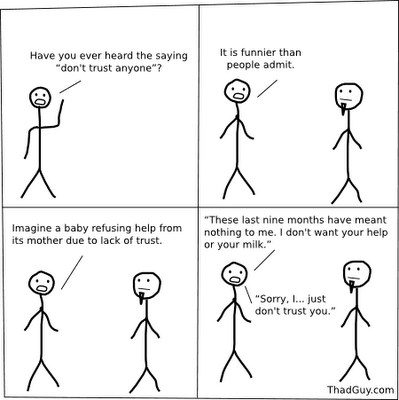
The human mentality to pursue pleasure (instant gratification) and avoid pain has made even the ability to trust a painful thing. So what needs to happen? In order to reestablish our trust in trust, we must follow the “Top 2 Ways to Improve Trust”.
I. Finally give ourselves some credit!
Although we may believe that others need to “earn your trust”, you give out enough for free. Humans inherently want to love and be loved by others. This allows us to trust people right away. Of course, the degree of trust and the events that can diminish or ignite it can vary greatly, but as a whole, we innately want to trust other humans.
Have you said hi to a stranger in the past 30 days, had a conversation with somebody you didn’t know too well, or played on a sports team before? If you said yes to any of these questions, you are guilty of instilling trust into another human instantly. We do this all of the time, and that is ok, even great at times. Understanding that there is a standard amount of instant trust you allow for each individual (will vary per individual) and learning how to build on it will allow you to fulfill your need of connection/love far greater and faster than before.
GIVE YOURSELF CREDIT!
II. The Million Dollar Question to building trust.

After acknowledging and accepting that you allow other individuals to have a small amount of “instant” trust and giving yourself credit for it, you must ask yourself this question.
If you were to be paired with a complete stranger and placed in a room for 1 hour with the goal being to leave the room 1 hour later trusting each other the most possible, what would you be doing during that hour?
This simple question that is easy for some and near impossible for others will create a cheat sheet for easy ways to develop secure connections and trust.
Share in the comments section your
answer to the question.
by YouTime Coaching | Oct 17, 2012 | Uncategorized
Some of you may remember Fred Rogers as an American educator, Presbyterian minister, songwriter, author, or television host, but most remember simply by saying “Mister Rogers”.
Each episode of “Mister Rogers’ Neighborhood” began the same way: Mister Rogers is seen coming home, singing his theme song “Won’t You Be My Neighbor?”, and changing into his sneakers and infamous old man cardigan sweater.
I am pretty confident that Mister Rogers made cardigans look cool for first time ever, or maybe it is just the comfortable old man in me speaking.
What many people didn’t know about Fred Roger is how much of an advocate he was.
May 1, 1969
- President Nixon attempts to decrease funding to PBS by 50% ($20 million –> $10 million).
- Fred Rogers goes before the Senate to defend the funding to PBS.
- Fred Rogers defends children, the messages we send to our younger population through television, the mental health field, therapy/counseling, and emotional expression.
- Fred Rogers proclaims the dramatic power of emotional expression amongst men (at this time many male soldiers were coming back from Vietnam).
In the late 1960’s, Fred Rogers made it crystal clear that he was deeply concerned with what was being delivered to our children via television and radio. Working with children most of his life, Fred, was driven to understand children’s needs and the “inner drama of childhood”.
For those parents that wish to provide their children with the best opportunities given your situation and resources listen closely to the message being conveyed by Fred Rogers.
“This is what I give. I give an expression of care
to help him realize that he is unique.”
Mister Rogers focuses on fulfilling a child’s need of significance and connection/love.
He fulfills their need of significance through making the children feel unique, important, and noticed by just being who they are, nothing more.
He fulfills their need of connection/love through listening to the children, spending time with them, and overtly vesting interest in their well-being.
Here are a few messages Fred was trying to get across in his Senate Hearing in 1969:
1. You are unique, just the way you are
2. Feelings are mentionable and manageable
3. Managing your feelings is far more dramatic then showing violence
4. We can model these principles through television and parenting
Watch the actual Senate Hearing in 1969 and see how Fred Rogers gets Senator Pastore of Rhode Island to admit he got “goosebumps”.