When driving out to see clients I frequently take Interstate 93 to get out to them. Those in the Boston area know very well that 93 is home to two major things, the infamous “Big Dig” and major traffic jams.
Just as you leave Boston on 93 South the left lane closes and everybody is forced to merge. I drive this exact route 4-5 times a week and still run into the same problem. I get all the way over into the left lane and forget that I will need to merge back into the original lane I was coming from.
This typically causes frustration, stress, a small amount of time, and sets the tone for the remainder of my drive, “pissed off with a headache”. One day I chose to do something different. Not only stay in the middle lane, BUT change to the right lane. My thought process was, “I don’t want to deal with merging, or the lane that needs to accept and let in those merging assholes.”
This changed my world! I saved a very little bit of time, a lot of frustration, and actually had a pleasant remainder of the ride. Unbelievably different outcomes from just one small change. I realized quickly that individual’s typically do 3 things when asked to merge:
“Pumping the Breaks”: Slow down to get behind somebody
“Pressing the Gas”: Speed up to cut someone off and/or get ahead of somebody
“Go With the Flow”: Merge in line with everybody else when forced to come together.
These occurrences led me to form a theory, known as “Merging Syndrome”.
THE BREAKDOWN:
Merging Syndrome
Individual’s that suffer from Merging Syndrome experience difficulty in effectively making important, timely, and valuable decisions.
Symptoms:
Irritation
Mental Fatigue
Frustration
Increased Anxiety
Aggravation
Headaches
Confusion
Use of the middle finger
Poor control of language
More extreme cases experience crying, blurry vision, and accidents.
These individuals are typically separated into three categories (although people can experience variations of them):
I. Pumping the Breaks: Individual’s that pump the breaks tend to avoid making important decisions and procrastinate. This can result in increased anxiety levels, poor decisions, missing out on fulfilling experiences, and missing potential growth opportunity. Individual’s that typically indulge in “Pumping the Breaks” value certainty, safety, and security.
II. Pressing the Gas: Individual’s that press the gas tend to rush into important decisions without proper planning, readiness, and regard. This can result in poor decisions, placing yourself in high-risk situations, and increased vulnerability. Individual’s that typically indulge in “Pressing the Gas” value variety and significance.
III. Go With the Flow: Individual’s that go with the flow tend to allow others to make decisions for them and lack regard for how this may affect them in the future. This can result in increased anxiety, feelings of being “out of control”, lack of fulfillment, and poor sense of identity. Individual’s that typically “Go With the Flow” value the need for connection.
When making important, timely, and valuable decisions in your life it is important to properly prepare yourself for the mental and physical rigors that may come your way. Making these decisions hold great potential for growth, contribution, and fulfillment. At the same time they have the potential to cause anxiety, doubt, pain, and confusion. Learn how to prepare, adapt, and acclimate to your new environment to help ensure a smooth transition.
If you or anybody you know is suffering from Merging Syndrome, please contact YouTime Coaching by emailing [email protected]
*Merging Syndrome is not a recognized syndrome by the current DSM or any body of literature. Merging Syndrome was created by Jonathan Wolf, through his own life experience and presented to help others identify their decision making process.
In light of the recent bombings at the Boston Marathon and the massive numbers of individuals returning from war, our culture has become all too familiar with the term “post traumatic stress”. What most people are not as familiar with is the concept of
“Post Traumatic Growth”
Research involving individuals and their relationship to stress, pain, fear, and trauma have been around for thousands of years but the interest in Post Traumatic Growth began to steal some of the limelight in the 1990’s.
Post Traumatic Growth involves an individual’s path in adapting to sets of negative experiences that would normally cause psychological distress or harm. These events could include experiences with death, abuse, serious injury, natural disasters, relationships, accidents, and other potentially traumatic events.
Simply looking at this list you can understand why some individuals experience post traumatic stress.
BUT
What if there were a way to experience growth following traumatic events like those mentioned above?
Post Traumatic Growth Characteristics:
Greater appreciation for life
Shift in sense of priorities
More genuine connections and relationships
Increase sense of personal strength
Recognition of new life paths and possibilities
Are you sold yet?
How can I get some Post Traumatic Growth?
1. First, you must have a belief system that supports growth.
Spirituality is a characteristic that has been closely linked to experiencing post traumatic growth, but the core concept behind this connection are the empowering beliefs a spiritual individual may possess.
Keep these in mind:
BELIEVE that you can grow from this
and
You are capable of this change.
2. You must have support
Support systems have been linked in post traumatic growth on many levels. Therapists, counselors, and life coaches (with proper training) can have great impacts on your ability to experience this growth, post traumatic event.
Surround yourself with genuine, insightful, and caring individuals that you feel comfortable sharing your life with. This could be the difference between growth and stress.
Conclusion:
Be confident and open to being able to grow
Develop a belief system that empowers and supports you in experiencing growth.
Seek out opportunity to develop new genuine relationships and connections.
Sniff out your most precious support systems and use them.
Lastly,
During the Boston Marathon I was watching the race in Kenmore Square (15 minute walk to the finish line), when I had heard what happened followed by a massive number of text messages, phone calls, and emails making sure I was okay. I want to thank those individuals and extend my heart and support to the families that were affected by these horrible events.
There is hope and there is strength within you to grow from this. Never loose sight of that.
All the best,
Jonathan B. Wolf, Ed.M. Vitality, Performance, and Parent Coach YouTime Coaching Boston, MA
Where do you get your advice from? Most people get adviceeveryday and never choose to use it. Well, these well knownmillionaires used the advice others gave them and look at the outcome.
Jonathan B. Wolf, Ed.M. YouTime Coaching Vitality, Performance, and Parent Coaching Email YouTime Coaching
Everyone is faced with making multiple decisions each and every day. Some of these decisions hold high importance to the outcome of our day, week, month, or even life. While on the other hand, most decisions will have little to no impact on such things.
Or could they?
While the big decisions can have a lasting impact so can the smaller ones. It all comes down to whether or not you have programmed your mind in the correct way.
Watch the video below to find out how to program your mind for successful decisions, reactions, and outcomes.
Were you programmed for success before watching this video?
Share in the comments below how you have used this method to train you brain for success!
If you were to be walking along the sidewalk and saw a penny, would you pick it up?
Is the value of the penny enough for you to stop in your tracks, reach down, and grab it?
What if it was a heads-up?
Maybe it would be worth it then.
A single penny is virtually worthless and cost more to manufacture then it’s face value.
So what is this copper and zinc alloy truly worth?
I will share with you a truly remarkable story to help answer this question.
The Tall Tale of Bipsy the Dog
Bipsywas brought into this world December 1st, 2012 by an abandoned and neglected pregnant mother roaming the streets ofLouisiana. She is one of five puppies brought up to New England by the Great Dog Rescue.
On January 25, 2013 Bipsy became part of Kate’s and my life. A cute, cuddly, mix breed that we couldn‘tquite figure out. We started house breaking, food schedules, buying pee pads, walks, and all the other fun activities associated with raising a puppy (more like a human baby). What most people know is that puppies, like babies, become extremely curious.
Bipsy was finishing up a weekend adventure at Kate’s parents house, where she was able to run around and enjoy the outdoors (not that easy in Boston).
When Kate went to pick up Bipsy her parent’s said,
“Bipsy may or may not of swallowed a penny,
just keep an eye out”.
When Bipsy returned back to the North End in Boston, she resumed her normal routines of acting hyper, sleeping, going to the bathroom, sleeping, acting hyper, and more sleeping. Only this time she added in an additional piece, massive amounts scratching. This caught my eye and I decided the next day to bring her to the Vet.
When we went in to see the Veterinarian, she wasn’t too worried about the itching and prescribe some Benadryl. I wasn’t going to mention the penny, but I did.
“Oh by the way, she may have swallowed a penny.”
The Vet responded with, “Now that worries me, the thing about pennies are that they contain zinc and zinc is toxic. We need to do an xray.”
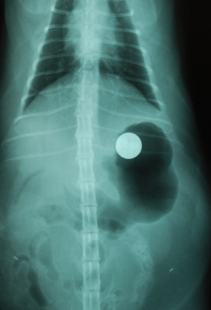
As I return back to the Dr.’s office, the vetconfirms that Bipsy indeed swallowed a penny.
The Vet lays out the next set of steps.
1. Induced Vomiting to get the penny out
If that doesn’t work,
2. Endoscopy
If that doesn’t work,
3. Stomach Surgery
They induced vomiting…
No penny.
$37 for vomiting? Where do they come up with these prices?
They completed the Endoscopy…
No penny.
They completed surgery,
THEY GOT THE PENNY!
The aftermath…
Being a Life Coach, it was absolutely necessary for me to find the meaning and take home message from this. During a long drive to see a client, I tried to wrap my mind around the concepts of
value, silver linings, luck, and beliefs.
I realized the major lesson in this is,
(besides having puppy insurance)
Many individual’s undervalue their abilities, skills, and strengths. Youtend to designate these qualities as“useless” and never utilize some of the most powerful tools you have to offer.
I challenge you to complete a skills and strengths inventory on yourself. Take the information you now have and explore what other settings or environments those skills would be most valuable in.
Explore your value, discover your value, maximize your value.
Since conflict is a normal occurrence within a relationship, you will definitely be faced the challenge of how to handle it. Some people choose to avoid, yell, abuse, instigate, or regulate. While each of these serve their purpose, they will not help in strengthening your relationships with those around you.
Don’t forget that we are all human and each have needs.
Remember this handy diagram?
Simple Breakdown:
Your job in a relationship is to meet the needs of your partner, while your partner’s job is to likewise meet yours. When somebody perceives this not to be happening, there is conflict.
Simple answer,
1. Figure out what needs aren’t being met
2. Acknowledge and affirm that your partner feels this way
3. Communicate openly about how to meet the needs in the future
With this, conflict is most likely resolved.
Keys to a Successful Resolution and Aftermath:
Theresolution and aftermath are contingent on a few ingredients. During “The Fight” try the following to help ensure a clean end to the conflict.
1. Timeouts: It is fair game to take a timeout and remove yourself
from the conflict, BUT, you must explain why you
need a timeout AND communicate that this is an
important conversation that you wish to be
continued and simply need a couple mins to level out.
2. Focus: Are you focusing on yourself? If so, remember your role
in a relationship, to meet the needs of your PARTNER. Take
a moment to focus on them and do your job to meet their
needs, while the “Law of Reciprocity” works for you.
3. Gain: When conflict arises individuals typically jump into fight
or flight mode and try to save themselves. Take a step back
and ask yourself, “What am I gaining from this” and “How
will this make my relationship stronger?” After answering
both these questions you will have a better gauge
as to whether you should be arguing in the first place!
Enjoy using the principles from Part I, II, and III of
Recap from Chapter 1: “Intro to Fighting” & “TheApproach”
1. Arguing only has the POTENTIAL to cause negative outcomes
2.The Approach is themostimportant aspect of the argument.
3.The Approach directly influences the outcome of theargument.
4.The mental and physiological state you are in prior to theargument will direct the fight.
5.If you are in a state that will undermine your desired outcome of the argument you need a “jarring”.
6. Try the “Opponent Appreciation” and “Movie Theater Effect” techniques to create a more resourceful state and get the result you desire.
Chapter 2: The Fight
Arguing can be an extremely toxic event for any relationship or create an important opportunity for growth. The difference between heading down these two opposing pathways is monumental to relationships. The difference in these two paths can be found in just a handful of decisions.
This blog is to help you navigate how to experience growth, increase closeness, heightened intimacy, and developing feelings of accomplishment through an argument.
Challenge:Your Relationship to Fighting
Take a second to right down some words that you associate with arguing. These words may be negative, positive, seem unrelated, or from direct experience. You may see fighting as a defense mechanism, a way for you to connect with others, or possibly a tactic that makes you feel important and noticed.
The importance of this exercise is to discover what cognitive relationships you associate to arguments and fighting. Once you recognize if your connection is positive or negative you can begin to witness its effects on “The Approach” and now how to change these limiting beliefs for “The Fight”
Definition
Limiting Belief: (noun) Thoughts and Beliefs that are manifested consciously or subconsciously that serve as obstacles and barriers to a desired or healthy behavior/decision.
“The Fight” is the ACTION stage within this whole process and where most people use their own style to out-perform their opponent and reign victorious.
The problem is developed because these “styles” that people use in their arguments are developed from typically subconscious feelings and can easily be expressed irrationally, untimely, and at your partners expense.
Our goal here is to develop arguing skills that will allow us to experience healthy growth, connection, certainty, and significance.
“Top 5 Rules to Successful Arguing”
1.Stay on Task
One of the biggest mistakes individuals make in arguing is that they do not stay on task. Understand what you are arguing about and keep this in mind with each point you bring up. When you feel like you are drifting away from the main topic, take second to regroup and jump back in. The last thing you want to be doing is yelling about who left the lights on, when the actual argument is about calling to say you will be home late.
2. Use “I” Statements
Let’s face it, humans typically get defensive very quickly and on a large scale. No female wants to feel like a piece of property, while no man wants to feel completely bossed around. When addressing personal preferences and perspectives start your statement with, “I feel as though vs. You always” in order to convey (on a conscious and subconscious level) that you understand this may not be the case BUT this is how it makes you feel.
3. Cool-off
Under no circumstance should anybody be yelling. If it has reached this point, neither of you are being heard, there will be no winner (your relationship will suffer), you are negatively affecting those around you, and the argument has reached the toxic zone. If you feel as though you are going to yell it is completely permissible to say “This is a very important conversation and do think it is necessary to talk about it, but I need to take a couple minutes to regroup”.
4. Be Quiet
Upwards of 90% of communication is non-verbal and if you don’t silence that yapper for a portion of the argument, you will miss all the important cues. Allow the other person to speak freely without interruption (this may be challenging, but that is normal). Listen to their points and much more importantly, how it makes them feel.
5. No Direction
Isn’t it the most frustrating thing in the world when you begin fighting with somebody who “loves to argue”. Quickly identify if you are one of those people. Do you contest, argue, and disagree with a high percentage of things around you? If so, keep this close to mind when arguing, because you are at higher risk of not “staying on task”. If you are one of these people, you tend to see your way and throw up the blinders for any other perspectives. Be flexible, honest, and open during argument.
Stay tuned next week for Part III of,
“The Science of an Argument”
Chapters 3-4: “The Resolution” and “The Aftermath”
Now, draw up a picture or create a movie of the most intense, emotional, and devastating argument you have ever been in. Really re-create those emotions that were present at the time of the fight.
Write down which of these occurred in that fight:
1.Crying
2.Yelling/Shouting/Screaming
3.Cursing
4.Damage to property
5.Physical Harm
6.Somebody leaving before the fight was over
7.Throwing of objects
8.Threats made towards the other person
9.Fun and Laughter
10.Increased heart rate and blood pressure
11.Involvement of unnecessary people
Wait…what? Can we go back to number 9 please?
I hope this caught your eye because if you are like most arguments had by individuals, fun and (happy) laughter is rarely present.
If you did not write down any of the above events, we can cuff, print, and book you for officially being a bold face liar. Let’s be honest for a second, do you really know “what went wrong” in your argument? Do you even know HOW to argue?
Yes, I said it. DO YOU KNOW HOW TO ARGUE?
I can say with great confidence that most people in this world do not know how to argue. Most individuals feel as though arguing ruins relationships, causes too much stress, only turns out hurting somebody, or is never a good thing.
This logic is flawed. Arguing only has the POTENTIAL to cause those events. Just like Napoleon Hill, best selling author of “Think and Grow Rich” claimed,
“Knowledge is not power. Knowledge is simply potential power.”
If you understand the science and anatomy of an argument in relationship to your personal tendencies, your eyes will open to how much of an argument you are actually in control of.
An argument is composed of 4 chapters:
1. The Approach
2.The Fight
3.The Resolution
4.The Aftermath
Just by a simple glance at this list I am sure you can start to visualize how these chapters unfold within your own arguments. Some people tend to favor putting all of their physical and mental energy into the actual fight, while others love to put their hard work to the test with the clean-up.
Before jumping into the first chapter, I challenge you to prioritize the 4 chapters of a fight based off your personal experience and how much mental/physical energy you feel is devoted to each of these.
My list looks like this:
1. The Fight
2. The Approach
3. The Resolution
4. The Aftermath
Chapter 1: The Approach
This is hands down the most under-utilized nugget of gold an individual can overlook in an argument.
The Approach will directly impact the outcome of the argument
The Approach to an argument involves the mental and physiological state an individual is in prior to commencing in a fight. This state will ultimately determine the direction, intensity, and outcome of the argument.
Challenge: A) Choose 1 person you tend to argue with frequently.
B) Think back to themost recent argument you had with them and picture yourself just momentsbefore the fight.
C) Where are you?What are you wearing? Are you alone?Are you coming from anywhere? Is this your first fight of the day? Are youstressed, happy, frustrated, excited, anxious?
How is your physical and mental state at this point?
What was the outcome of the argument?
Start to recognize patterns between your “state” prior to the argument and the outcome of the fight.
If you would like to direct the argument to the outcome you want, first define what outcome you truly desire and form a strong belief that this IS the outcome. When defining it is very important you identify what success is in each of the 3 other chapters (The Fight, The Resolution, The Aftermath).
Belief: (noun) A feeling of absolute certainty that something is true.
Some individuals see success in The Fight chapter as “no yelling”, while others may identify it as “They will hear my point without interruption.”
Take a look at the Success Cycle to see how your belief can transform the outcome.
A strong belief in your desired outcome will place you at the highest potential and in a peak state to perform at your best. Having strong beliefs and being at maximum potential will produce a great performance (Action), leading to successful results and in turn confirming your initial belief.
Challenge: If you feel as though you are heading into an argument with a physical and mental state that will undermine the results you desire, you are in need of a “jarring”.
Jarring: an emotional/physical shock to disrupt your current state.
Jarring Techniques:
Opponent Appreciation: Before an argument begins think about the individual and appreciate at least 3 things about them. This will jar your current emotional state and put you in a more resourceful state.
Movie Theatre Effect: Visualize yourself in a movie all by yourself. Up on the big screen is a picture of the individual you are about to get into an argument with. Create this image so it is drawing up those negative emotions regarding the fight. Once you have the picture, create a second image that is of the same individual but in a very pleasant state that you enjoy. This is a picture of the individual brings you happiness and laughter. Close your eyes, put picture one up on the screen, count down from 3, and replace picture one with picture two. Do this 7-8 times until it is almost impossible to see picture one without seeing picture two.
If you read this blog, fully participated in all of the challenges and exercise you are one your way to being a master at arguments.
Stayed tuned for next week’s Chapter 2: The Fight
Summary of Chapter 1 “The Approach”:
1.Arguing only has the POTENTIAL to cause negative outcomes
2.The Approach is the most important aspect of the argument.
3.The Approach directly influences the outcome of the argument.
4.The mental and physiological state you are in prior to theargument will direct the fight.
5.If you are in a state that will undermine your desired outcome of the argument you need a “jarring”.
6.Try the “Opponent Appreciation” and “Movie Theatre Effect” techniques to create a more resourceful state and get the result you desire.
We now live in a country where adolescents are more depressed, anxious, and weigh more than ever.
Following the recent 2012 presidential election, most people are better able to understand why insurance costs and health care is a growing problem.
If politicians, parents, and working professionals are worried about the rising health care costs, where do the adolescents fit into this?
Children typically do not pay for their own insurance, health care related costs or even have a faint clue as to what this means, but what is their involvement in the rising health care concern?
For instance, 25% percent of adolescents develop anxiety disorders (Merikangas, 2010), obesity prevalence rates have almost tripled since 1980 (Ogden, Carroll, Kit & Flagel, 2012), approximately 1/3 of adolescents are overweight or obese (Ogden, Carroll, Kit & Flagel, 2012) and almost 1 out of 10 children are diagnosed with depression (Luby, 2009).
I believe the REAL question to ask here is…
Do children in this country even stand a chance to develop into confident, motivated, and happy adults?
WE NEED A SHIFT IN MINDSET
Without a major shift of focus on adolescent preventative health care in response to the rising rates of children diagnosed with anxiety/depression disorders and obesity, we have a very costly problem when treating these adolescents in adulthood with fully developed chronic lifestyle diseases and disorders.
In order to minimize the number of adolescents that develop more severe disorders into adulthood and those that cultivate lifestyle diseases (Type II diabetes, heart disease, hypertension, and hyper-lipidemia), the mental and physical health of adolescents NEEDS to become our health care focus and predominant priority.
Childhood and adolescence are vulnerable phases in life that places the demographic at substantial risk for developing the signs and symptoms of anxiety disorders (Beesdo, Knappe, & Pine, 2009).
Many people are willing to acknowledge that children’s and adolescent’s minds are very impressionable and capable of retaining vast amounts of information, including events and interactions that could lead to anxiety.Although Doctors claim there is no one factor that leads to an adolescent developing an anxiety disorder, they do predict that environmental factors play a large role (Beesdo, Knappe, & Pine, 2009).
Children spend much of their time in school (with teachers, at home (with parents), and with friends. This may give light to how those environments contribute to the rising prevalence of childhood anxiety and depression.
Children are born with the ability to sense fear, but what causes the development of a pathological problem? With 25% of adolescents developing anxiety disorders in the United States and a prevalence rate of 18% of adults with anxiety disorders, there are a massive number of individuals trying to treat this growing problem (Kessler, Berglund, Demler, Jim, & Walters, 2005).
While the numbers of anxiety disorders are increasing, so do the prescriptions for SSRI’s and the utilization of the health care system. This all comes at a huge cost. From 1991-2005 we witnessed an increase in anti-depressant prescriptions from 6.82 million to 32.72 million (Chen et al., 2008). With this wave of newly diagnosed individuals, came along an increased expenditure on the anti-depressant medications from $159 million in 1991 to $2.26 billion in 2004 (Chen et al. 2008).
Imagine a world where we treat children for their underlying problem rather than simply and solely placing them on medication. Proven to have significant benefits, cognitive behavioral therapy is the treatment of choice for anxiety and depression in adolescents (Compton et al., 2004). An increased adherence to psychotherapy for adolescence could have a drastic impact on the outcome and future development of the individual’s anxiety disorder into adulthood.
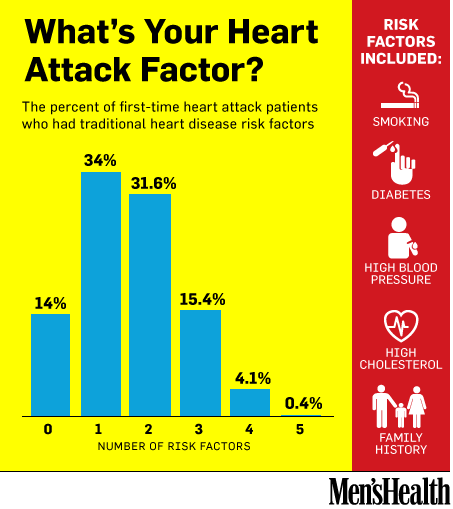
The leading cause of death in America is heart disease. According to the Center for Disease Control (2011), an estimated cost of treating heart disease is a staggering $444 billion and is responsible for $1 of every $6 spent in the health care system.
“The Last Heart Attack” with CNN’s Dr. Sanjay Gupta
A major risk factor for developing heart disease is obesity, which is tightly correlated to an individual’s diet and physical activity level (diet and physical activity just so happen to be risk factors as well). Obesity rates in adolescents have tripled since 1980, mainly due to poor diet and lack of physical activity (Ogden et al. 2012).
If we are exposing adolescents to multiple risk factors for heart disease, why are we surprised to see them develop the illness in adulthood?
Our children are the next generation of heart attacks,
unless parenting, school systems, and the media change their messages to youth. The priority for future health care needs to have a focus on adolescent mental health and physical well-being.
If some of the chronic illness’ that cost our country billions of dollars are treated before they occur and in some cases prevented, the bill for treating heart disease and anti-depression medication prescriptions will be drastically reduced.
Our shift in mindset must begin with creating prevention plans rather than treating symptoms while fully supporting adolescents with the counseling, mentoring, and positive modeling necessary to develop a strong self-image, motivation, and coping skills to reduce the symptoms of anxiety and depression disorders.